
Acacia gall wasp
Trichilogaster acaciaelongifoliae
Description
How to identify
The Acacia gall wasp (Trichilogaster acaciaelongifoliae) is a small hymenopteran insect of the Pteromalidae family known for inducing gall formation on host trees.
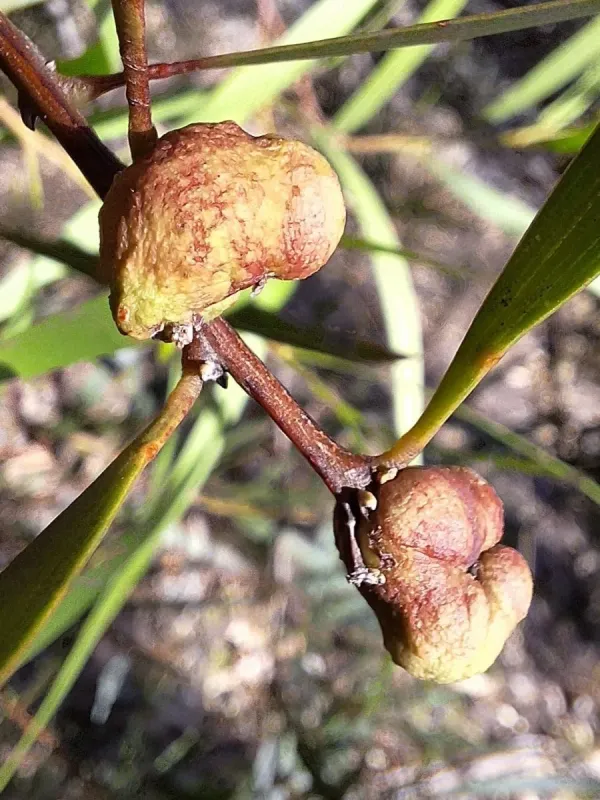
The adult female is specialized to locate and oviposit into the flower buds of specific acacia species, triggering an abnormal growth response.
The larval stage resides within the protective tissue of the gall, feeding on the nutrient-rich cells until maturity is reached.
The synchronization between the insect's life cycle and the host tree's budding period is critical for the survival of the species.
Adult wasps emerge from the galls through tiny exit holes, ready to mate and initiate a new cycle of infestation in nearby healthy buds.
What it damages
The primary host for this pest is Acacia longifolia, where the wasp significantly impacts reproductive capacity.
By transforming reproductive buds into galls, the insect prevents normal flowering and subsequent seed production.
The energetic cost to the tree is substantial, as the galls act as strong nutrient sinks, diverting resources away from vegetative growth.
Heavy infestation leads to a decline in the tree's overall vigor and can permanently deform the crown structure.
In some regions, this insect is intentionally used as a biological control agent to manage invasive acacia populations by limiting their spread.
Signs of infestation
The most distinct sign of infestation is the appearance of woody or fleshy galls on the branches instead of normal floral inflorescences.
During the flowering season, the absence of blooms on specific twigs combined with the presence of abnormal growths is a clear diagnostic indicator.
Once the adults emerge, the surface of the galls becomes perforated with small, circular exit holes.
In the post-emergence phase, the galls may dry out and become brittle, making them susceptible to colonization by opportunistic fungi.
Chronic infestation results in a patchy appearance of the tree canopy, with clusters of galls contrasting with healthy foliage.
Control measures
Pruning and destroying infested branches before the adult emergence period is the most practical manual control method.
Strict monitoring during the budding phase is essential to identify early signs of gall development and facilitate targeted intervention.
Chemical control is rarely recommended or effective, as the larvae are shielded from contact or systemic insecticides within the galls.
Maintaining ecological balance by encouraging natural parasitoids can help suppress wasp populations in naturalized settings.
Avoid transporting wood or branches from infested areas to prevent the spread of the wasp into new, unaffected locations.
Taxonomy
- Latin name
- Trichilogaster acaciaelongifoliae
- Order
- Hymenoptera
- Family
- Melanosomellidae
- EPPO code
- TRLGAC
Discussion
No discussions yet — be the first.