
Trichilogaster
Trichilogaster
Description
How to identify
Trichilogaster belongs to the family Pteromalidae (order Hymenoptera). These are specialized wasps that maintain a close evolutionary relationship with specific host plants.
Adult insects are typically small parasitoid-like wasps, rarely exceeding a few millimeters in length. Their bodies usually feature a dark coloration with a metallic luster.
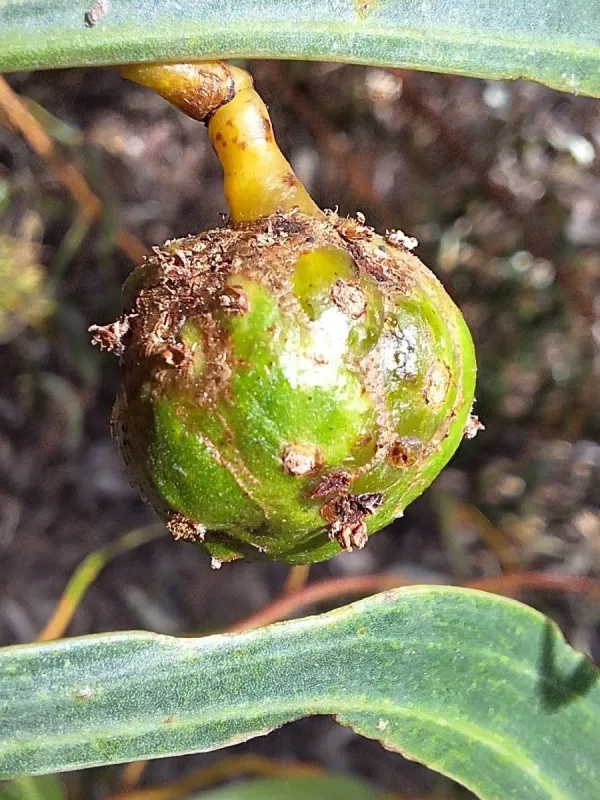
The key characteristic of these insects is their ability to induce the formation of galls on the host plant's tissues. Larvae develop within these structures, feeding on plant nutrients.
Their life cycle is highly synchronized with the vegetation periods of the host plant. Adults emerge during the initial growth phases of buds or young shoots to oviposit.
This genus is widely recognized as a biological control agent used to manage populations of invasive plant species, particularly various types of Australian Acacia.
What it damages
Trichilogaster predominantly affects various Acacia species, including Acacia pycnantha and Acacia longifolia. They are specialized phytophagous insects targeting specific hosts.
The wasps prefer to attack flower buds and shoot tips. The selection of the oviposition site depends on the physiological condition of the plant during the season.
In natural ecosystems, the negative impact of this species manifests as a reduction in the host's overall productivity. Gall formation diverts a significant portion of nutrients from the plant.
Severe infestations prevent the plant from developing viable seeds, which makes Trichilogaster a valuable tool in managing invasive weed populations.
In ornamental gardening, affected shrubs lose their aesthetic value due to shoot deformation and the suppression of normal flowering cycles.
Signs of infestation
The first sign of the pest's presence is the appearance of characteristic pathological tissue growths known as galls. These may vary in shape depending on the host plant species.
Visually, galls appear as swellings on shoots, often colored differently from healthy bark. These structures house all developmental stages of the wasp larvae.
Upon cutting open a gall, one can find larval chambers containing white or cream-colored legless larvae. As these larvae grow, the gall significantly increases in volume.
At later stages, after the adults have emerged, small round exit holes become visible on the surface of the galls, indicating the completion of the insect's development cycle.
General stunted growth of affected branches and the premature shedding of deformed ovaries are also direct indicators of the pest's activity.
Control measures
In commercial plant production, control measures for Trichilogaster are rarely implemented, as its activities are often beneficial for biological weed suppression.
If protection of valuable ornamental plants is required, systemic insecticides may be applied. The chemicals must have translaminar properties to reach larvae inside the galls.
Preventive measures include regular inspection of plants in early spring. Timely pruning and destruction of galls before adult emergence helps to reduce the local population.
Biological control strategies involve preserving and attracting natural entomophagous insects that parasitize Trichilogaster larvae within the galls.
Agrotechnical methods, such as maintaining optimal soil fertility, help increase plant vigor, thereby improving the host's resilience to tissue deformation caused by the pest.
Taxonomy
- Latin name
- Trichilogaster
- Order
- Hymenoptera
- Family
- Melanosomellidae
- EPPO code
- TRLGSP
Discussion
No discussions yet — be the first.