
Leopard shark
Triakis semifasciata
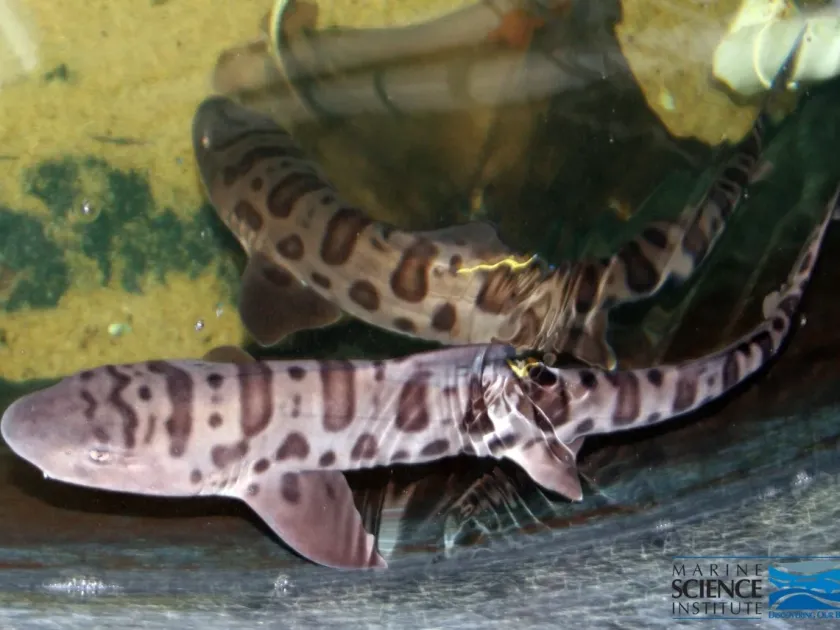
Description
How to identify
The leopard shark (Triakis semifasciata) is a species of houndshark belonging to the order Carcharhiniformes, naturally occurring in temperate Pacific coastal waters.
The species is easily recognized by its distinctive dorsal dark saddles and spots, which resemble the coat of a leopard, providing excellent camouflage in sandy or rocky seabeds.
Biologically, this shark is a marine predator with gills, cartilaginous skeleton, and a physiology strictly limited to salt water environments.
It lacks any specialized adaptations for locomotion on terrestrial soil or the ingestion of terrestrial plant-based materials.
Categorizing this marine species as a plant pest is scientifically incorrect and has no basis in agricultural practice or biological reality.
What it damages
The leopard shark does not damage crops. Its diet consists of crabs, shrimp, clams, and small fish found exclusively in marine ecosystems.
Agricultural fields, greenhouses, and orchards are entirely outside the biological range and survival requirements of this shark species.
There are no documented instances of this shark causing any form of damage to vegetable, cereal, or fruit crop production.
Because the leopard shark is completely isolated from agricultural landscapes, it cannot act as a vector for disease or a direct consumer of agricultural produce.
Farmers have no reason to be concerned about this species in relation to their crops, as the animal lives entirely in the ocean.
Control measures
Control measures against the leopard shark in agricultural settings are non-existent, as the organism is not a threat to plant health.
Agronomic resources should not be diverted to managing marine species that have zero interaction with terrestrial farming systems.
Effective crop management should remain focused on proven pests, such as insects, nematodes, and fungal pathogens, which significantly impact yield.
The best practice for a farm manager is to ignore misinformation regarding marine wildlife as agricultural pests and focus on established agricultural guidelines.
Preventative strategies should prioritize field surveillance of real threats and the application of integrated pest management principles.
Taxonomy
- Latin name
- Triakis semifasciata
- Family
- Triakidae
- EPPO code
- TRIKSE
Discussion
No discussions yet — be the first.