
Smooth-hound
Mustelus
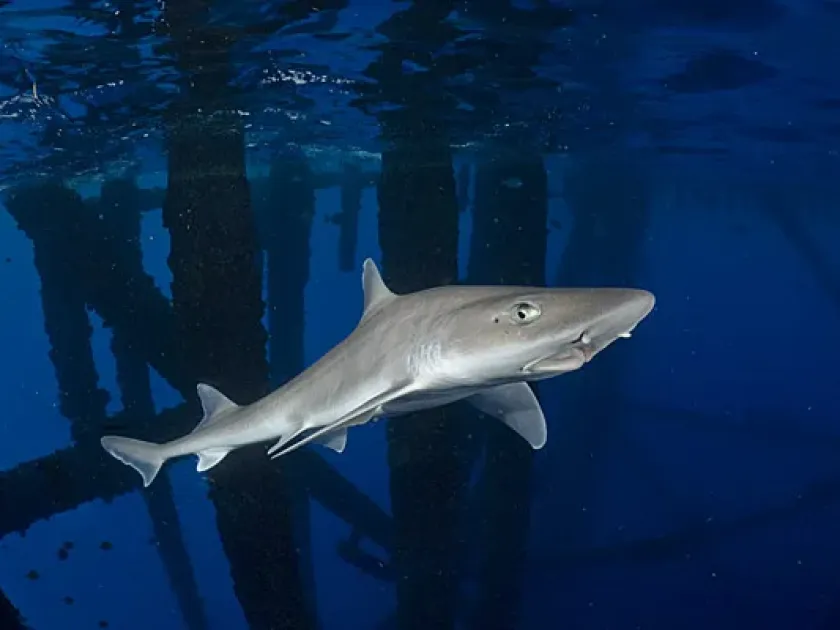
Description
How to identify
The smooth-hound (genus Mustelus) belongs to the family Triakidae, order Carcharhiniformes, and is recognized as a cartilaginous marine fish.
These sharks are exclusively aquatic organisms that inhabit temperate and tropical coastal waters around the globe.
They possess specialized grinding teeth used to consume benthic crustaceans, such as crabs and lobsters, and small bony fish.
Morphologically, they are adapted for swimming and are never found in terrestrial or soil-based environments.
The biological nature of the genus Mustelus is strictly oceanic, separating it entirely from any category of terrestrial plant pest.
What it damages
The smooth-hound shark does not cause damage to crops, vegetables, cereals, or any other agricultural plants.
Since these animals reside in marine ecosystems, they have no interaction with agricultural systems or the foliage and roots of terrestrial flora.
There are no recorded instances of this species affecting agricultural productivity or plant health.
The concept of a marine shark being an agricultural pest is biologically impossible given the distinct environmental niches.
Consequently, farmers do not face any damage or losses caused by this fish species.
When it appears
The life cycle and activity of Mustelus are determined by oceanic water temperature, currents, and marine reproductive patterns.
These biological cycles bear no relation to the sowing, growing, or harvesting seasons of terrestrial agriculture.
Regardless of the time of year, there is no crossover between the shark’s behavioral activity and agricultural work.
Farmers do not need to consider marine shark activity when planning crop rotations or field management.
The seasonal migrations of smooth-hound sharks remain strictly within the marine domain.
Signs of infestation
There are no signs of infestation on plants caused by the smooth-hound, as it does not interact with agricultural fields.
Any damage to crops found in a field should be attributed to common insect pests, pathogens, or environmental stress factors.
Professional agronomists are encouraged to identify actual crop stressors rather than looking for marine influences.
Absence of damage is the expected result of the smooth-hound's presence in the nearby coastal waters.
Field diagnostics should be limited to known terrestrial pests that threaten agricultural yield.
Control measures
No agricultural control measures, pesticides, or monitoring protocols are needed for the smooth-hound shark.
The application of chemicals targeting this marine species is completely unnecessary and would be ecologically harmful.
Agro-management resources should be strictly allocated to the control of relevant terrestrial pests and diseases.
Standard Integrated Pest Management (IPM) practices should be followed to protect crops from real threats.
Treating marine sharks as agricultural pests is an error that should be disregarded in professional agronomic practice.
Taxonomy
- Latin name
- Mustelus
- Family
- Triakidae
- EPPO code
- MSTLSP
Discussion
No discussions yet — be the first.