
Trachyphloeus
Trachyphloeus
Description
How to identify
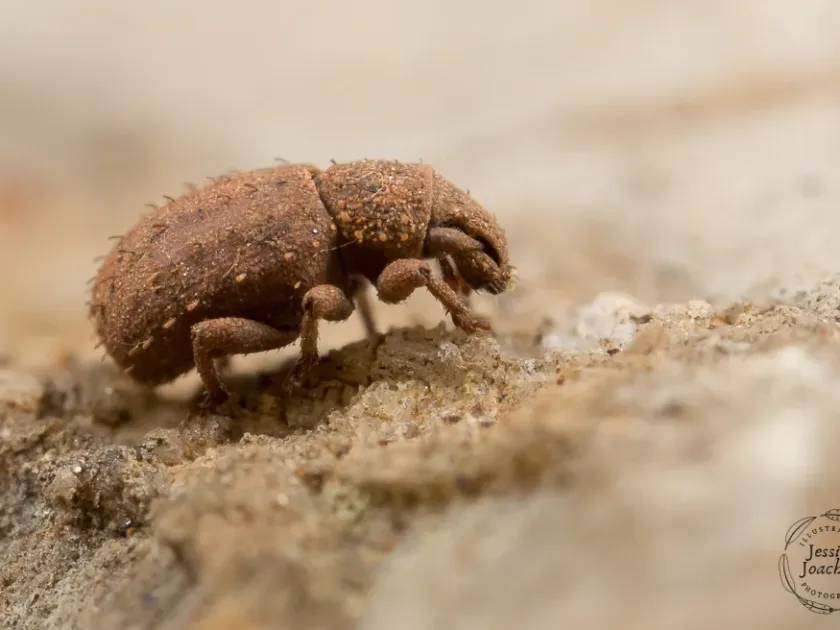
Trachyphloeus is a genus of broad-nosed weevils belonging to the family Curculionidae, known for their cryptic appearance and behavior.
These beetles are generally small, usually measuring between 3 and 4 mm in length, which makes them difficult to detect in the field.
The body is covered with dense scales, often creating a dull or earth-toned camouflage that perfectly blends with the soil surface.
The snout, or rostrum, of Trachyphloeus is typically short and broad, distinguishing them from other longer-snouted species of the Curculionidae family.
Their larvae are legless, grub-like, and pale in color, specifically adapted for survival and feeding within the soil environment.
What it damages
Trachyphloeus impacts plants through both larval and adult feeding activities, often causing cumulative damage to the crop.
Adult beetles feed on leaves and shoots, creating characteristic notch-like patterns on the edges of the leaf blades.
The larvae are particularly damaging as they live underground and feed on the plant's root system, which can severely stress the host plant.
Severe infestations can lead to stunted growth, reduced vigor, and eventually the death of young plants that lack a robust root structure.
Economic damage is often more pronounced in vegetable nurseries or high-value perennial crops where root health is critical for survival.
When it appears
The life cycle of Trachyphloeus is closely synchronized with the growth of its host plants, starting with spring emergence.
Adults emerge from their overwintering sites in the soil when temperatures begin to rise, initiating feeding and reproductive activity.
These beetles are primarily nocturnal, seeking shelter under soil clods or debris during the heat of the day to avoid desiccation.
The larval stage is extended throughout the growing season, with larvae feeding on roots until they pupate in the soil.
As winter approaches, the insects move deeper into the soil or find protected spots in organic mulch to survive the cold temperatures.
Signs of infestation
The most visible sign of an adult presence is the appearance of jagged, semicircular holes along the edges of the foliage.
Plants showing unexplained wilting, even when soil moisture is adequate, should be inspected for root damage caused by larvae.
Careful manual excavation around the base of the plant often reveals the presence of white grubs feeding on the secondary root hairs.
Monitoring the fields at night using a flashlight can help confirm the identity of the pest, as they are most active after sunset.
Persistent patches of slow-growing or yellowing plants in a field are often indicative of localized Trachyphloeus colonization.
Control measures
Effective management begins with sound agronomic practices, such as deep fall plowing to disturb the soil and reduce overwintering populations.
Maintaining a weed-free field is essential to limit alternative food sources for the adults and prevent their population from expanding.
When populations exceed the economic threshold, targeted insecticide applications may be necessary to minimize damage to the crop.
- Utilizing soil-applied insecticides during planting for long-term protection.
- Encouraging natural predators and using biological controls like entomopathogenic fungi.
- Practicing strict crop rotation to interrupt the life cycle of the beetle.
Early detection through regular field scouting is crucial for implementing timely control measures and preventing extensive crop losses.
Taxonomy
- Latin name
- Trachyphloeus
- Order
- Coleoptera (beetles)
- Family
- Curculionidae
- EPPO code
- TRAYSP
Discussion
No discussions yet — be the first.