
Mustard leaf roller
Tortrix sinapina
Description
How to identify
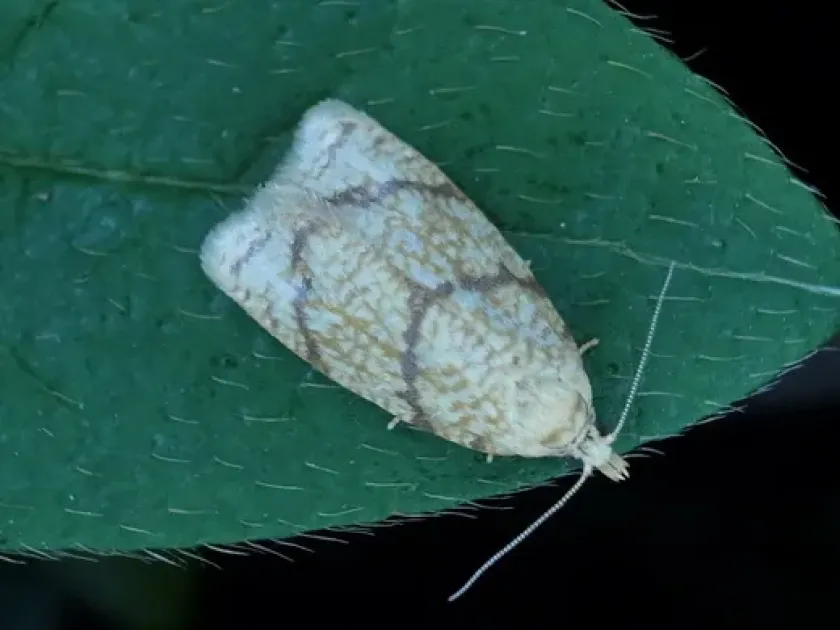
The mustard leaf roller (Latin: Tortrix sinapina) is a member of the order Lepidoptera and the family Tortricidae. The adult moth is small, with a wingspan of approximately 15–18 mm, and features cryptic coloration that blends perfectly with the foliage of its host plants.
The larva, or caterpillar, reaches a length of 12–15 mm and possesses a spindle-shaped body that ranges from light green to yellowish-green. A key identification feature is the caterpillar's head, which is usually pale with distinct dark spots, helping agronomists distinguish it from other similar species.
The pupa is typically protected within leaves that the caterpillar has rolled or tied together with silken threads. This hidden location provides the insect with a stable microclimate and protection from predators, such as birds or parasitic wasps.
The life cycle of Tortrix sinapina is closely synchronized with local weather conditions and the availability of suitable host crops. The pest typically overwinters in the pupal or late larval stage, sheltered within plant debris or the upper layer of the soil.
Pheromone traps are highly effective for monitoring the emergence of adult moths. By tracking these patterns, farmers can predict egg-laying periods and schedule insecticide applications with precision, ensuring better protection of the crop during critical growth phases.
What it damages
The primary hosts of the mustard leaf roller include members of the Brassicaceae family. This includes important commercial crops such as mustard, rapeseed, oilseed radish, and various cabbage varieties, making this pest a significant threat to oilseed and vegetable production.
Damage is primarily caused by the larvae, which feed on leaf tissue, creating irregular holes or completely skeletonizing the leaves. This destruction of the leaf surface reduces the plant's photosynthetic capacity, leading to weakened plants and stunted growth.
Beyond the foliage, larvae often target flower buds and developing pods. This damage is particularly critical, as it directly impairs seed set and fruit development, which can lead to substantial yield losses in rapeseed and mustard fields.
The economic impact of the pest is most severe during the budding and flowering stages. Damage at these stages is irreversible and often results in decreased oil quality and lower total biomass, impacting the profitability of the entire crop cycle.
Larval excrement deposited on the leaves and pods also negatively affects the market quality of vegetable crops. This cosmetic damage can make produce unsuitable for fresh market sales, causing further financial loss for growers.
Signs of infestation
The most visible sign of infestation is the presence of rolled or folded leaves, often bound together by delicate silk webs. Detecting these rolled structures during regular field inspections is the most reliable way to confirm the presence of larvae.
Leaf damage appears as irregular perforations or "windows" where the tissue has been eaten, with remaining edges eventually drying out. In high-density populations, this damage becomes severe, turning leaves into brittle, skeletonized remains.
The larvae are active and elusive; they often drop from the plant to the soil when disturbed, a defense mechanism that makes them difficult to catch during quick walkthroughs. Searching the undersides of leaves and inside folded clusters is essential for accurate assessment.
Damage to reproductive parts, such as aborted buds or deformed pods, is a clear indicator of infestation. If a significant number of plants show these signs, it suggests that the population density has likely exceeded the economic threshold.
The presence of adult moths during dusk or early morning is a precursor to egg-laying. Observing these adults in the field should serve as an immediate alert for agronomists to begin checking the crop for early-instar larvae and webbing.
Control measures
Cultural control methods are the first line of defense. Deep plowing after harvest is highly effective at destroying pupae overwintering in the soil. Furthermore, implementing strict crop rotation, ensuring that Brassica crops are not grown in the same field for multiple years, significantly reduces pest pressure.
Weed management is equally vital. Host weeds like wild radish or hedge mustard must be controlled throughout the season, as they act as reservoirs for the pest, allowing the population to bridge the gap between crop growth cycles.
When the economic threshold is reached, chemical control via insecticides is necessary. Effective options include pyrethroids, organophosphates, or neonicotinoids, applied according to strict local regulations to minimize risks to non-target organisms and prevent resistance buildup.
Biological controls, such as products containing Bacillus thuringiensis, offer an effective and eco-friendly alternative for managing young larvae. This approach helps maintain natural predator populations, including ladybugs and parasitic wasps, which assist in regulating the pest population naturally.
Integrated Pest Management (IPM) strategies, supported by regular field monitoring and digital decision-support tools, enable growers to optimize application timing. This ensures that chemical interventions are only used when absolutely required, promoting both crop safety and environmental sustainability.
Taxonomy
- Latin name
- Tortrix sinapina
- Order
- Lepidoptera (butterflies)
- Family
- Tortricidae
- EPPO code
- TORTSI
Discussion
No discussions yet — be the first.