
Torostoma apicale
Torostoma apicale
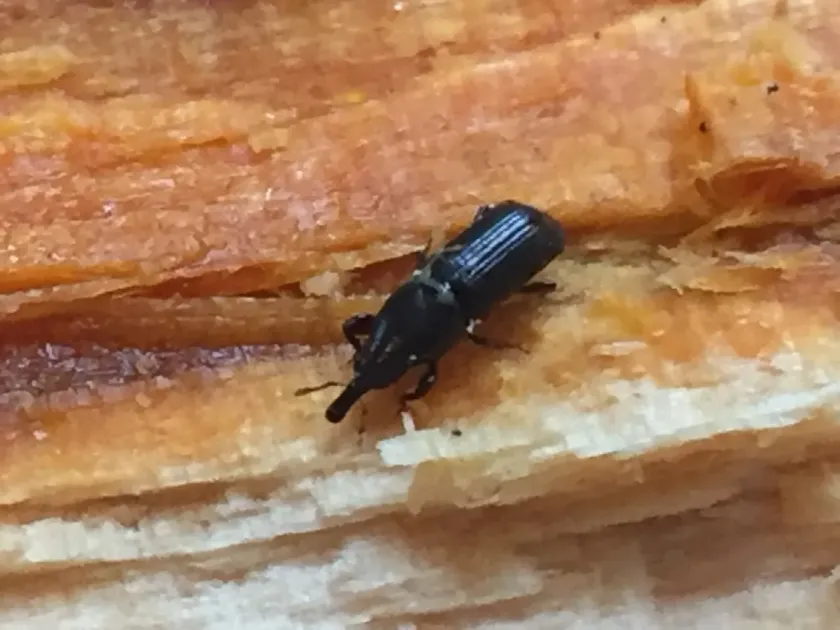
Description
How to identify
Torostoma apicale belongs to the order Coleoptera and the family Curculionidae (weevils). These insects are recognized by their distinct elongated snout, known as a rostrum, which is typical for the family.
The morphology of this species is highly specialized for a cryptic lifestyle, living primarily inside plant tissues. Their exoskeleton is robust, providing effective defense against external environmental stresses.
The life cycle is closely synchronized with the phenology of their host plants. It proceeds through egg, larval, pupal, and adult stages, with the larval stage being the most destructive to agricultural plants.
Identification often requires expert entomological examination of the thorax and elytra, as these weevils can easily be confused with related species in the field without close inspection.
Females deposit eggs directly into the plant tissue, ensuring the larvae have an immediate food source and shelter from predators as soon as they hatch.
What it damages
This pest primarily attacks vegetative and reproductive parts of agricultural crops. It tends to thrive in regions where climatic conditions match the specific requirements of its life cycle.
As the larvae feed inside stems or fruits, they disrupt the vascular system of the plant, hindering the transport of water and nutrients essential for growth and development.
The resulting damage includes premature shedding of fruit, stunted plant growth, and sometimes total loss of the crop in severely infested areas.
These internal injuries create entry points for secondary infections, such as fungal or bacterial pathogens, which further exacerbate the health decline of the affected plants.
Economic losses are significant not only due to direct yield reduction but also due to the devaluation of agricultural products, making them unsuitable for storage or processing.
Signs of infestation
Initial signs of infestation often include small puncture marks on the leaves or stems where adults have been feeding. These marks can be an early warning for farmers.
The presence of internal galleries or tunnels carved out by larvae is a key indicator of infestation. Dissecting the stem or fruit often reveals the larvae or their frass inside.
Wilting of the terminal shoots or deformed fruit development are common symptoms of internal feeding by the larvae, which can be hard to detect in the early stages.
Emergence holes, created when adults leave the plant after pupation, are a definitive sign that a generation has completed its development within the tissue.
Yellowing or chlorosis of specific plant parts indicates that the internal vascular structure has been damaged by the larval feeding process.
Control measures
Crop rotation remains the cornerstone of integrated pest management for this species, as it effectively disrupts the habitat and food source availability for subsequent generations.
Deep plowing after the harvest is an essential cultural practice that exposes hibernating stages to harsh environmental conditions, significantly reducing the population in the following season.
Chemical control usually involves the application of systemic insecticides that are absorbed by the plant, targeting larvae that are shielded within the plant tissue.
Biological control, such as the application of entomopathogenic fungi or the encouragement of natural predators, can be a sustainable alternative to conventional pesticides.
- Monitoring population density using pheromone traps.
- Proper removal and destruction of crop residues post-harvest.
- Selection of crop varieties that show resistance to weevil feeding.
Taxonomy
- Latin name
- Torostoma apicale
- Order
- Coleoptera (beetles)
- Family
- Curculionidae
- EPPO code
- TOROAP
Discussion
No discussions yet — be the first.