
Pine shoot beetle
Tomicus piniperda
Description
How to identify
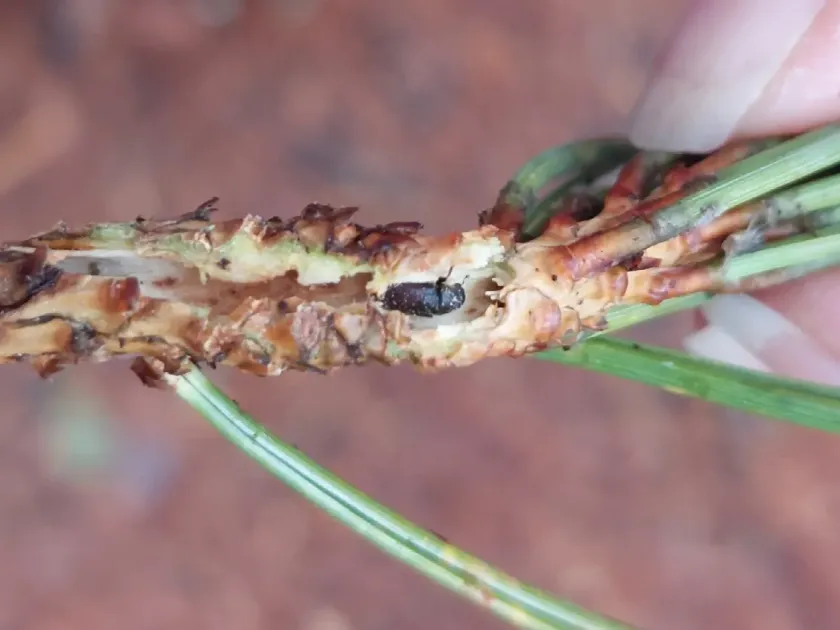
The Pine shoot beetle (Tomicus piniperda) is a significant forestry pest belonging to the Curculionidae family, specifically the Scolytinae subfamily. Adult beetles are small, cylindrical, measuring 3.5 to 5 mm in length, and exhibit a shiny black or dark-brown coloration.
Unlike many other bark beetle species, the elytra (wing covers) of this beetle are smooth at the tip without any distinct indentations or teeth. This morphological characteristic is key for precise species identification in the field.
Larvae are legless, C-shaped, and creamy-white with a distinct brownish head capsule. They develop within galleries constructed between the bark and the sapwood of the host tree.
The lifecycle is strictly synchronized with the phenology of pine trees. The species is highly adapted to coniferous ecosystems and can cause significant economic losses in both timber production and ornamental plantings.
Identification often relies on a combination of visual inspection of the bark for entrance holes and the analysis of crown damage during the summer feeding period.
What it damages
The primary host of the Pine shoot beetle is the Scots pine (Pinus sylvestris). The damage caused by this insect is categorized into two main types: trunk breeding damage and crown feeding damage.
Breeding damage occurs when adults bore into the trunks of stressed or recently fallen trees to lay eggs. Their galleries disrupt nutrient transport, leading to the rapid decline and death of the infested tree.
Feeding damage occurs when young adults emerge and migrate to the crowns of healthy pines. They bore into the pith of the current year’s shoots, causing them to wilt, wither, and eventually snap off.
These broken shoots result in stunted growth, distorted tree architecture, and a reduction in the overall health and timber value of the pine stands.
Severe infestations, particularly when combined with environmental stressors like drought, can lead to widespread tree mortality across large forest tracts.
When it appears
Adult beetles begin their spring flight early in the season, as soon as temperatures consistently reach 10–12°C. This makes them one of the earliest active bark beetle species in the spring.
The spring period is critical as the beetles search for suitable hosts for mating and egg-laying. This is the optimal window for implementing initial control and sanitation measures.
Larval development takes place throughout the summer months under the bark. New generation adults emerge from late summer to autumn and immediately move to the tree canopy for maturation feeding.
Maturation feeding continues until the onset of cold winter weather. During this phase, the beetles reside inside the galleries of the shoots they have infested.
Winter is typically spent in the leaf litter at the base of the tree or within the protective cavities of the shoots, allowing the species to survive low temperatures.
Signs of infestation
The earliest sign of an infestation is the presence of fine 'boring dust' on the trunk bark, which is the waste product ejected by beetles as they construct their mating galleries.
The most visible sign of crown damage is the carpet of fallen pine shoots on the forest floor in late summer. Examining the base of these fallen twigs will show a clean exit hole bored by the beetle.
Resin flow ('pitch tubes') on the trunk can sometimes indicate where beetles have attempted to enter, although this reaction may be weak in severely weakened or dying trees.
Chlorotic (yellowing) or reddening needles in the crown are indicators of a systemic infestation that has caused significant disruption to the vascular system of the tree.
Increased woodpecker activity on specific trees often serves as a natural indicator that a large brood of larvae is developing beneath the bark, providing a food source for the birds.
Control measures
Sanitation logging is the most vital control strategy. Removing infested trees before the new generation of beetles emerges is essential to preventing the further spread of the population.
The use of trap trees involves leaving freshly felled logs in the forest to attract breeding beetles. Once occupied, these logs must be removed or debarked to destroy the brood.
Pheromone traps are highly effective for monitoring population levels and identifying new outbreaks early. This data-driven approach allows for precise intervention before major damage occurs.
Maintaining high forest hygiene, including the prompt removal of slash and logging debris, reduces potential breeding sites for the population.
- Regular forest monitoring and professional surveys.
- Strategic use of trap trees to aggregate local beetle populations.
- Promoting forest biodiversity to support natural predator populations.
Taxonomy
- Latin name
- Tomicus piniperda
- Order
- Coleoptera (beetles)
- Family
- Curculionidae
- EPPO code
- BLASPI
Discussion
No discussions yet — be the first.