
Palm moth
Tirathaba rufivena
Description
How to identify
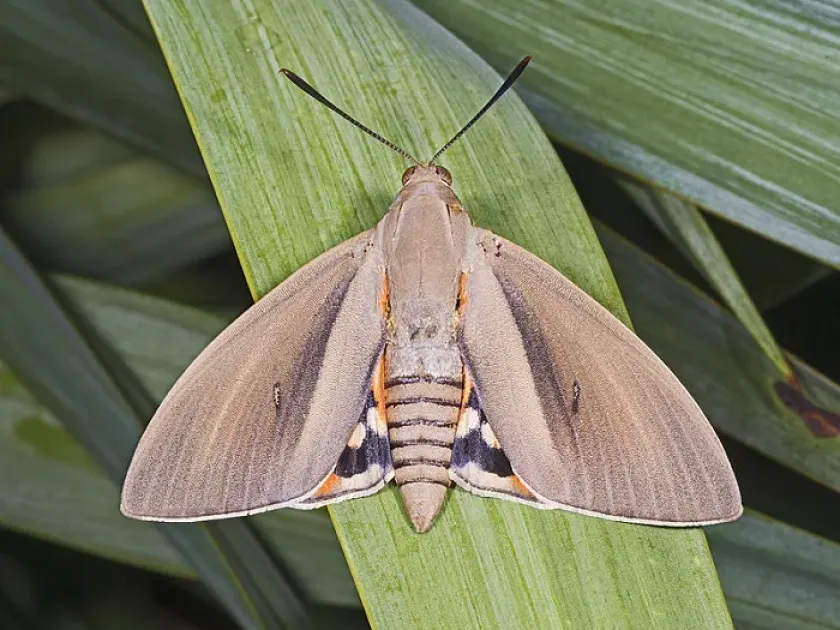
The palm moth (Tirathaba rufivena) is a member of the Pyralidae family. The adult moth has a wingspan of approximately 25–30 mm, with grayish-brown forewings featuring distinctive dark venation, which serves as a key identification marker.
Eggs are typically laid in small clusters near the host plant's inflorescences, ensuring that newly hatched larvae have immediate access to their preferred food source.
Larvae pass through several instars, with their body color evolving from cream to a reddish-brown hue. They are characterized by their habit of spinning protective silk webs.
Pupation occurs within a sturdy, silken cocoon often constructed inside damaged flowers or clusters of young fruit, providing the pupa with a secure environment during metamorphosis.
This species is highly adapted to tropical palm environments, making it a persistent threat to commercial plantations of coconut and oil palms globally.
What it damages
The larvae are primarily floral and fruit feeders. They target the inflorescences of palm trees, often consuming the buds before they can bloom and be pollinated.
In coconut palms, the larvae tunnel into the developing nuts, feeding on the soft tissues inside. This leads to the premature shedding of young fruit and significantly reduced yields.
The feeding activity creates entry points for various fungal and bacterial pathogens, leading to secondary infections that can damage the entire palm crown.
Economic damage is severe because the pest attacks the reproductive organs directly, potentially destroying the entire potential harvest of an affected tree.
Heavy infestations can lead to a drastic reduction in fruit set, affecting the profitability of palm-growing agricultural enterprises over multiple seasons.
Signs of infestation
The most visible sign of an infestation is the presence of silk webbing, which larvae use to bind together flowers and small fruits into protective nests.
Accumulation of dark, granulated frass (insect excrement) at the base of the inflorescence or on the surface of young nuts indicates active larval feeding.
Premature nut fall, characterized by visible entry holes or tunnels on the surface of the fruit, is a classic symptom of Tirathaba rufivena activity.
Wilting, browning, or necrosis of inflorescences occurring before natural fruit set is a strong indicator of internal damage caused by the larvae.
- Silk nests and webbing on palm flower spikes.
- Presence of larval excrement on fruits.
- Premature fruit dropping.
- Browning and decay of inflorescences.
Control measures
Cultural control involves regular orchard sanitation, including the removal of dead leaves and old inflorescence stalks, which reduces habitats for moth populations.
Biological control programs often introduce or conserve parasitoid wasps that specifically target the eggs and larvae of the palm moth to suppress their numbers.
Chemical applications are targeted based on monitoring data, using selective insecticides applied during peak adult flight periods to minimize impacts on non-target species.
Monitoring the population using pheromone-baited traps is critical for timing interventions and determining the necessity of chemical control measures.
Integrated Pest Management (IPM) is essential for long-term sustainability, combining natural habitat management, biological controls, and judicious chemical usage.
Taxonomy
- Latin name
- Tirathaba rufivena
- Order
- Lepidoptera (butterflies)
- Family
- Pyralidae
- EPPO code
- TIRTRF
Discussion
No discussions yet — be the first.