
Palm moth
Tirathaba mundella
Description
How to identify
The palm moth (Tirathaba mundella) is a significant pest belonging to the order Lepidoptera and the family Pyralidae. It is a specialist feeder that targets the reproductive structures of palm trees, particularly in tropical regions.
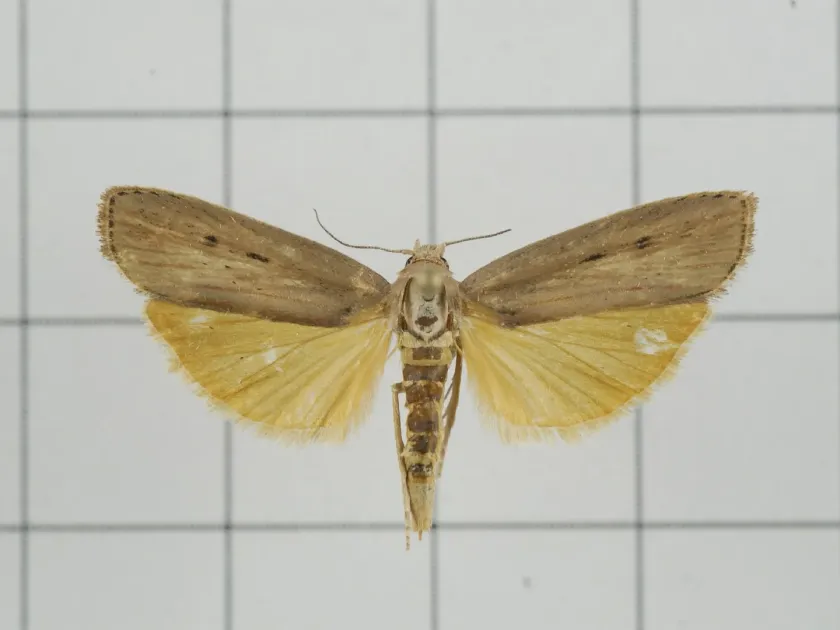
Adult moths are relatively small, with a wingspan of approximately 25 mm. Their cryptic coloration, ranging from grayish-brown to dark brown, allows them to blend seamlessly into the bark and foliage of palm trees, making them difficult to detect during daylight hours.
The larval stage is characterized by caterpillars that undergo several developmental instars. They typically possess a dark, hardened head capsule and a body that varies from pale beige to reddish-brown, often covered in sparse, fine hairs.
The life cycle of Tirathaba mundella is continuous in equatorial climates, where overlapping generations are common. This perpetual reproductive cycle makes the species particularly challenging to manage on a year-round basis.
Pupation occurs within a tough, protective cocoon woven from silk threads and plant debris. These cocoons are typically secured in protected niches within the palm's inflorescences or among the developing fruit bunches.
What it damages
Caterpillars primarily feed on the male and female inflorescences of the oil palm (Elaeis guineensis). They bore into the floral tissues, creating extensive internal galleries that disrupt the plant's reproductive development.
The destruction of female flowers is particularly damaging to commercial yields, as it leads to the abortion of young fruit. This premature fruit drop significantly reduces the weight and oil content of the harvest at maturity.
In addition to oil palms, the species can infest coconut palms and other palm relatives. This wide host range ensures that the pest can maintain high population densities even when primary crops are not at their peak susceptible stage.
Economic losses are cumulative, resulting from both the direct loss of fruit and the diminished quality of the bunches. In severe outbreaks, growers may face yield losses exceeding 30-40% per tree if effective control measures are not implemented.
Secondary damage is caused by the introduction of opportunistic pathogens. The holes bored by larvae allow fungi and bacteria to enter the fruit tissue, leading to bunch rot and rendering the remaining produce unsuitable for oil extraction.
Signs of infestation
The most prominent indicator of an infestation is the presence of dense silk webbing around the developing fruit bunches. Larvae use this webbing to anchor themselves and protect their feeding sites from environmental stress and predators.
An accumulation of granular larval frass (excrement) on the surface of the inflorescence is a clear sign of active feeding. These dark pellets often become a breeding ground for molds, further degrading the health of the bunch.
Symptoms also include the yellowing and premature withering of flower tips. Careful inspection of the bunch interior will often reveal the presence of larvae, their silk tunnels, and damaged, hollowed-out fruit surfaces.
The bunch structure becomes loose and brittle due to the larvae eating through the internal tissues. A high level of infestation is easily identified by the unkempt appearance of the tree canopy where inflorescences are located.
Monitoring the adult population is best achieved through the use of light traps, which attract the moths at night. Regular field scouting for egg-laying and early-instar larval activity is crucial for timing interventions appropriately.
Control measures
Sanitary management is the first line of defense; removing and destroying heavily infested bunches significantly lowers the pest load within the plantation. This manual approach is highly effective for localized outbreaks.
Biological control, particularly the application of Bacillus thuringiensis-based bio-insecticides, is a highly effective and environmentally responsible method for targeting young larvae before they bore deep into the plant tissue.
Pheromone traps serve as a critical tool for monitoring population surges and male mating disruption. By targeting the reproductive phase of the adult moths, growers can prevent new egg-laying cycles without broad-spectrum chemical use.
In cases where infestations exceed the economic threshold, targeted chemical control is necessary. It is essential to rotate insecticides with different modes of action to prevent the development of pesticide resistance in the moth population.
Integrated Pest Management (IPM) strategies emphasize the protection of natural enemies, such as parasitic wasps and predatory ants. These beneficial insects provide a foundation for natural suppression, keeping the palm moth populations within manageable levels.
Taxonomy
- Latin name
- Tirathaba mundella
- Order
- Lepidoptera (butterflies)
- Family
- Pyralidae
- EPPO code
- TIRTMU
Discussion
No discussions yet — be the first.