
Great tinamou
Tinamus major
Description
How to identify
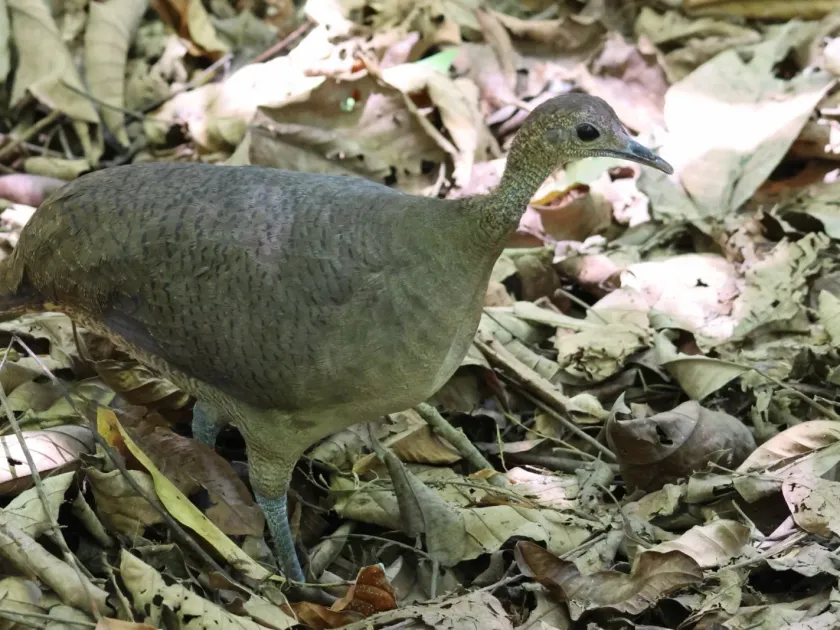
The Great tinamou (Tinamus major) is a ground-dwelling bird belonging to the Tinamidae family. Physically, it resembles a partridge, featuring a compact build, a short tail, and grey-brown plumage that provides excellent camouflage within the tropical forest floor litter.
Adult individuals weigh approximately one kilogram. They lead a secretive life, preferring to travel on foot rather than fly. Their anatomical structure is perfectly adapted for rapid running, allowing the birds to make swift raids on agricultural lands adjacent to forest areas.
Sexual maturity and the reproductive cycle are closely linked to tropical seasonality. Females lay eggs in ground nests, which are then tended by the male. Population numbers remain stable in natural habitats; however, when forests are cleared for cultivation, these birds actively use anthropogenic landscapes as a food source.
The diet of this species is predominantly herbivorous. These birds consume seeds, fallen fruits, and young shoots of herbaceous plants. When close to plantations, they switch to cultivated crops, perceiving them as easy and accessible prey.
The presence of this pest can be identified by characteristic three-toed tracks on moist soil and specific loud whistling sounds made by males during morning and evening hours. Monitoring field edges helps detect the species' activity at the beginning of crop ripening.
What it damages
The main damage is caused to young maize, rice, and grain seedlings in Central and South American regions. The birds peck seeds directly from the soil immediately after sowing, which leads to sparse stands and the necessity for reseeding.
During the vegetative stage, the Great tinamou damages the above-ground parts of plants by pecking at tender leaves and stems of young seedlings. This slows plant growth and reduces the potential yield of plantations.
The highest level of damage is observed during the fruit ripening and ear-forming stages. Birds are capable of causing serious damage to grain crops by eating maturing seeds, which leads to direct crop losses and decreased product quality.
Tinamou may also cause damage to vegetable crops by digging up or harming root vegetables and tubers located near the soil surface. Their powerful beaks allow them to easily handle the hard outer layers of many cultivated plant species.
The severity of the damage increases in years when wild fruit yields are low in forest areas. During such periods, the pressure of these birds on agricultural fields intensifies significantly, requiring immediate measures for field protection.
Control measures
An effective method of protection is installing wire mesh fencing around the perimeter of fields bordering forest areas. This prevents birds from entering the crop area, especially during the early stages of plant development.
The use of acoustic deterrents that mimic predator sounds shows good results in reducing bird visits to fields. It is recommended to change the frequency and type of signals to prevent the pests from habituating to the deterrents.
Agronomic methods include early planting dates, which allow the crop to reach a stage where it becomes less attractive to the birds. Clearing areas adjacent to the field of dense brush, where birds find shelter, is also effective.
Biological protection methods include creating conditions for natural predators, such as birds of prey and small wild felines. Maintaining biodiversity around fields helps keep tinamou numbers at a naturally controlled level.
The use of reflective tape and other visual deterrents is effective for smaller plots. Combining various protection methods allows for minimizing yield losses and limiting the damage caused by this bird species.
Taxonomy
- Latin name
- Tinamus major
- Family
- Tinamidae
- EPPO code
- TINAMA
Discussion
No discussions yet — be the first.