
Chrysanthemum thrips
Thrips nigropilosus
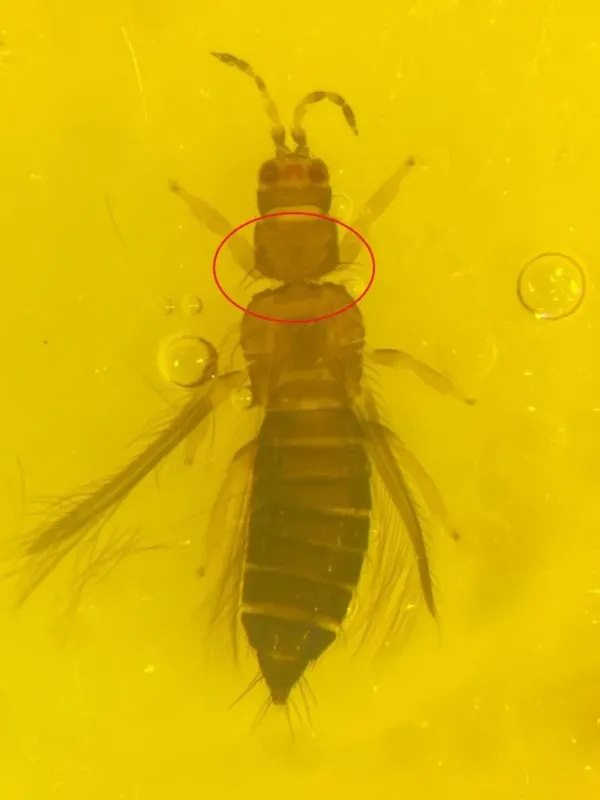
Description
How to identify
The chrysanthemum thrips (Thrips nigropilosus) is a member of the order Thysanoptera and the family Thripidae. These tiny insects are characterized by a slender body measuring approximately 1 to 1.5 mm in length, typically displaying yellow to brownish coloration.
The larvae resemble the adults in shape but lack wings and are generally lighter in color. They are highly active and tend to congregate on the undersides of leaves, within leaf axils, and inside flower buds, which makes them difficult to spot during the early stages of an infestation.
The life cycle encompasses several stages: egg, two larval instars, prepupa, pupa, and adult. In favorable conditions, such as warm and humid greenhouse environments, a single generation can develop in as little as two to three weeks.
Reproduction is frequently parthenogenetic, meaning females can produce offspring without mating. This reproductive strategy allows populations to explode in size rapidly, posing a severe threat to commercial floriculture.
Identification often requires careful inspection with a magnifying lens, focusing on the plant's apical meristems and the undersides of young foliage where feeding activity is most concentrated.
What it damages
Although it is a polyphagous pest, the chrysanthemum thrips is particularly notorious for the damage it inflicts on members of the Asteraceae family, especially chrysanthemums, as well as various vegetable crops like cucumbers. They feed by piercing plant tissues and extracting sap.
As the thrips remove cell contents, the affected areas lose chlorophyll, resulting in characteristic silver or white stippling. These spots often coalesce, causing severe foliage necrosis and hindering the plant's ability to photosynthesize effectively.
Flower buds are particularly susceptible; if infested, they may fail to open, bloom asymmetrically, or wither completely. This loss of aesthetic value causes significant economic hardship for growers of ornamental crops.
Thrips are also efficient vectors for various plant viruses, which cause symptoms such as mottling, chlorosis, and stunted growth. The transmission of these pathogens can be more devastating than the direct feeding damage itself.
Severe infestations can lead to total crop failure if left unchecked, as the silvering and distortion of leaves and flowers render the plants unsaleable in competitive markets.
When it appears
In outdoor settings, the chrysanthemum thrips is most active during the summer months, when warm and dry conditions facilitate rapid reproduction and spread. The pest thrives in these environments, migrating between different host plants.
In protected cultivation like greenhouses, the pest can remain active year-round. Because the climate is artificially maintained, there is no dormant winter period, requiring constant vigilance and sustained management programs.
During the off-season, thrips can survive in plant debris, topsoil, or on nearby weeds. As temperatures rise, they emerge and quickly move to infest new crops, making greenhouse sanitation a critical component of pest control.
Early detection of migration into the greenhouse is essential. Monitoring the perimeter and using sticky traps allows growers to respond before the pest population establishes itself within the crop.
Continuous monitoring using blue or yellow sticky cards is the industry standard for tracking population dynamics and determining the timing for management interventions throughout the season.
Signs of infestation
The most prominent sign of infestation is the appearance of silvery or metallic patches on the leaves. This is caused by air filling the empty cells that have been emptied of their sap by the feeding thrips.
Tiny black spots on the underside of the leaf, which are the excrement of the thrips, serve as a very reliable indicator of their presence, even if the adult insects themselves are hiding.
Distorted, twisted, or stunted growth in new shoots is another indicator. As the plant attempts to grow, the damage to the tender tissues causes structural abnormalities that are easy to spot upon close inspection.
- Silvering or stippling on the leaves.
- Small black excrement spots on leaf undersides.
- Deformed, unopened, or asymmetrical flower buds.
Shaking the flower heads over a piece of white paper will often dislodge the active insects, providing a simple yet effective way to confirm an infestation when visual symptoms are just beginning to appear.
Control measures
Effective management requires a rotating chemical strategy. Because thrips develop resistance to pesticides quickly, it is vital to alternate between different chemical classes to ensure long-term control.
Cultural practices are paramount, including rigorous greenhouse sanitation, removal of weeds that serve as alternate hosts, and the proper disposal of plant debris where pupae may hide.
Biological control, utilizing natural enemies like predatory mites (e.g., Amblyseius species) or pirate bugs (Orius species), is highly effective in greenhouses and is a cornerstone of modern Integrated Pest Management (IPM).
Systemic insecticides can be used to target populations that are protected within leaf folds or deep inside buds, where contact sprays might fail to reach. Applications should be timed carefully before the flowering stage.
Sticky traps not only monitor population numbers but also serve as a mechanical method to reduce the number of adult thrips, thereby lowering the overall pressure of the infestation.
Taxonomy
- Latin name
- Thrips nigropilosus
- Order
- Thrips
- Family
- Thripidae
- EPPO code
- THRINI
Discussion
No discussions yet — be the first.