
Linden thrips
Thrips calcaratus
Description
How to identify
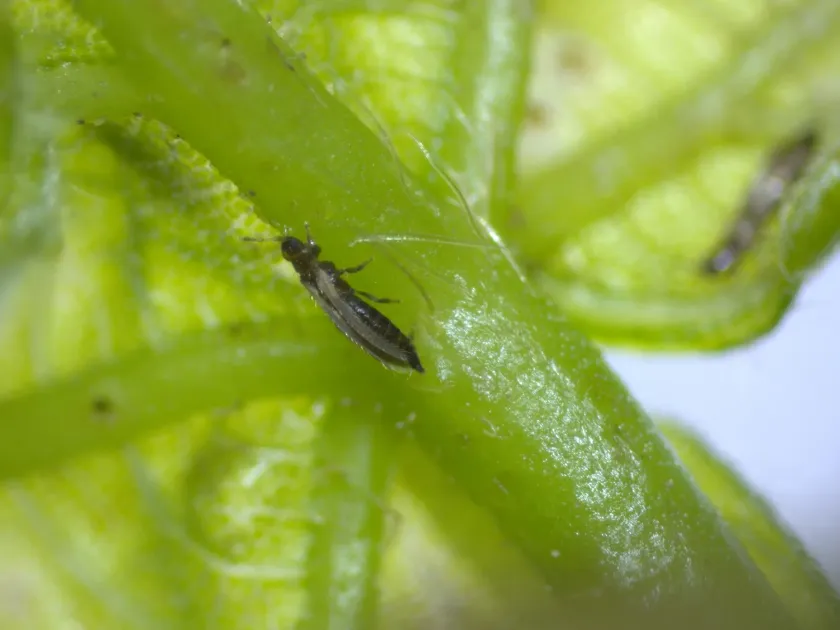
The linden thrips (Thrips calcaratus) is a small insect belonging to the order Thysanoptera and the family Thripidae. Adult insects have an elongated body, measuring approximately 1.5–2 mm, and exhibit a dark brown to yellowish-brown coloration.
These insects possess two pairs of narrow wings with characteristic fringes that facilitate active flight within the tree canopy. Larvae are typically lighter in color and translucent, gradually turning yellowish as they mature, but they remain wingless throughout their developmental stages.
Systematically, this species is well-adapted to the canopy of broadleaf trees, finding shelter and nutrition among the leaves. Identification is challenging due to the insect's cryptic nature and microscopic size, often necessitating the use of a magnifying glass for proper field inspection.
The life cycle encompasses stages of egg, larva, propupa, pupa, and adult. Throughout the growing season, the species can produce multiple generations, which significantly increases the rate of infestation under favorable climatic conditions.
Dry and hot weather conditions create optimal environments for population outbreaks. Conversely, high air humidity and frequent rainfall have a detrimental effect on the Thrips calcaratus population density, limiting their overall activity and reproduction.
What it damages
The primary host plant for this pest is the linden tree (Tilia). The insect completes its entire life cycle on this genus, showing a distinct preference for young, tender foliage.
While primarily associated with linden trees, in instances of high population density, these thrips may temporarily inhabit other deciduous species or shrubs in close proximity. However, their specialized feeding habits remain focused on Tilia species.
The pest leads a primarily sedentary, hidden lifestyle on the underside of leaves, piercing plant tissues to extract cellular sap. This feeding behavior disrupts metabolic processes within the leaf cells, leading to a general weakening of the host tree.
In urban environments, the linden thrips can cause significant aesthetic and physiological damage to park plantings, avenues, and protective forest belts. Affected trees become more susceptible to secondary diseases and environmental stressors.
Severe infestations lead to a loss of ornamental value, which is critical for urban landscaping and city greening. Prolonged stress on the tree canopy can result in premature leaf drop and a degradation of the tree's health status.
Signs of infestation
The initial stage of infestation is marked by the appearance of small, light-colored spots or streaks on the underside of the leaf. As the epidermis is pierced, necrotic zones form, which eventually coalesce into larger discolored patches.
With heavy infestation, leaves become deformed, curl, and begin to turn yellow prematurely. The leaf surface often develops a silver or greyish sheen, which is a classic diagnostic marker of damage caused by piercing-sucking insects.
Small black dots, representing the excrement of the thrips, are frequently visible on the damaged plant organs. This serves as a vital diagnostic feature distinguishing thrips infestation from common fungal diseases.
Stunted shoot growth and atypical leaf fall during mid-summer are reliable signs of high population density within the canopy. The observed exhaustion of the tree increases its susceptibility to subsequent secondary infections.
- Appearance of silver-colored spots on leaves.
- Deformation and curling of leaf edges.
- Presence of tiny black dots (fecal matter).
- Premature leaf drop in late summer.
Control measures
Management strategies include cultural practices aimed at maintaining tree vigor. Providing timely irrigation and adequate fertilization is essential to boost the natural resistance of the host trees against pest pressure.
For monitoring population levels in parks, sticky traps (blue or yellow) are highly effective tools. They allow arborists to determine the onset of activity and schedule protective measures accordingly.
In cases of severe infestation, the use of systemic insecticides remains the most effective control method. Applications should ideally target periods when larvae are actively feeding, as they are most vulnerable to chemical treatments at this stage.
It is crucial to rotate insecticides belonging to different chemical classes to prevent the development of resistance within the thrips population. Biological agents, such as entomopathogenic fungi, can also prove effective if the infestation is detected early.
Sanitation practices, such as the removal and destruction of fallen leaves, help reduce the reservoir of overwintering stages. Healthy, well-maintained trees exhibit significantly higher tolerance to thrips compared to stressed or weakened specimens.
Taxonomy
- Latin name
- Thrips calcaratus
- Order
- Thrips
- Family
- Thripidae
- EPPO code
- THRICA
Discussion
No discussions yet — be the first.