
Thelazia lacrymalis
Thelazia lacrymalis
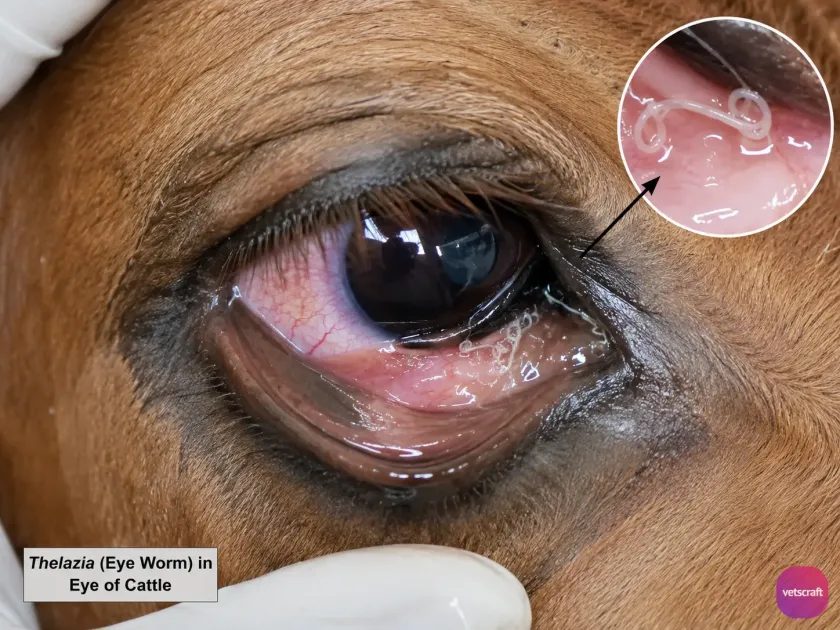
Description
How to identify
Thelazia lacrymalis is a species of parasitic nematode belonging to the family Thelaziidae, within the order Spirurida. These worms are highly adapted parasites that infest the eyes of equids, including horses, donkeys, and mules.
Adult worms appear as thin, thread-like organisms, white or translucent in color, typically measuring between 8 to 16 millimeters in length. They are specifically located within the conjunctival sac and the lacrimal ducts.
The life cycle of this parasite is dependent on an intermediate host, specifically non-biting flies of the genus Musca. These flies ingest the parasite's larvae while feeding on the lacrimal secretions of an infected animal.
Inside the intermediate host, the larvae undergo development into the infective stage, a process influenced by ambient temperatures, usually requiring several weeks to complete.
Transmission occurs when the infected fly visits another animal to feed on eye secretions, depositing the infective larvae into the conjunctival sac, where they grow into mature adults.
What it damages
The primary hosts for Thelazia lacrymalis are horses. In regions with poor animal hygiene and high fly populations, the prevalence of this parasite can be quite significant, impacting equine health.
The parasites cause direct mechanical damage to the conjunctiva and cornea. Their movement and the presence of their excretory products lead to irritation and inflammation of the delicate eye tissues.
Continued infestation often progresses to chronic conditions such as conjunctivitis, keratitis, and blepharitis, which cause significant pain and distress to the animal.
In addition to direct damage, the parasites may facilitate the introduction of secondary bacterial infections, complicating the clinical picture and requiring intensive treatment.
The economic impact on equine enterprises includes reduced animal performance, veterinary costs for treatment, and the potential need for long-term management of chronic ophthalmic conditions.
When it appears
The seasonal occurrence of thelaziosis is strictly tied to the activity of the Musca flies, which serve as vectors for the transmission of the nematode larvae.
The peak risk period coincides with the summer months, starting from late spring when temperatures are high enough to support both fly breeding and rapid larval development.
In regions with longer, warmer seasons, the transmission window is significantly broader, increasing the risk of widespread infestation within herds that are not protected.
Winter conditions generally lead to a decrease in fly activity, though adult worms can persist in the eyes of the host for extended periods, remaining active until environmental conditions improve.
Proactive management strategies must be implemented early in the season, focusing on both the host and the environment to interrupt the parasite's transmission cycle.
Signs of infestation
The clinical signs of thelaziosis are easily recognizable by increased lacrimation (tearing), which is the most prominent symptom of ocular irritation.
Animals frequently show signs of discomfort, such as blinking, squinting, or rubbing their eyes against objects in an attempt to alleviate the persistent irritation.
- Excessive tear production and matting of hair around the eyes.
- Reddening of the conjunctiva (conjunctivitis).
- Development of corneal opacity or ulceration in severe cases.
- Visible presence of thread-like worms moving on the eyeball surface.
Secondary signs often include mucopurulent discharge and a cloudy or hazy appearance of the eye, which may develop if the condition is left untreated for a long period.
Control measures
Effective control of Thelazia lacrymalis requires a multimodal approach combining targeted medical therapy with environmental management practices.
Veterinary treatment involves the administration of anthelmintic drugs known to be effective against spirurid nematodes, often applied locally as ophthalmic drops or ointments.
Environmental sanitation is critical for breaking the life cycle; this includes regular manure removal and stable cleaning to reduce the breeding sites for Musca flies.
The use of fly repellents, specifically formulated for the periorbital area, is a recommended practice during the summer months to minimize the attraction of flies to the horse's eyes.
Routine veterinary inspections and early detection are essential to prevent the spread of the parasite within a herd and to ensure the rapid recovery of affected animals.
Taxonomy
- Latin name
- Thelazia lacrymalis
- Order
- Nematodes
- Family
- Thelaziidae
- EPPO code
- THEZLA
Discussion
No discussions yet — be the first.