
Thaumatotibia
Thaumatotibia
Description
How to identify
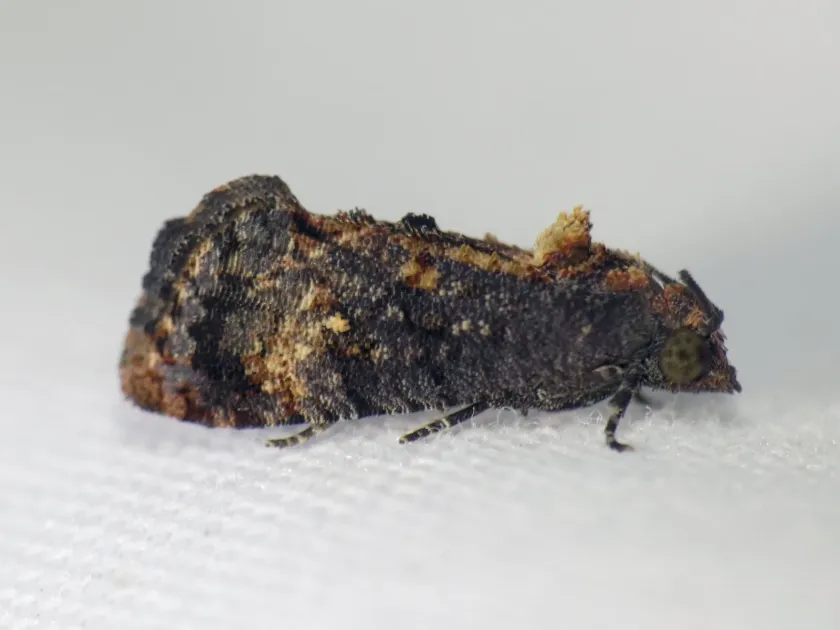
Thaumatotibia, most notably the species Thaumatotibia leucotreta (commonly known as the false codling moth), belongs to the Tortricidae family. Adult moths are relatively small, with a wingspan of approximately 15-20 mm, exhibiting a mottled grey-brown coloration that provides excellent camouflage against tree bark.
The larval stage is the primary destructive form of this pest. As the larvae grow, their coloration shifts from a pale cream or white in the early stages to a distinctive reddish or deep orange color in the later instars. The head capsule remains dark, which serves as a key identifying characteristic.
Eggs are extremely small, oval, and flattened, typically laid singly on the surface of host fruits. Because of their tiny size and color blending with the fruit skin, they are notoriously difficult to spot during routine field scouting.
Pupation occurs within a tough, silken cocoon, either in the soil or inside decaying fruit. The pupae have the capacity to move actively before the adult emergence, a trait that aids their transition from protected environments to the surface.
The species is highly adaptable, exhibiting biological resilience across various climates. This makes it a significant threat to global agriculture, necessitating constant vigilance and effective monitoring programs.
What it damages
Thaumatotibia is a severe polyphagous pest, capable of attacking over 70 different plant species. Economically important crops such as citrus, peaches, nectarines, pomegranates, corn, and cotton are particularly susceptible to infestations.
Damage is exclusively caused by the larvae, which bore into the fruit shortly after hatching. Upon entry, they feed on the pulp and seeds, creating internal galleries that lead to the rapid degradation of the fruit.
Infested fruit often undergoes premature ripening and abscission, falling to the ground well before harvest. This behavior leads to substantial yield losses in orchards if not managed correctly throughout the growing season.
Once the fruit is breached, it becomes highly susceptible to secondary infections, including various bacterial and fungal pathogens. This secondary rot renders the produce completely unmarketable and unsuitable for storage or export.
In many regions, Thaumatotibia is classified as a quarantine pest. Its presence can lead to severe trade restrictions and financial loss for growers, as importing countries maintain strict biosecurity protocols regarding this moth.
When it appears
The developmental rate of Thaumatotibia is heavily influenced by ambient temperatures. In tropical and subtropical regions, the pest can breed continuously throughout the year, completing numerous overlapping generations.
In temperate zones, the life cycle slows down, and the pest may enter a diapause state as a larva to survive cooler periods. Activity resumes as temperatures increase, with moth flights coinciding with the availability of suitable host fruit.
Adult moths are nocturnal, with most activity, including mating and egg-laying, occurring during dusk and throughout the night. The timing of these flights is critical for farmers to plan their monitoring and control actions.
Generation turnover is rapid during the warm summer months, meaning populations can explode quickly. Most severe damage is typically observed as the fruit reaches maturity, as these fruits are preferred sites for oviposition.
Understanding the link between climatic patterns and the insect’s life cycle is essential. By tracking "degree days," agronomists can predict the timing of larval emergence and apply treatments at the most vulnerable stages.
Signs of infestation
The initial sign of infestation is often a small, circular entry hole on the fruit skin, sometimes accompanied by a small amount of frass (larval excrement) or sap secretion at the site of penetration.
Premature color change or softening of the fruit is another indicator. When such fruit is dissected, researchers or farmers will find internal tunneling and evidence of larval feeding on the pulp and seed cavities.
- Presence of fine silk webbing around the entry hole.
- Decay spots forming around the larval entry point.
- Early fruit drop with visible larval exit holes.
- Presence of larvae or pupal cases within the debris of fallen fruit.
Pheromone-baited traps are the standard for field detection. Monitoring these traps allows growers to detect the arrival of the pest early, providing a window of opportunity to intervene before the larvae bore deep into the fruit.
Regular visual inspections of fruit, especially near harvest time, are vital. Removing fruit that shows early signs of damage can help reduce the local population and prevent the spread of the moth to neighboring trees.
Control measures
Controlling Thaumatotibia requires an Integrated Pest Management (IPM) strategy that combines physical, cultural, and chemical controls to suppress population numbers below economic injury levels.
Cultural practices are paramount, specifically strict orchard sanitation. The frequent collection and destruction of all dropped fruit are essential, as these are the primary sites where larvae complete their development and pupate.
Mating disruption using pheromone dispensers is a highly effective, non-toxic strategy. By flooding the orchard with synthetic pheromones, males are unable to locate females, effectively crashing the population growth in subsequent generations.
Chemical control must be timed precisely to coincide with the period when larvae are active on the fruit surface before they bore inside. Rotation of insecticide classes is necessary to prevent the development of pesticide resistance.
Biological control methods, including the release of egg parasitoids like Trichogramma wasps, offer a sustainable alternative. These natural enemies attack the pest at the egg stage, providing significant suppression without chemical residues.
Taxonomy
- Latin name
- Thaumatotibia
- Order
- Lepidoptera (butterflies)
- Family
- Tortricidae
- EPPO code
- THATSP
Discussion
No discussions yet — be the first.