
Bronze bug
Thaumastocoris peregrinus
Description
How to identify
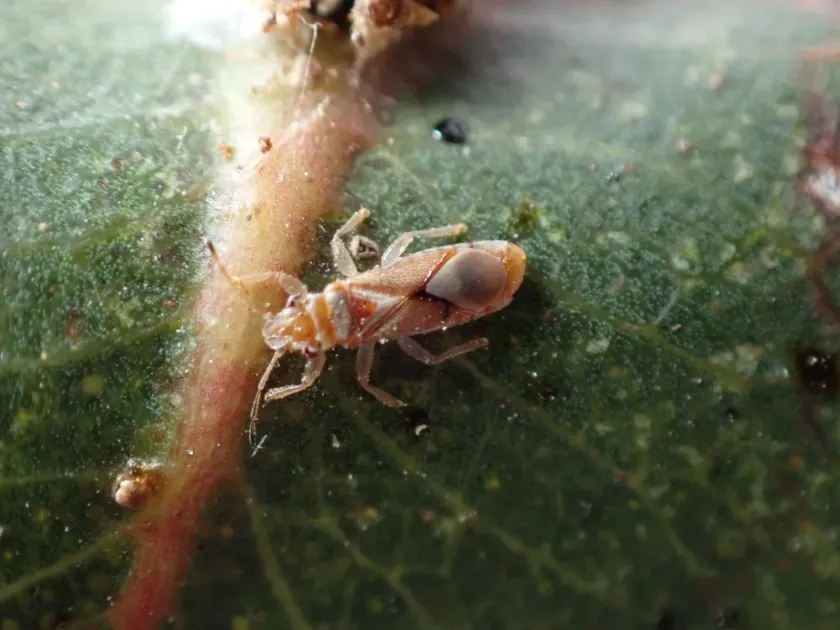
The Bronze bug (Thaumastocoris peregrinus) is a small insect in the order Hemiptera, belonging to the family Thaumastocoridae.
Adult bugs are approximately 3 mm long with a flattened, bronze-brown body that allows them to blend into the bark and foliage of host trees.
They possess distinctive hemelytra (forewings) that have a lace-like appearance, which is a common characteristic of the family Thaumastocoridae.
The nymphs go through five developmental stages, progressively increasing in size and developing wing pads before reaching maturity as winged adults.
The species features a piercing-sucking mouthpart, which is highly efficient at penetrating the epidermis of eucalyptus leaves to extract plant sap.
What it damages
This pest primarily attacks trees of the genus Eucalyptus, posing a significant threat to plantations, urban forests, and native woodlands.
By feeding on the sap, the insects disrupt the plant's ability to perform photosynthesis, leading to significant stress and overall tree decline.
Young seedlings in nurseries are particularly vulnerable to heavy infestations, which can lead to severe stunting or the death of the plants.
In mature stands, chronic infestation results in reduced wood production, loss of foliage, and increased susceptibility to secondary pests and diseases.
The insect's ability to rapidly multiply on specific eucalyptus species makes it a major concern for commercial forestry industries worldwide.
When it appears
The life cycle and population dynamics of Thaumastocoris peregrinus are heavily influenced by temperature, with development accelerating in warmer conditions.
Females deposit eggs on the leaves, often in clusters, which are glued to the surface to ensure stability and protection until the nymphs emerge.
In temperate and tropical regions, the insect can complete multiple generations within a single year, leading to overlapping life stages throughout the season.
Peak activity is typically observed during warmer months, although in areas with mild winters, the population can remain active throughout the entire year.
Extreme weather events can temporarily reduce populations, but the species shows a high capacity for recovery due to its rapid reproductive rate.
Signs of infestation
A classic sign of a Bronze bug infestation is the silvering or bronzing of leaves, which occurs due to the extraction of chlorophyll during feeding.
Infested trees often display significant leaf yellowing, followed by premature defoliation, which gives the crown a thin and sparse appearance.
The presence of black spots (excreta) on the undersides of leaves is a diagnostic feature often accompanied by the accumulation of shed nymphal skins.
Heavily infested branches may show signs of dieback, and the overall growth of the tree is significantly stunted compared to healthy specimens.
In high densities, the insects can produce a visible impact on the landscape, with entire stands of trees turning brown or grey during the height of the season.
Control measures
Chemical control involving systemic insecticides can be effective for individual trees or nurseries, though large-scale application is limited by environmental factors.
Biological control, particularly the introduction of the egg parasitoid Cleruchoides noackae, has shown great promise in suppressing population growth.
Integrated Pest Management (IPM) strategies emphasize the importance of early detection through sticky traps and visual inspections of foliage.
Selecting and breeding eucalyptus genotypes that exhibit natural resistance or tolerance to the bronze bug is a key long-term solution for the forestry industry.
Proper silvicultural practices, including thinning and maintaining tree health, help reduce the severity of impacts caused by this invasive insect pest.
Taxonomy
- Latin name
- Thaumastocoris peregrinus
- Order
- Hemiptera (bugs, aphids, leafhoppers)
- Family
- Thaumastocoridae
- EPPO code
- THMCPE
Discussion
No discussions yet — be the first.