
Bronze bug
Thaumastocoris
Description
How to identify
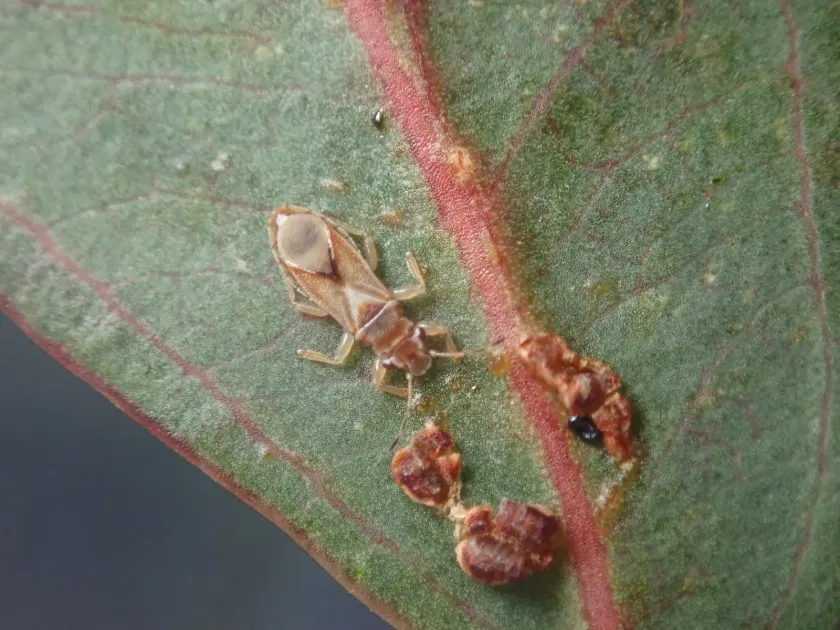
The bronze bug (Thaumastocoris peregrinus) is a tiny hemipteran insect belonging to the family Thaumastocoridae. Measuring approximately 3 mm in length, these bugs are known for their brownish coloration and delicate, lace-like wing structure.
Equipped with piercing-sucking mouthparts, they are specifically adapted to feeding on eucalyptus foliage. Their flattened body shape allows them to hide effectively within the crevices of tree bark or the dense canopy, making early detection challenging.
The life cycle of this pest is rapid, particularly under warm and dry conditions. Females deposit eggs in clusters on the leaf surfaces, which eventually hatch into nymphs that undergo five developmental stages before reaching adulthood.
Both nymphs and adults actively feed on the same host plants. Their high reproductive rate and short generation time can lead to massive population outbreaks in a very short period if environmental conditions are favorable.
The insect is highly resilient, capable of surviving in various climates, and has successfully invaded many parts of the world, posing a constant threat to commercial eucalyptus plantations.
What it damages
The primary hosts of the bronze bug are various species of the Eucalyptus genus. Damage is observed in both nursery-grown saplings and established forest plantations, leading to severe physiological stress in trees.
By extracting sap from the leaves, the bugs disrupt the photosynthetic process. The salivary enzymes they inject during feeding cause chlorophyll degradation, which is why the leaves change color and eventually wither.
Trees growing in stressed environments, such as those suffering from drought, are particularly susceptible. The loss of foliage reduces the tree's overall vigor and can lead to stunted growth or even total mortality in extreme cases.
The cumulative damage often results in significant economic losses in the forestry sector due to reduced timber yield and increased maintenance costs required for pest suppression.
Secondary infections are a major concern, as the wounds caused by the bronze bug provide entry points for opportunistic fungal pathogens, further complicating the recovery of affected trees.
Signs of infestation
The most prominent sign of infestation is the discoloration of the canopy, which takes on a characteristic bronze or silvery hue. As the damage progresses, the leaves turn yellow, then brown, and eventually drop off.
On the undersides of the leaves, small black spots of excrement are typically visible. These deposits, along with the shed skins of nymphs, are reliable indicators of an established bug colony.
A sticky honeydew secretion left on the leaves often leads to the growth of sooty mold, appearing as a black, powdery coating. This reduces the surface area available for photosynthesis and further weakens the tree.
Premature leaf drop is a common symptom during the peak of an outbreak. A thin, sparse canopy, even during the active growing season, suggests that the tree is being drained of its vital resources by a large population of bugs.
Physical inspection of the branches during sunny hours usually reveals the bugs moving rapidly. They are often active on the surface of the leaves, showing little fear of movement near them.
Control measures
Biological control represents the most sustainable solution. The introduction of specific egg parasitoids, such as Cleruchoides noackae, has shown great promise in suppressing bronze bug populations in multiple countries.
Chemical control is generally reserved for nurseries or high-value urban trees. Systemic insecticides applied to the roots or trunks can provide lasting protection by making the tree sap toxic to the feeding bugs.
Good silvicultural practices are essential for integrated pest management. Ensuring proper tree spacing and maintaining optimal soil health helps improve the trees' natural resistance to infestations.
- Monitor canopy health using sticky traps.
- Introduce native or imported natural enemies.
- Use systemic insecticides for localized high-pressure outbreaks.
- Enforce strict quarantine measures for plant movement.
Regular surveillance is the key to preventing large-scale outbreaks. Early detection allows for targeted interventions, minimizing the need for broad-spectrum chemical applications and preserving ecological balance.
Taxonomy
- Latin name
- Thaumastocoris
- Order
- Hemiptera (bugs, aphids, leafhoppers)
- Family
- Thaumastocoridae
- EPPO code
- THMCSP
Discussion
No discussions yet — be the first.