
Tetramesa hyalipennis
Tetramesa hyalipennis
Description
How to identify
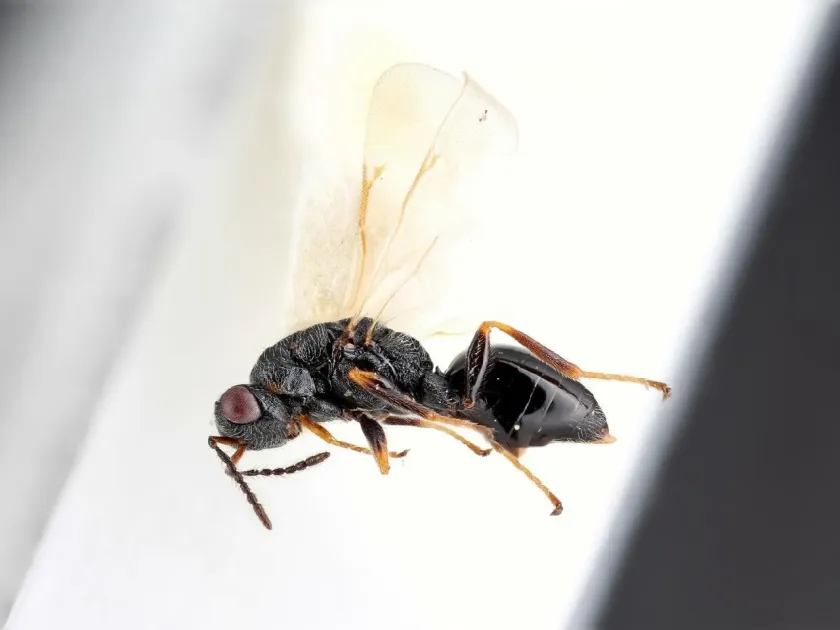
Tetramesa hyalipennis belongs to the order Hymenoptera and the family Eurytomidae. These are small insects, often resembling tiny ants or wasps, characterized by their clear, transparent wings.
Adult specimens typically reach a length of 3–5 mm. Their bodies are dark, often black with a metallic sheen. Females possess a well-developed ovipositor, which allows them to deposit eggs inside the stems of host plants.
The larvae are legless, white or yellowish in color, and slightly curved. They develop exclusively within the plant tissues, making them highly protected from external environmental factors.
The insect's life cycle is closely linked to the phenology of wild grasses and cultivated cereals. Generally, there is one generation of this pest per year.
The larvae hibernate in a state of diapause directly inside the infested stubble or stems, where they undergo their primary growth and pupation period in the spring.
What it damages
The primary crops damaged by Tetramesa hyalipennis include various species of cereals, such as wheat, rye, and barley. While the pest prefers wild grasses, it frequently migrates to cultivated fields.
Larvae feed on the succulent tissues of the stem, hollowing out internal cavities. This disrupts the normal sap flow within the plant during the critical ear-formation stage.
Heavy infestation leads to underdeveloped ears, which often become shriveled, while the grain inside fails to achieve proper mass and quality standards.
Plants infested with this pest are prone to lodging, as the internal destruction of the stem significantly reduces its mechanical strength and resistance to wind pressure.
The economic loss is realized through reduced grain yields and degraded seed quality, making the monitoring of this pest essential for effective agronomic management.
When it appears
Adult emergence typically occurs in the spring when temperatures become consistently favorable for insect activity. This period often coincides with the tillering or stem-extension phase of cereal growth.
Females actively search for suitable stems to lay their eggs, piercing the stem walls with their ovipositors. The reproductive process lasts for approximately two to three weeks, depending on regional climatic conditions.
The peak of larval damage occurs in early summer, coinciding with the rapid growth of the stem and the development of the plant's reproductive organs.
By mid-summer, the larvae finish feeding and enter a state of rest, preparing for hibernation within the stubble that remains in the fields after harvest.
The autumn period is characterized by the completion of larval development, with the insect remaining in a dormant state within plant debris until the following spring.
Signs of infestation
One of the primary indicators of infestation is the yellowing and premature drying of upper leaves, even if the stem appears visually healthy at first glance.
Field inspections may reveal characteristic exit holes in the stems, created by adults after pupation. These holes typically appear as tiny, precise pinpricks.
If a stem is broken during the wax-ripening stage of the grain, an internal cavity may be found, filled with larval frass and debris from the insect's feeding.
General stunted growth and poor ear development compared to surrounding healthy plants serve as secondary signs that the stem may be infested by the pest.
In fields heavily affected by the pest, localized lodging is often observed, appearing as patchy, wavy areas in the crop that cannot be attributed to weather events.
Control measures
The primary control method is deep plowing of stubble, which buries plant debris containing hibernating larvae deep underground, effectively preventing adult emergence.
Maintaining a strict crop rotation schedule is an important preventive measure. It is strongly advised not to plant cereals following host crops that are highly susceptible to this pest.
Eliminating volunteer cereals and managing weed grasses around the field edges significantly reduces the local population of the pest.
The use of resistant cereal cultivars, particularly those with thicker or denser stem walls, can make it more difficult for females to deposit their eggs.
Chemical insecticide application is effective only during the mass emergence phase of adults, specifically before they have the opportunity to lay eggs inside the stems.
Taxonomy
- Latin name
- Tetramesa hyalipennis
- Order
- Hymenoptera
- Family
- Eurytomidae
- EPPO code
- HAROHY
Discussion
No discussions yet — be the first.