
Tethya
Tethya
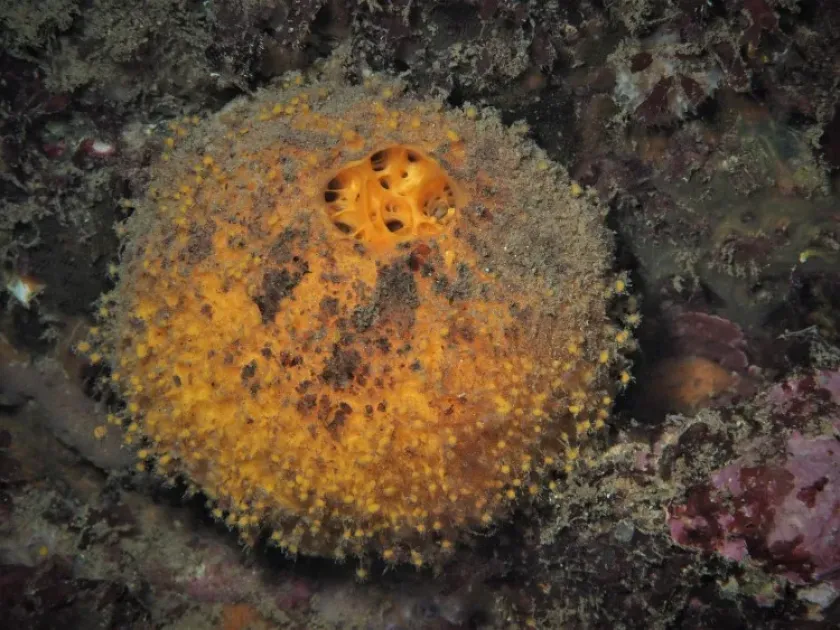
Description
How to identify
The genus Tethya belongs to the phylum Porifera, class Demospongiae, and the order Tetractinellida.
These organisms are known as orange sponges, characterized by their spherical shape and a firm, textured surface.
The internal skeleton is composed of radial bundles of silica spicules, forming a distinct cortex that protects the inner soft tissues.
They filter water through a system of channels and chambers, capturing tiny food particles such as bacteria and detritus.
Size varies significantly depending on the species and age, with some individuals reaching several centimeters in diameter.
What it damages
It is crucial to clarify that Tethya sponges are not agricultural pests and do not damage land-based plants.
They are strictly marine organisms that inhabit coastal reefs and benthic zones in oceans worldwide.
Since they reside only in saltwater environments, they have no contact with crops, orchards, or field vegetation.
There is no mechanism by which these sponges could interact with plant metabolism or damage plant tissues.
Any concerns regarding their impact on agriculture are fundamentally based on a misclassification of their ecological role.
When it appears
The life cycle of Tethya is driven by oceanic environmental parameters like temperature and currents rather than seasonal agronomic calendars.
They remain active throughout the year in regions where water temperatures support their metabolic processes.
Reproduction involves both sexual cycles and asexual methods such as budding, allowing them to colonize available hard surfaces.
Larval stages are mobile and drift with currents until they find a suitable substrate to attach and begin development.
Growth rates may increase during periods of higher nutrient availability in the water column, but this is independent of terrestrial seasons.
Signs of infestation
The primary sign of the presence of Tethya is the observation of globular, orange to yellow-colored bumps on marine rocks.
The surface texture appears bumpy due to the protrusion of spicule bundles through the outer skin layer.
They are sessile organisms, meaning they remain fixed in one place on the substrate throughout their adult life.
No symptoms of disease or infestation are associated with these sponges in relation to other organisms.
In a marine biological survey, their presence is confirmed by the specific architectural arrangement of their skeletal spicules.
Control measures
As Tethya sponges pose no threat to agricultural productivity, there are no control or pest management strategies recommended.
They are considered beneficial components of marine ecosystems as they help filter and maintain water quality.
No pesticides, fungicides, or biological controls are used against them, as they are not pests.
In aquaculture environments where they might accumulate on pipes, simple mechanical cleaning is the only necessary measure.
Agronomists should ensure that the term is not confused with soil-dwelling pests or other plant pathogens.
Taxonomy
- Latin name
- Tethya
- Family
- Tethyidae
- EPPO code
- TTHYSP
Discussion
No discussions yet — be the first.