
African paradise flycatcher
Terpsiphone viridis
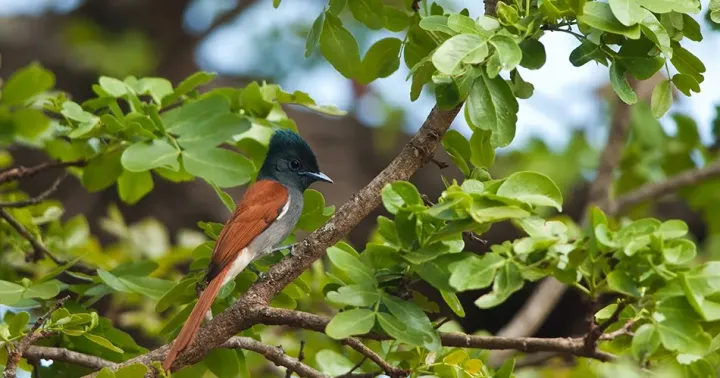
Description
How to identify
The African paradise flycatcher (Terpsiphone viridis) is a passerine bird in the monarch flycatcher family, recognized for its vibrant plumage and elegant tail streamers in males.
This species is not an agricultural pest; rather, it is a highly specialized insectivore that plays a critical role in controlling insect populations within its habitat.
The birds are anatomically adapted for agility, allowing them to capture insects in mid-air or glean them directly from the foliage of trees and shrubs.
Taxonomically, they are categorized within the Monarchidae family, and their presence is often indicative of a healthy, biodiverse environment.
Identifying them involves listening for their distinct, energetic calls or observing their swift, fluttering flight patterns between canopy layers.
What it damages
The African paradise flycatcher causes absolutely no damage to crops, as its entire diet consists of arthropods rather than plant material.
They act as natural pest managers in orchards, consuming larvae, beetles, and other invertebrates that would otherwise threaten plant health.
Any damage to leaves or fruits observed in a garden should be attributed to actual phytophagous pests or fungal pathogens, not to these birds.
By maintaining a balance in insect populations, these flycatchers contribute significantly to the reduction of crop loss throughout the growing season.
Farmers and gardeners benefit from the ecosystem services provided by these birds, as they reduce the need for manual pest intervention.
When it appears
These birds are most active during the breeding season, which often correlates with the peak availability of prey in the spring and summer months.
In tropical regions, their breeding cycles are closely linked to rainfall patterns, which trigger the emergence of large insect populations.
They are migratory in some parts of their range, and their arrival in a particular area marks a period of increased natural protection for trees.
During the nesting period, the birds demonstrate heightened territorial behavior as they forage intensely to feed their growing fledglings.
Seasonal knowledge of their nesting habits helps land managers time their horticultural activities to avoid disturbing these helpful avian neighbors.
Signs of infestation
The most reliable sign of their presence is the characteristic, high-pitched song and frequent movement within the tree canopy.
Gardeners can spot their cup-shaped nests, built from soft plant fibers and spider webs, strategically placed in branch forks.
An absence of major insect infestations on trees, despite the lack of pesticide usage, often points to the effective work of these insectivorous flycatchers.
Visual confirmation of birds repeatedly diving from perches to catch flying insects is a classic sign of their hunting behavior.
Fallen feathers or bird droppings in the vicinity of trees are common, harmless indicators that the birds are utilizing the canopy for foraging.
Control measures
No control measures are necessary for the African paradise flycatcher because they are strictly beneficial to agriculture and gardening.
The most recommended management strategy is to preserve the natural vegetation and large trees that these flycatchers require for nesting.
Avoiding the use of broad-spectrum pesticides is vital, as these chemicals can harm the bird population and disrupt the natural biological control they provide.
Providing clean water sources during hot, dry spells is a simple way to encourage these birds to remain in the garden and continue their insect-hunting duties.
Integrated Pest Management (IPM) practices should always prioritize the protection of such natural predators over the elimination of any wildlife.
Taxonomy
- Latin name
- Terpsiphone viridis
- Family
- Monarchidae
- EPPO code
- TERPVI
Discussion
No discussions yet — be the first.