
Paradise flycatcher
Terpsiphone
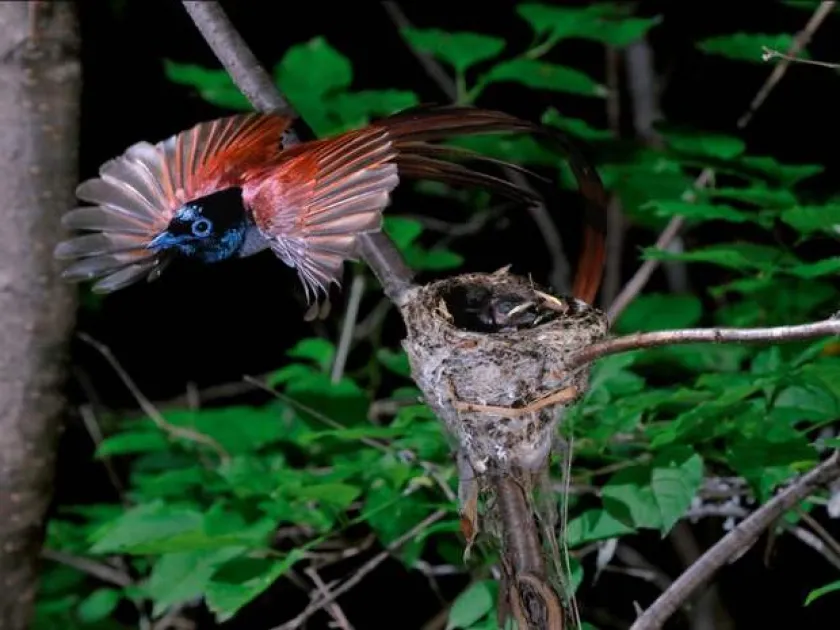
Description
How to identify
The paradise flycatcher (genus Terpsiphone) belongs to the Monarch flycatcher family (Monarchidae) within the order Passeriformes. These birds are known for their graceful flight and distinctive long tails in males.
Their physical appearance often features a striking contrast between the head plumage and the rest of the body. They are highly active during the day, focusing their attention on capturing insects mid-flight.
They inhabit various environments ranging from dense tropical forests to shaded garden areas, where they find ample nesting opportunities and resources.
These birds are migratory in many parts of their range, often timing their arrival in breeding grounds with the peak abundance of insect populations.
The biological success of Terpsiphone species relies on their ability to adapt to diverse arboreal habitats, making them common visitors in well-vegetated areas.
What it damages
The paradise flycatcher is strictly insectivorous and poses no threat to agricultural crops, fruit, or ornamental vegetation in any stage of its lifecycle.
Because they do not feed on plant tissue, seeds, or nectar, they cannot be categorized as garden pests or agricultural threats.
Their role in the ecosystem is strictly beneficial, as they act as natural predators for many insect species that might otherwise damage foliage or fruits.
There are no recorded instances of these birds causing damage to agricultural productivity; they are valued for their role as biological pest control agents.
Farmers and gardeners do not need to implement any defensive measures against these birds, as they are partners in maintaining a healthy environment.
Control measures
No control methods are required or recommended for paradise flycatchers, as they are not pests. Protection and conservation are the standard practices.
To encourage their presence, gardeners should avoid the heavy use of broad-spectrum insecticides, which would inadvertently reduce the bird's natural food supply.
Maintaining diverse flora and large trees ensures that these birds have adequate shelter and nesting sites to stay in the vicinity of your crops.
Integration of such insectivorous birds into the garden ecosystem is an excellent way to reduce reliance on chemical interventions for pest management.
Supporting biodiversity by providing water and avoiding habitat destruction helps sustain these useful birds for future seasons of biological control.
Taxonomy
- Latin name
- Terpsiphone
- Family
- Monarchidae
- EPPO code
- TERPSP
Discussion
No discussions yet — be the first.