
Common tenrec
Tenrec ecaudatus
Description
How to identify
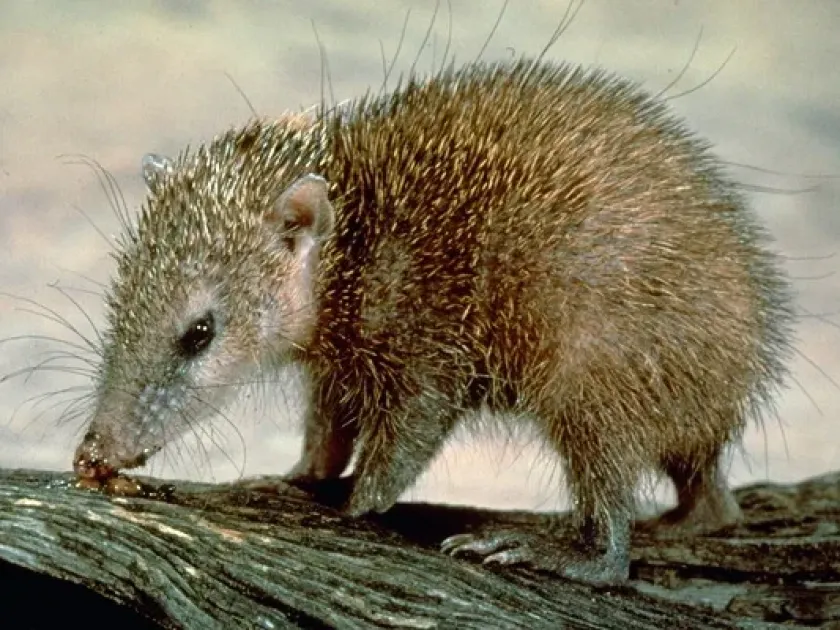
The common tenrec (Tenrec ecaudatus) is a large insectivorous mammal, often resembling a hedgehog due to its spiny appearance and long snout.
It possesses a coarse coat mixed with sharp spines, which serves as a defensive mechanism against predators in its natural habitat.
Adult individuals can grow significantly, with lengths ranging between 25 and 40 centimeters, making them notable visitors to agricultural plots.
These animals are primarily nocturnal, which makes them difficult to spot and monitor during typical daylight working hours.
Their coloration usually blends well with soil and decaying vegetation, providing excellent camouflage in agricultural landscapes.
What it damages
Although primarily insectivorous, the common tenrec is known to cause significant damage to crops when searching for subterranean food sources.
Root crops such as potatoes, sweet potatoes, and cassava are particularly vulnerable to their digging and feeding habits.
By excavating the soil to find larvae or insects, they frequently disturb and damage the root systems of young horticultural plants.
The exposed root systems often succumb to moisture loss or subsequent pathogen attacks, leading to poor crop yield or plant death.
Their intense burrowing behavior can compromise large segments of a planting row in a single night of feeding activity.
When it appears
Peak activity for the common tenrec occurs during the wet season, which provides favorable conditions for their foraging and movement.
During drier months, these animals tend to undergo a state of torpor, which significantly reduces their impact on agricultural operations.
The risk of damage is highest during the development phase of tubers and root vegetables, as these provide a concentrated food source.
Their presence on farmland is often synchronized with the beginning of the rains, facilitating easier digging in softened ground.
Monitoring for this pest should be intensified during the late growth stages when tubers become large enough to attract their attention.
Signs of infestation
The most prominent sign of a tenrec infestation is the presence of numerous small burrows and disturbed soil patches near plant bases.
Visible bite marks on harvested or partially dug-up root vegetables clearly indicate the involvement of mammalian pests.
Widespread wilting of plants without evidence of foliar diseases is a strong indicator of underground root system damage.
Small mounds of loose soil or tunnels running along the rows are common signatures of their foraging movements.
Droppings found along the edges of the field can help agriculturalists verify the presence of the species and estimate population size.
Control measures
Installing underground mesh fencing is one of the most effective mechanical methods to prevent tenrecs from accessing your crops.
The deployment of ultrasonic pest repellers can discourage these animals from lingering or burrowing within the cultivated area.
Maintaining clear field borders and reducing the population of soil-dwelling larvae can decrease the attractiveness of the plot.
Live-trapping and relocation are humane and effective methods for removing individual tenrecs from sensitive agricultural zones.
- Use organic repellents based on strong-smelling essential oils.
- Regularly inspect the field for new burrows or tunnel openings.
- Encourage local predators that help balance the ecosystem and suppress pest numbers.
Taxonomy
- Latin name
- Tenrec ecaudatus
- Family
- Tenrecidae
- EPPO code
- TENREC
Discussion
No discussions yet — be the first.