
Tenrec
Tenrec
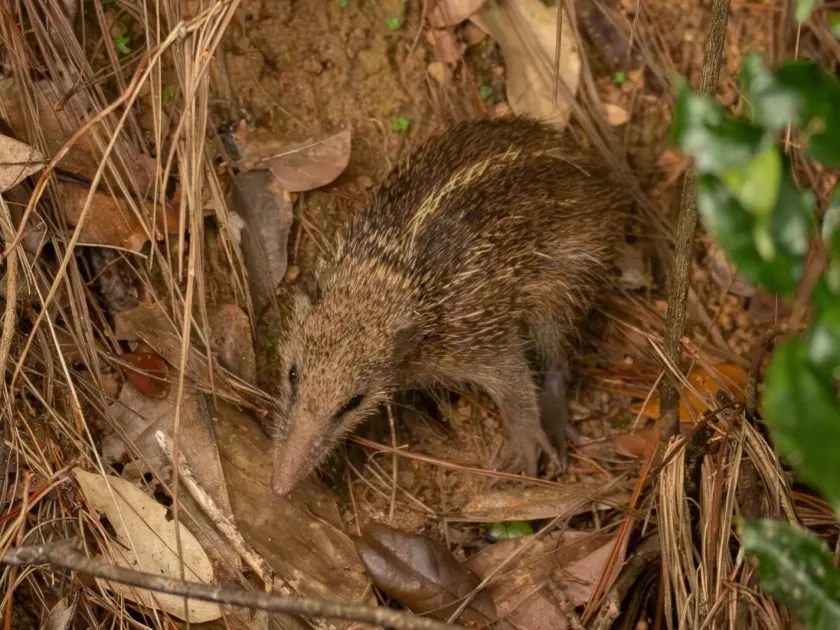
Description
How to identify
The tenrec (family Tenrecidae, order Afrosoricida) is a small mammal that, in specific agricultural landscapes like Madagascar, can behave as a localized pest.
These animals possess a hedgehog-like appearance, with bodies covered in coarse spines or bristles that provide protection against potential predators.
Sizes range significantly between species, from 10 to 40 cm, with the larger varieties being capable of causing substantial soil disturbance.
Primarily nocturnal and secretive, they are often difficult to detect during the daylight hours, making early identification a challenge for farmers.
Their digging behavior serves as their primary method of foraging, which inadvertently leads to significant disruption of the topsoil and plant root structures.
What it damages
The primary agricultural damage caused by tenrecs involves the physical destruction of subterranean plant parts, such as roots, rhizomes, and tubers.
Root crops like sweet potatoes, cassava, and yams are particularly susceptible to their foraging activities, as these animals seek out starch-rich food sources.
Young seedlings are frequently damaged, as the tenrecs' tunneling causes the roots to become detached from the soil, leading to rapid plant desiccation.
By constantly turning the soil, they expose fragile root systems to environmental stressors and increase the likelihood of soil-borne pathogen attacks.
In some agricultural systems, their tunneling can disrupt the placement of drip irrigation lines, leading to water wastage and uneven field irrigation.
When it appears
Tenrec activity is highly correlated with rainfall patterns; many species enter a state of dormancy during the dry season to conserve energy.
The peak period for agricultural damage occurs during the rainy season when food availability is high and the animals are most active and reproductive.
Spring and summer months see increased foraging pressure as the populations seek nutrition to support their growth and offspring development.
As harvest approaches, their focus shifts to mature, starchy crops, making this a critical window for crop loss if preventive measures are ignored.
Agronomic monitoring should be intensified during the critical growth phases of tubers to ensure timely implementation of protection strategies.
Signs of infestation
Visible signs of tenrec presence include irregular mounds of earth, shallow burrows, and disturbed soil around the base of vegetable crops.
Damaged tubers often display deep, characteristic teeth marks or large hollowed-out sections that are distinct from insect or rodent damage.
Sudden wilting or leaning of healthy plants without any foliar disease indicators is a strong diagnostic sign of root system interference.
Nocturnal sounds, such as rustling in low vegetation or soft grunting noises, often indicate the presence of these animals within the garden boundaries.
Fecal deposits found near the edges of fields or garden plots can also help confirm the presence of this specific pest.
Control measures
The most effective mechanical control involves installing fine-mesh metal fencing that is buried at least 20-30 cm deep to prevent burrowing underneath.
Ultrasonic deterrent devices have shown promise in reducing the time these animals spend within the perimeters of vulnerable crop areas.
Maintaining clear field edges and practicing proper weed management reduces the attractiveness of the site by removing potential daytime nesting cover.
Natural repellents, such as concentrated aromatic plant extracts or castor oil-based sprays, can be used to discourage local foraging activity.
Given the ecological role of tenrecs, chemical poisoning is strongly discouraged; farmers should focus on exclusion and physical deterrence methods instead.
Taxonomy
- Latin name
- Tenrec
- Family
- Tenrecidae
- EPPO code
- TENRSP
Discussion
No discussions yet — be the first.