
Temnorhinus
Temnorhinus
Description
How to identify
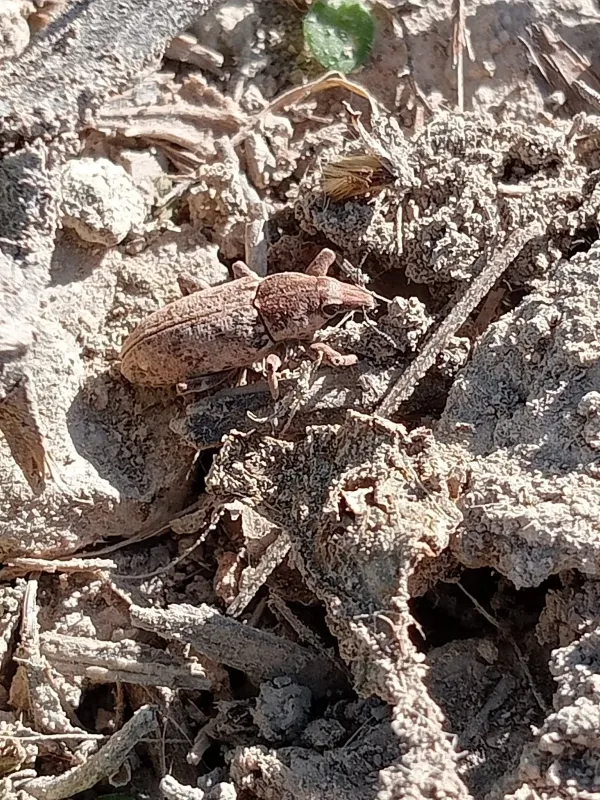
Temnorhinus is a genus of weevils belonging to the family Curculionidae (order Coleoptera), recognized for their specialization in feeding on Amaranthaceae plants.
The adult beetles are characterized by a robust body covered in scales, which vary in color to match the soil, providing effective camouflage against predators.
They possess a distinct rostrum typical of the weevil family, which serves as a specialized tool for feeding on plant tissues and facilitating the oviposition process.
Larvae are legless, fleshy, and typically whitish, adapted specifically for a subterranean lifestyle where they develop within the root zone of host plants.
These insects are particularly well-adapted to arid environments, making them persistent pests in steppe agricultural regions where they withstand high temperature fluctuations.
What it damages
The primary agricultural targets for Temnorhinus are sugar beets, table beets, and fodder beets, all of which are susceptible to significant infestation.
The pest also utilizes wild Chenopodium (goosefoot) species as secondary hosts, which helps maintain the population level within the field ecosystem.
Adult beetles cause damage by chewing on the foliage of young seedlings, which can lead to severe crop thinning or even total loss of the stand early in the season.
Larval feeding is the most destructive phase, as they burrow into the taproot, compromising the structural integrity of the plant and hindering its development.
Injured roots are not only stunted in growth but are also more prone to secondary infections, ultimately leading to reduced yield and lower sugar content at harvest.
When it appears
Temnorhinus overwinter as adult beetles in the soil or under surface debris, remaining dormant until the return of favorable spring temperatures.
The emergence period of adults typically aligns with the sprouting of beet crops, posing an immediate threat to vulnerable young plants in the field.
Oviposition occurs over an extended period, during which females lay eggs in the soil near the base of the host plants to ensure food for the emerging larvae.
Larvae feed throughout the summer months, progressing through several instars while tunneling into the root systems to satisfy their nutritional requirements.
The new generation of adults typically completes development by late summer or early autumn, feeding briefly before returning to the soil to hibernate.
Signs of infestation
Early symptoms of an infestation include irregularly notched or ragged leaf edges on young seedlings, caused by the nocturnal feeding activity of adult beetles.
Plants exhibiting signs of yellowing, sudden wilting during peak heat, or stunted overall development are indicative of larval damage to the root system.
Small exit holes or tunnels visible on the surface of the root are characteristic signs of mature larval activity, often leading to deep internal cavities.
Field observation may reveal patches of irregular crop establishment where plants appear weaker compared to healthier sections of the same field.
Digging into the soil surrounding the base of wilted plants often reveals the presence of larvae, confirming the underlying cause of the observed plant distress.
Control measures
Effective management relies heavily on crop rotation, ensuring that beets are not planted consecutively to avoid building up high pest populations.
Aggressive weed control, especially focusing on wild goosefoot and related Amaranthaceae, is essential to minimize non-crop feeding and breeding habitats.
Deep autumn plowing serves as a crucial mechanical control method, disrupting the hibernation sites of adults and exposing larvae to adverse conditions.
Seed treatment with systemic insecticides provides a necessary layer of protection, shielding young seedlings from beetle damage during the critical early growth phases.
In cases of high infestation levels, localized application of foliar insecticides may be required to prevent widespread damage and maintain crop productivity.
Taxonomy
- Latin name
- Temnorhinus
- Order
- Coleoptera (beetles)
- Family
- Curculionidae
- EPPO code
- TEMRSP
Discussion
No discussions yet — be the first.