
Telenomus podisi
Telenomus podisi
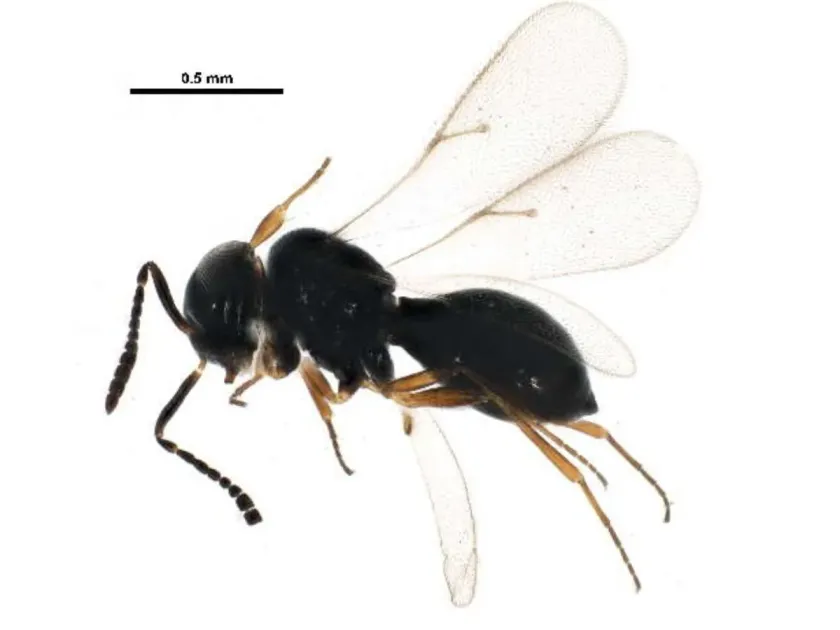
Description
How to identify
Telenomus podisi is a tiny parasitic wasp belonging to the family Scelionidae. Despite its small size, usually around 1 mm, it is a highly specialized and efficient natural enemy of various stink bugs (Pentatomidae).
These wasps are characterized by their dark bodies and keen sensory abilities. Females are experts at navigating through crop canopies to locate fresh egg masses deposited by agricultural pests on the undersides of leaves.
What it damages
It is important to clarify that this insect is not a pest, but rather an essential biological control agent. It helps protect diverse crops, such as soybeans and vegetables, by parasitizing the eggs of herbivorous shield bugs.
The larvae of Telenomus podisi consume the contents of the host eggs, effectively preventing the development of the destructive nymph stages. This biological service significantly contributes to reducing pest populations in the field.
When it appears
The activity of these wasps is strictly seasonal and correlates with the temperature and the availability of host egg masses. They become active during the spring as soon as the first stink bug generations begin egg-laying.
Throughout the season, multiple generations of Telenomus podisi can emerge, which allows the species to maintain its pressure on pest populations until the end of the harvest period.
Signs of infestation
The primary sign of the presence of this parasitoid is the alteration of the host eggs. Stink bug egg masses that have been parasitized often shift in color and eventually appear darker compared to healthy, unparasitized eggs.
Upon closer examination, one can observe small, circular exit holes on the surface of the egg shells. These holes are created by the adult wasps after completing their metamorphosis inside the egg.
Control measures
To support populations of Telenomus podisi, farmers should avoid the overuse of broad-spectrum insecticides that could inadvertently kill this beneficial wasp during its peak activity.
Integrated Pest Management (IPM) strategies often include protecting natural habitats near fields and sometimes releasing lab-reared wasps to ensure the effective suppression of stink bug outbreaks.
Taxonomy
- Latin name
- Telenomus podisi
- Order
- Hymenoptera
- Family
- Scelionidae
- EPPO code
- TELNPO
Discussion
No discussions yet — be the first.