
Telenomus
Telenomus ostriniae
Description
How to identify
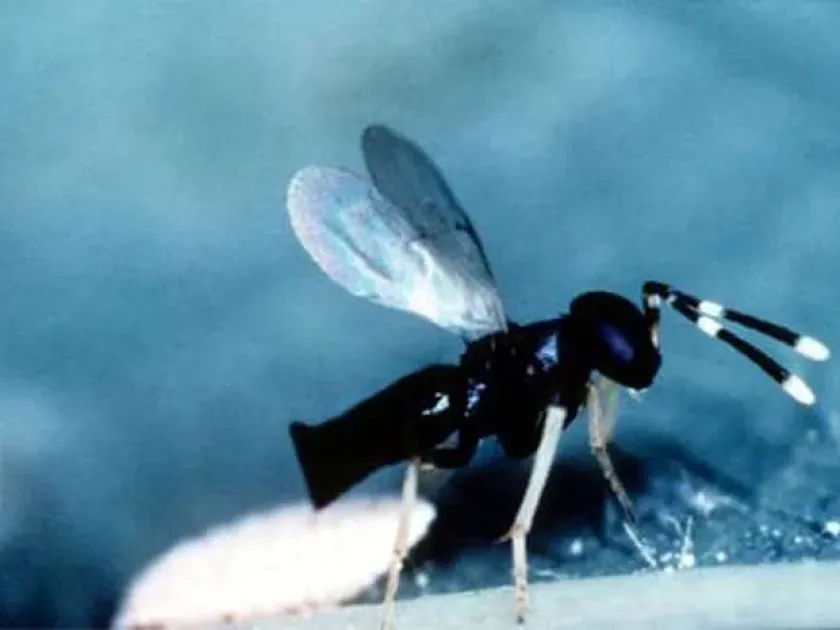
Telenomus ostriniae is a minute parasitic wasp belonging to the family Scelionidae. These insects are exceptionally small, often measuring less than one millimeter in length.
The adult wasps are typically dark in color, featuring well-developed wings that facilitate searching for host eggs. Their bodies are streamlined and specialized for oviposition into the eggs of Lepidoptera.
They are highly specialized natural enemies, focusing their reproductive efforts almost exclusively on the eggs of the European corn borer (Ostrinia nubilalis).
By detecting chemical cues and pheromones released during the moth's egg-laying process, female wasps locate egg clusters on corn leaves with remarkable precision.
The success of this biological control agent depends on the timing of its life cycle relative to the development of the corn borer population in the field.
What it damages
It is crucial to emphasize that Telenomus ostriniae is not a plant pest; it is a highly beneficial entomophagous insect used to suppress harmful populations of the corn borer.
The "damage" caused by this wasp is limited to the eggs of the pest. By inserting its eggs into the host's eggs, the wasp larvae consume the contents, effectively preventing the development of the corn borer larva.
This parasitic action prevents the corn borer larvae from emerging and causing damage to corn stalks, ears, and kernels, thereby protecting the overall crop yield.
Because they target the egg stage, the damage to the corn crop is prevented before the pests can even begin feeding on plant tissues.
Integrating this natural predator into agricultural systems is a sustainable strategy to reduce the reliance on chemical insecticides in corn production.
When it appears
The presence of Telenomus ostriniae in cornfields coincides with the flight period of the European corn borer, typically occurring during the summer months from June to July.
Depending on ambient temperatures and the availability of host eggs, these wasps can complete multiple generations within a single growing season.
Warm and humid weather conditions are generally conducive to the activity and survival of adult wasps, allowing them to effectively locate and parasitize host eggs.
As the season progresses and host populations decline, the wasps enter a dormant stage or complete their reproductive cycle, waiting for the next season.
Agricultural monitoring programs track these seasonal patterns to determine the optimal timing for releasing lab-reared wasps into commercial cornfields.
Signs of infestation
The primary indicator of parasitism by Telenomus is a visible change in the appearance of corn borer egg clusters, which turn dark gray or black as the wasp develops inside.
Upon close inspection with a microscope, tiny exit holes can be seen on the egg shells, created by adult wasps emerging after completing their metamorphosis.
A reduction in the number of larvae found on corn plants despite a high initial count of egg clusters is a strong sign of successful biological suppression.
Field technicians often collect egg masses and incubate them in laboratory settings to calculate the parasitism rate and assess the effectiveness of the control efforts.
High rates of egg parasitism serve as clear evidence that the predatory wasp is successfully controlling the pest population in that specific area.
Control measures
Control strategies for the management of the corn borer using Telenomus focus on preserving existing populations and augmenting them through controlled releases.
Farmers are encouraged to minimize the use of broad-spectrum insecticides that are toxic to beneficial insects, particularly during the peak flight period of the corn borer.
The release of laboratory-reared wasps is a common practice in integrated pest management (IPM) to ensure that the density of the predator is sufficient to suppress the pest outbreak.
Enhancing biodiversity at the farm level, such as planting flowering strips, provides adult wasps with nectar, which significantly increases their lifespan and reproductive output.
- Reducing broad-spectrum insecticide application.
- Implementing supplemental releases of mass-reared wasps.
- Planting nectar-rich borders to support predator longevity.
- Monitoring pest egg density for timely intervention.
- Utilizing selective, predator-safe bio-pesticides.
Taxonomy
- Latin name
- Telenomus ostriniae
- Order
- Hymenoptera
- Family
- Scelionidae
- EPPO code
- TELNOS
Discussion
No discussions yet — be the first.