
Telenomus
Telenomus dignoides
Description
How to identify
Telenomus dignoides belongs to the order Hymenoptera, family Scelionidae. It is a group of minute parasitic wasps that play a vital role as natural enemies of various agricultural pests.
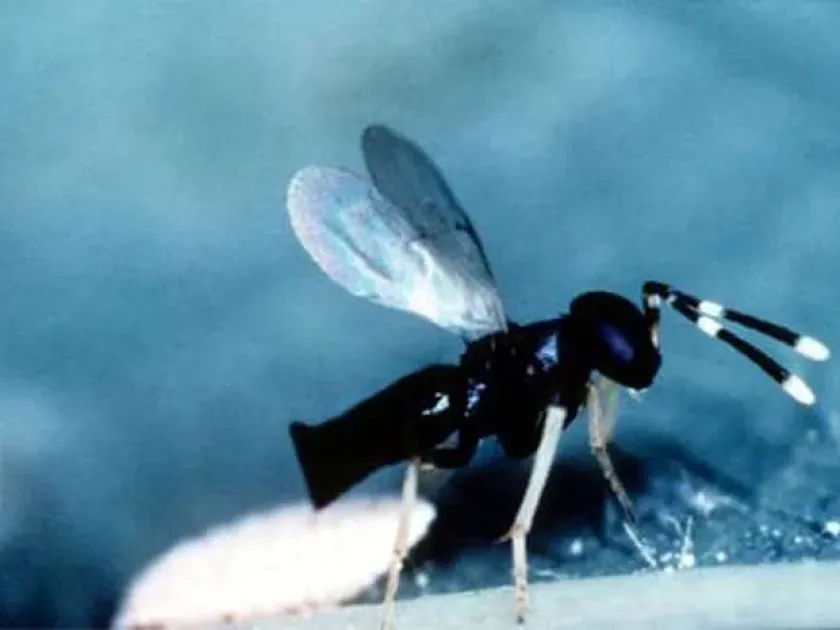
These insects are extremely small, generally measuring less than 1 millimeter in length. Their bodies are typically dark or black, allowing them to blend into their environment effectively.
The wings exhibit a characteristic venation pattern typical of this family, providing the agility necessary for these insects to search for their hosts.
The life cycle is strictly tied to the presence of host insect eggs, making them highly specialized parasitoids within the agricultural ecosystem.
Identification often requires expert entomological analysis due to their microscopic size and the diversity of species within the Telenomus genus.
What it damages
Telenomus dignoides is not a plant pest; rather, it is a highly beneficial insect that serves as a biological control agent against numerous species of moths and butterflies.
The larvae of these wasps develop inside the eggs of pest insects, effectively preventing the development of larvae that would otherwise consume agricultural crops.
By parasitizing eggs, these wasps significantly reduce the damage caused to field crops, vegetables, and fruit orchards throughout the growing season.
They act as a natural regulator, maintaining pest populations below the economic threshold and contributing to a more sustainable agricultural practice.
Their activity results in the death of the pest in the egg stage, which is the most efficient way to manage infestation before any damage to the plant occurs.
When it appears
Activity generally begins in the early spring, synchronized with the first seasonal flights of the host moth species and their initial egg-laying periods.
The population reaches its peak during the mid-summer months, coinciding with the mass reproduction of major lepidopteran pests in the fields.
Depending on local climate conditions, the wasp can complete multiple generations in a single year, ensuring continuous pressure on the host population.
As autumn approaches and temperatures decrease, the wasps seek suitable environments for diapause or overwintering to ensure their survival until the following spring.
This phenological synchrony with the pest life cycle makes Telenomus a reliable and predictable component of biological pest management.
Signs of infestation
A primary sign of Telenomus presence is the darkening of host eggs, which typically turn black or deep brown as the parasitoid larva develops inside.
Close inspection of infested egg batches will reveal tiny exit holes, indicating that the adult wasp has successfully emerged after completing its development.
Field monitoring often involves counting the percentage of darkened (parasitized) eggs in a given area to assess the current level of natural control.
The use of sticky traps, particularly those designed for small hymenopterans, allows agronomists to monitor adult activity levels throughout the field.
An absence of larval feeding damage on plant leaves despite the presence of egg-laying moths is often a sign of effective parasitism by native wasp populations.
Control measures
To preserve Telenomus populations, it is essential to minimize the use of broad-spectrum chemical insecticides, which can be highly toxic to these beneficial wasps.
Integrated Pest Management (IPM) strategies should prioritize selective biopesticides and cultural practices that favor the survival of natural enemies.
- Avoiding chemical sprays during peak wasp activity periods
- Maintaining field margins and wildflower strips as refuges for beneficial insects
- Implementing augmentation biological control by releasing lab-reared wasps
Maintaining a diverse agricultural environment encourages the natural buildup of parasitoids and reduces the frequency of pest outbreaks.
By shifting toward practices that support these natural allies, farmers can achieve long-term suppression of major pests while reducing reliance on synthetic chemistry.
Taxonomy
- Latin name
- Telenomus dignoides
- Order
- Hymenoptera
- Family
- Scelionidae
- EPPO code
- TELNDG
Discussion
No discussions yet — be the first.