
Taphrorychus
Taphrorychus
Description
How to identify
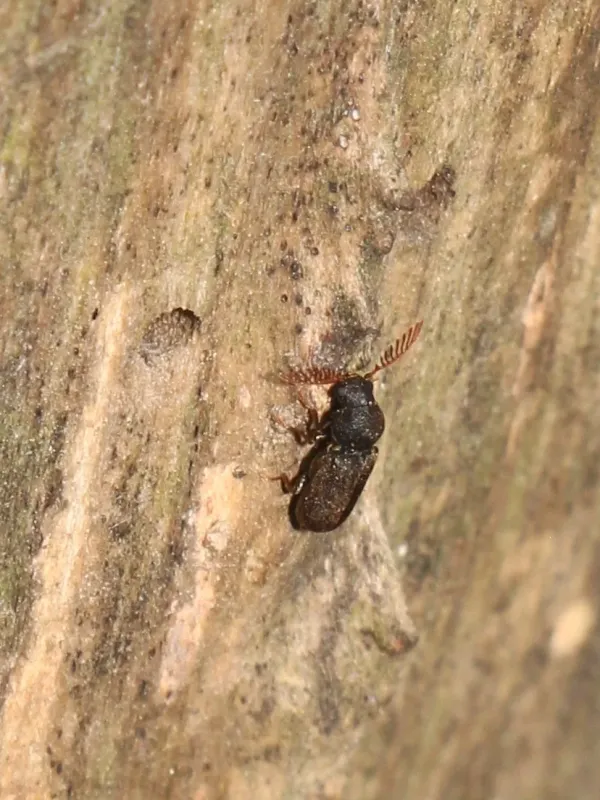
Taphrorychus is a genus of bark beetles belonging to the family Curculionidae, subfamily Scolytinae. These small beetles typically measure between 1.5 to 2.5 mm in length.
They possess a cylindrical, robust body, often ranging in color from dark brown to black, which enables them to blend into the bark of their host trees effectively.
The larvae are legless, white to yellowish in color, and have a distinct head capsule. They spend their entire developmental cycle beneath the bark of the host tree.
While often categorized as secondary pests that target weakened trees, they can become primary threats in dense or stressed forest stands where the trees' natural defenses are lowered.
Species within this genus, such as Taphrorychus bicolor, are well-known in Europe for their specific association with deciduous tree species, including beech and oak.
What it damages
Taphrorychus primarily attacks deciduous trees, with a strong preference for beech, oak, and sometimes fruit trees such as apple or cherry species.
The damage is caused by the adults and larvae tunneling through the inner bark and cambium layer, which disrupts the transport of nutrients and water within the tree.
Furthermore, these beetles act as vectors for fungal pathogens. By boring into the wood, they introduce spores that cause internal wood rot and further weaken the tree's structure.
Trees affected by significant infestation will show signs of canopy decline, branch dieback, and eventually death if the infestation is not managed properly.
In timber-producing regions, the aesthetic and structural quality of the wood is severely compromised by the galleries created by the beetles, leading to economic losses.
When it appears
The active life cycle of Taphrorychus typically begins in spring, with adult beetles emerging from their overwintering sites as temperatures rise in April and May.
This emergence period is critical for mating and the colonization of new host trees, where females bore through the bark to establish egg-laying galleries.
The duration of the life cycle varies depending on environmental conditions, usually ranging from one to two years per generation in cooler temperate climates.
Pupation occurs in late summer or autumn within the wood, and the newly developed adults often overwinter within the galleries where they were born.
Spring is the most effective time for monitoring and implementing protective measures, as the beetle population is concentrated near the surface of the bark during emergence.
Signs of infestation
The most prominent sign of an infestation is the presence of tiny, circular exit or entry holes on the bark, approximately 1 mm in diameter.
Another indicator is the accumulation of frass, or "boring dust," found in the crevices of the bark or at the base of the tree, which results from the beetles' tunnel-building activities.
Leaves on infested branches may show premature yellowing or wilting, which is a direct consequence of the damaged cambium layer preventing water from reaching the canopy.
Peeling away a section of the bark reveals the intricate network of galleries, which often follow a specific pattern characteristic of the Taphrorychus genus.
Evidence of fungal infection, often appearing as dark staining in the wood around the tunnels, confirms that the infestation has facilitated the spread of pathogenic spores.
Control measures
The primary control strategy involves sound silvicultural practices, including the prompt removal and destruction of infested or weakened trees to reduce the breeding population.
It is essential to prevent the accumulation of freshly cut wood or slash in the vicinity of healthy stands, as these serve as magnets for bark beetle colonization.
Chemical control, while challenging, can be implemented during the peak flight periods using targeted insecticide applications on the trunks to prevent the beetles from settling.
Integrated Pest Management (IPM) techniques, such as the use of pheromone-baited traps, are recommended to monitor beetle activity levels and time interventions accurately.
- Maintain high tree vitality through appropriate watering and soil management.
- Regularly inspect trees for signs of entry holes and boring dust.
- Apply protective coatings or wraps to younger fruit trees to deter beetle access.
Taxonomy
- Latin name
- Taphrorychus
- Order
- Coleoptera (beetles)
- Family
- Curculionidae
- EPPO code
- TAPRSP
Discussion
No discussions yet — be the first.