
Tanyrhynchus carinatus
Tanyrhynchus carinatus
Description
How to identify
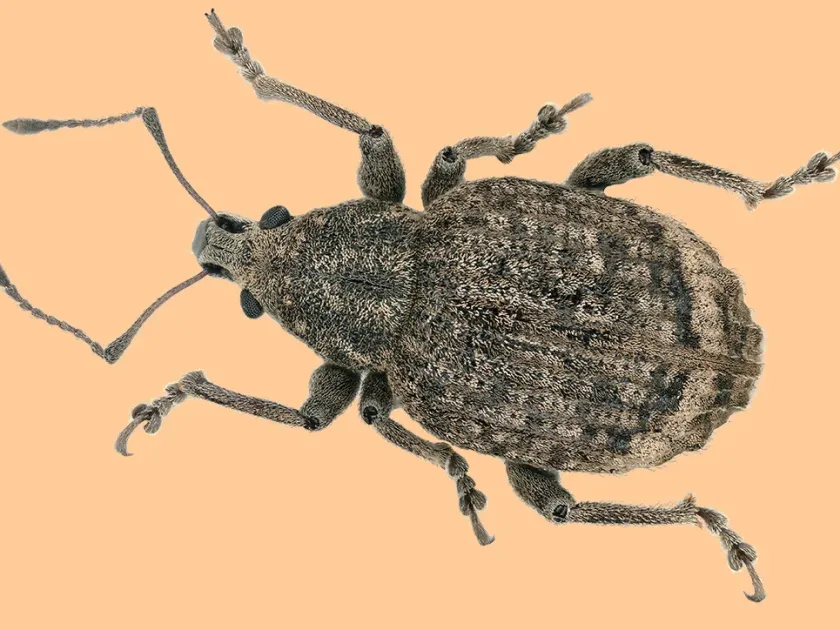
Tanyrhynchus carinatus is a beetle species belonging to the Curculionidae family, which includes a wide range of destructive agricultural weevils.
The adult insect is characterized by a distinct rostrum (snout) and prominent ridges on its elytra, which serve as its primary taxonomic identification features.
The insect possesses an adaptive, earth-toned coloration that provides camouflage against the soil surface and plant debris, making it difficult to detect during daylight.
The life cycle of this weevil includes complete metamorphosis: egg, larva, pupa, and adult, with each stage occurring in specific microhabitats within the field.
Larvae are typically white or cream-colored with a brown head capsule and reside primarily underground, where they feed on the root systems of various host plants.
What it damages
Damage is caused by both adults and larvae, though the nature and intensity of the injury vary significantly between these life stages.
Adult beetles feed on the foliage, creating characteristic notches or ragged edges along the leaves, which reduces the photosynthetic area of the plant.
Larvae cause severe damage by feeding on roots, which disrupts water and nutrient uptake, leading to stunted growth, yellowing, and potential plant death.
Infested fields often exhibit uneven plant development, with localized patches of weakened or wilted plants being a common indicator of larval feeding activity.
The damage caused by larvae often facilitates the entry of soil-borne pathogens, leading to secondary rot and further compromising the health of the crop.
When it appears
Adult activity typically begins in early spring as soil temperatures rise, prompting the beetles to emerge from their overwintering sites in the soil.
The period of peak adult activity often coincides with the germination and early vegetative stages of host crops, increasing the risk of significant seedling damage.
During the warmer months, adults may exhibit reduced surface activity, often retreating into the upper soil layers or under dense foliage to avoid high temperatures.
As autumn approaches, the beetles prepare for diapause, moving deeper into the soil profile to survive the winter months until the following spring.
Environmental factors such as rainfall and soil moisture levels play a crucial role in regulating the emergence patterns and population density of the pest.
Signs of infestation
The most recognizable sign of infestation is the presence of characteristic leaf-notching on the edges of the plant leaves caused by adult feeding.
Stunting and premature wilting of plants in specific patches, even under sufficient irrigation, often indicate the presence of larvae damaging the root system.
Active inspection of fields during the dusk or night hours may reveal the presence of adult beetles, as they are primarily nocturnal foragers.
The presence of larvae can be confirmed by digging around the base of affected plants and examining the root zone for feeding damage or the larvae themselves.
Soil sampling prior to planting is a highly effective diagnostic tool used to assess population levels and determine the risk of future infestation.
Control measures
Effective management of Tanyrhynchus carinatus requires an integrated pest management (IPM) approach that combines cultural, mechanical, and chemical tactics.
Deep autumn plowing is a highly recommended mechanical control method, as it disrupts the soil environment and exposes larvae and pupae to predators and desiccation.
Crop rotation serves as a fundamental cultural practice, preventing the buildup of pest populations by removing host plants from the site for successive seasons.
When economic thresholds are exceeded, targeted chemical applications using systemic or contact insecticides are necessary to protect the crop's yield potential.
- Utilizing insecticide-treated seeds to provide early-season protection.
- Monitoring field edges and applying spot treatments where pest pressure is high.
- Maintaining field sanitation to eliminate weeds that may serve as alternative hosts for the weevil.
Taxonomy
- Latin name
- Tanyrhynchus carinatus
- Order
- Coleoptera (beetles)
- Family
- Curculionidae
- EPPO code
- TANRCA
Discussion
No discussions yet — be the first.