
Grey beet weevil
Tanymecus dilaticollis
Description
How to identify
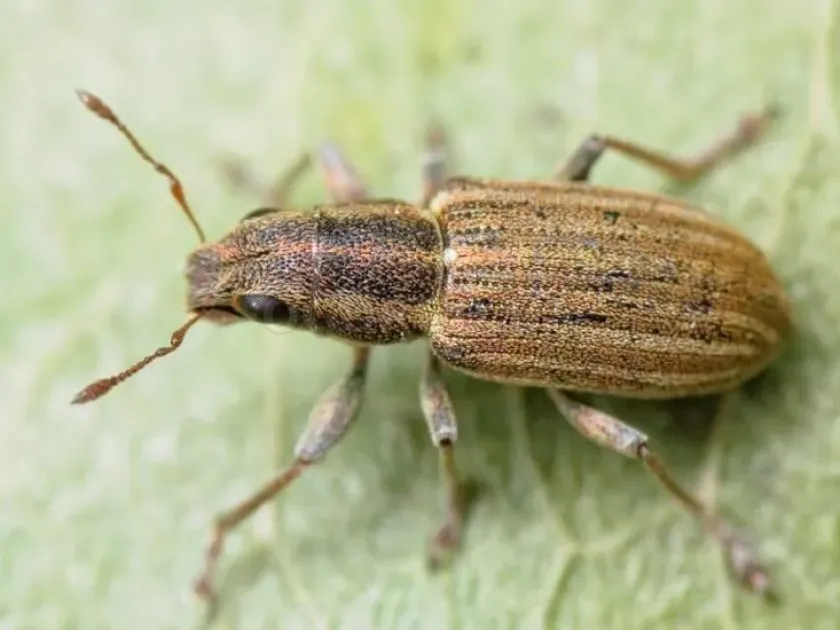
The grey beet weevil (Tanymecus dilaticollis) is a significant beetle pest belonging to the Curculionidae family. These beetles are typically 7–11 mm long and are characterized by a dense covering of greyish-brown scales, which provides excellent camouflage on the soil surface.
Unlike many other insects, this weevil does not fly; it moves primarily by crawling across the ground. Because of this, populations tend to build up locally in fields that are frequently cropped with preferred host plants, making long-term field history a critical factor for risk assessment.
The life cycle of the grey beet weevil usually spans two years. Both adults and larvae can overwinter deep in the soil, which makes them resilient to cold weather and challenging to manage using standard surface-level agricultural practices.
Adults emerge from the soil in early spring as temperatures rise above 10–12°C. Their emergence is often synchronized with the germination of spring crops, creating an immediate danger to vulnerable seedling stages.
The larvae, which live underground, are white and C-shaped. They feed on plant roots, often causing damage that is hidden from the surface, which leads to slow and stunted plant growth that is sometimes misdiagnosed as nutrient deficiency or drought stress.
What it damages
The grey beet weevil is a polyphagous pest, meaning it attacks a wide range of crops. While sugar beet is its primary host, it also infests corn, sunflower, soybean, alfalfa, and various cereal crops, especially in arid climates.
The most devastating damage occurs at the seedling stage. Adult beetles feed on the cotyledons and tender stems, often severing the plants completely. This can lead to total crop failure, necessitating expensive replanting of the fields.
Larval feeding on the roots is another major concern. By damaging the root architecture, the larvae reduce the plant's ability to take up water and nutrients, making the entire crop much more susceptible to heat stress and environmental factors.
In hot and dry years, the damage potential of the weevil increases significantly. The plants, already struggling with moisture, succumb faster to the combined impact of larval root damage and adult foliage consumption.
Monitoring is crucial, as the economic injury level (EIL) is relatively low. Once adult populations exceed threshold limits, immediate protective measures are required to prevent widespread stand loss and yield reduction.
Signs of infestation
The most visible sign of infestation is the characteristic notched edges of young leaves. As beetles feed, they create irregular, jagged cuts along the leaf margins, which is a classic symptom of Tanymecus dilaticollis activity.
In severe cases, you will observe missing plants or large gaps in the rows. This indicates that the weevils have been feeding on the stems of emerging seedlings before they had a chance to establish themselves.
To detect the pest, agronomists should examine the soil around the base of the seedlings during the early morning or evening hours. Because they blend in perfectly with soil particles, finding them requires careful observation of soil clods.
Wilting plants that do not show signs of leaf damage might be suffering from root feeding. Digging up affected plants and examining the roots for tunnels or missing root tissue can confirm the presence of larval activity.
The presence of adult beetles in the field during the sensitive emergence window is a primary alert. Field history of the pest and visual scouting should be used to make informed decisions about intervention.
Control measures
Effective management begins with strict crop rotation. Avoiding back-to-back plantings of host crops like beet or sunflower is the most powerful tool for breaking the weevil's life cycle and reducing population build-up in the soil.
Seed treatment with systemic insecticides is the standard and most effective practice for protecting crops during the critical seedling stage. This provides a chemical barrier that protects the plant until it is strong enough to withstand some herbivory.
Deep autumn plowing can help disrupt the life cycle of the larvae and pupae within the soil. This mechanical disturbance exposes the pests to predators and environmental extremes, reducing the number of survivors for the next season.
In instances of heavy infestation, foliar insecticide applications are necessary. These treatments should be timed for the periods when the beetles are most active on the plant surface to ensure maximum efficacy.
Weed control along field edges and borders is vital. Many weeds serve as alternative hosts for the weevil, providing them with food and shelter until the main crop emerges. Maintaining clean field borders reduces the immigration pressure of the pests.
Taxonomy
- Latin name
- Tanymecus dilaticollis
- Order
- Coleoptera (beetles)
- Family
- Curculionidae
- EPPO code
- TANYDI
Discussion
No discussions yet — be the first.