
Grey beet weevil
Tanymecus
Description
How to identify
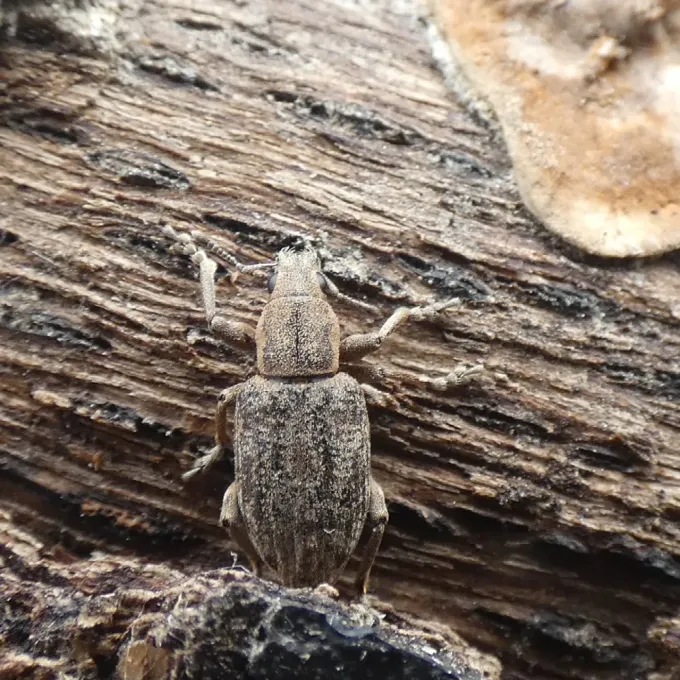
The grey beet weevil, scientifically known as Tanymecus palliatus, belongs to the Curculionidae family. The adult beetle is characterized by an elongated body measuring 8 to 12 mm, covered in dense, greyish-brown scales.
A key diagnostic feature is the short, thick snout with a longitudinal groove. Its antennae are geniculate (elbowed), which is a common trait for this group of weevils, distinguishing them from other coleopteran pests.
The larvae are apodous (legless) and white, possessing a distinct yellowish-brown head capsule. They spend their entire developmental cycle in the soil, feeding on plant roots, which makes them difficult to monitor.
The life cycle typically lasts one or two years. Both adults and larvae can overwinter deep in the soil, allowing the population to survive diverse environmental conditions and seasonal fluctuations.
Adults emerge from the soil in early spring when temperatures reach approximately 10–12°C. This emergence often coincides with the germination and early growth stages of major host crops.
What it damages
This species is a polyphagous pest, meaning it attacks a wide range of crops including sugar beets, sunflowers, corn, and various legumes. It is considered a significant threat to young seedlings.
Adult weevils cause damage by feeding on the leaves of young plants, typically eating the margins. In severe cases, they can destroy the entire seedling, leading to patchy and thinned stands.
The larvae represent the most dangerous stage for root development. They feed on roots and taproots, often gnawing through the tissue, which weakens the plant and leads to stunted growth or complete collapse.
Economic damage is most severe in fields with high larval density. If left unmanaged, the infestation can lead to significant yield losses, especially in sugar beets where root health is critical for sugar accumulation.
The damage is often amplified by dry weather conditions, which hinder the plant's ability to recover from the root damage caused by larval feeding, ultimately reducing the final harvest volume.
When it appears
Adult activity begins in the spring, usually during April. Weevils are sensitive to temperature, often staying hidden in soil cracks or under debris during the cooler parts of the day or at night.
The mating and oviposition period spans from May to June. Females deposit eggs in the soil near the host plants, ensuring that the newly hatched larvae have immediate access to food sources.
Larval development continues throughout the summer months. They undergo several instars while remaining in the soil, feeding progressively on larger roots as they grow larger and move deeper into the soil profile.
Pupation occurs in late summer or early autumn, deep in the soil layers. The resulting young adults typically remain underground, entering diapause to survive the winter months until the following spring.
Because they spend most of their life cycle in the soil, the emergence pattern is highly dependent on spring soil warming rates, which dictates the timing of preventive insecticide applications.
Signs of infestation
Visible signs of infestation include irregular notches on the leaf margins, which are characteristic of adult weevil feeding. Finding these marks on early seedlings is a primary indicator for field inspection.
If fields show signs of irregular wilting or plant loss, soil excavation around the base of the plant is recommended. The presence of white, legless larvae near the root zone is a definitive sign of infestation.
In mature crops, root damage can manifest as general lack of vigor or stunted growth. Careful examination of the taproot often reveals lesions or tunnels, confirming the presence of the pest.
High populations of adults are often found along field edges, especially those bordering perennial grasses or forests. These zones act as reservoirs and are the primary points of entry into the crop field.
A sudden, inexplicable reduction in plant stand density is a warning sign that requires an immediate investigation of the soil profile to check for larval activity before the damage becomes irreversible.
Control measures
The most effective strategy is the use of seed treatments with systemic insecticides. This provides essential protection during the vulnerable seedling stage, effectively controlling the adults upon arrival.
Good agricultural practices, such as crop rotation, are crucial. Avoiding the planting of sugar beets in the same field for consecutive years helps to break the life cycle of the pest.
Deep autumn plowing is recommended to disrupt the soil structure where the pests overwinter. This process can significantly reduce the overwintering population of both larvae and adults.
- Spatial isolation of new beet fields from areas with previous high infestations.
- Rigorous weed management in and around fields to eliminate alternative food sources.
- Targeted insecticide application on field edges where pest migration is detected.
When the economic threshold is reached, application of registered insecticides is necessary. It is important to apply these during the optimal time of day, following safety protocols to protect pollinators.
Taxonomy
- Latin name
- Tanymecus
- Order
- Coleoptera (beetles)
- Family
- Curculionidae
- EPPO code
- TANYSP
Discussion
No discussions yet — be the first.