
Spruce leafroller
Taniva albolineana
Description
How to identify
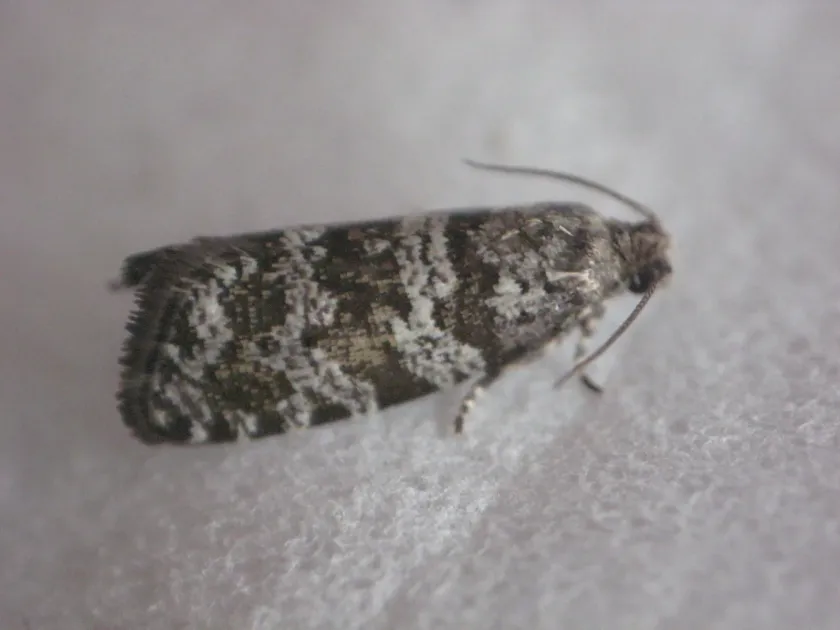
The spruce leafroller (Taniva albolineana) is a small moth belonging to the Tortricidae family, known for causing significant damage to various spruce species. The adult moth has a wingspan of approximately 10–12 mm and features brownish-gray wings with distinct light-colored patterns.
The larvae are small caterpillars, typically reaching up to 10 mm in length. They are usually greenish to brownish in color with a darker head, which provides effective camouflage against the spruce needles they inhabit.
The life cycle begins with eggs overwintering on the needles or twigs of the host tree. This overwintering strategy ensures that the larvae hatch exactly when the new growth begins in the spring.
Pupation occurs within small silken webs constructed by the larvae among the needles, providing them with protection against natural predators and environmental stressors.
Adult moths emerge in early summer, often exhibiting a staggered flight period, which makes timing for effective monitoring and treatment crucial for arborists and gardeners.
What it damages
The primary hosts of the spruce leafroller are species of the Picea genus, including Norway spruce, blue spruce, and white spruce. Ornamental plantings are particularly susceptible to severe infestations.
Larvae feed on the needles, often starting at the base and webbing them together. This behavior leads to premature needle drop and significant thinning of the tree's foliage over time.
Damage to the buds and young shoots is particularly problematic as it impacts the tree's vertical growth and architectural symmetry. Deformed branches are a common result of chronic infestations.
Weakened trees become susceptible to secondary infestations by bark beetles and other wood-boring insects, further endangering the tree's structural integrity and long-term health.
In cases of heavy infestation, large portions of the canopy can be defoliated, leading to significant aesthetic decline and potential mortality in younger or stressed trees.
When it appears
The spruce leafroller typically has one generation per year. Larvae hatch in early spring, synchronized with the bud break and initiation of growth in spruce trees.
Active feeding peaks during late spring and early summer (April to June), which is the period when larvae grow most rapidly and cause the most extensive foliage damage.
Pupation takes place in early summer, with adult moths appearing shortly thereafter. The adult flight phase usually occurs between June and July, followed by egg-laying for the next season.
Weather conditions play a critical role in the timing of the life cycle; warm spring temperatures often accelerate larval development, potentially resulting in earlier canopy damage.
Professional monitoring should commence before the buds open, as detecting the larvae early is essential for implementing successful control measures.
Signs of infestation
The most visible sign of an infestation is the presence of silk webbing that binds needles together on young shoots, creating small nests for the larvae to feed within.
The needles within these webs turn yellow, then brown, and eventually fall off. The overall appearance of the tree becomes thin and sickly, with noticeable patches of dead foliage.
Accumulated larval frass (excrement) trapped within the silken webbing is a definitive sign of an active infestation and can often be seen upon close inspection of the inner canopy.
Missing or damaged buds at the tips of branches are clear indications that the leafroller has affected the current year's growth and potentially the future development of the branch.
In severe cases, you may notice silk threads hanging from the branches, and a gentle shaking of the foliage can often reveal the presence of larvae as they suspend themselves to drop.
Control measures
Managing the spruce leafroller requires an integrated pest management (IPM) approach that focuses on early detection and targeted intervention.
- Prune and destroy infested shoots during the early stages of infestation to reduce the local population of larvae.
- Apply systemic insecticides early in the spring, just as the buds begin to expand, to control hatching larvae before they establish their protective webs.
- Utilize biological control agents, such as Bacillus thuringiensis, which are effective against young larvae and environmentally friendly.
- Install pheromone traps to monitor adult moth activity and optimize the timing of any chemical applications.
- Maintain tree vigor through proper watering and soil management to help trees recover from feeding damage.
It is important to ensure that insecticide treatments are applied thoroughly to the foliage to reach the larvae hidden within their silken structures.
Rotating chemical classes of pesticides is recommended to prevent the development of resistance within the population, especially in high-density nursery environments.
Continuous surveillance and maintenance practices are the best defense, ensuring that spruce trees remain healthy and resilient throughout the growing season.
Taxonomy
- Latin name
- Taniva albolineana
- Order
- Lepidoptera (butterflies)
- Family
- Tortricidae
- EPPO code
- TAVAAL
Discussion
No discussions yet — be the first.