
Spruce needle miner
Taniva
Description
How to identify
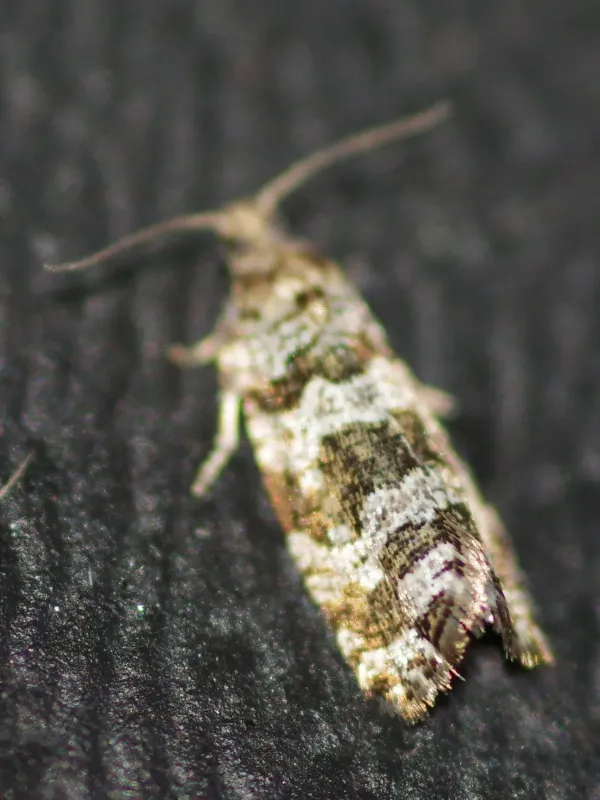
The spruce needle miner (Taniva albolineana) is a small moth belonging to the family Tortricidae, known to affect various spruce species in ornamental and forest settings.
The adult moth has a wingspan of approximately 10–12 mm. Its forewings are mottled with brown and grey, providing excellent camouflage against the bark of spruce branches.
The larval stage consists of small, greenish-brown caterpillars that feed on needles. They typically reach about 8–10 mm in length when fully mature.
This species is univoltine, meaning it produces one generation per year. The eggs are laid on the previous year's needles and overwinter until spring.
Identification often relies on observing the larval webbing activity during the early spring months when temperatures rise and buds begin to swell.
What it damages
The primary hosts of this pest are species of the genus Picea, with Norway spruce and blue spruce being highly susceptible to infestations.
Larvae feed exclusively on the foliage, mining the interior of the needles or simply attaching them to branches with silken threads to feed securely.
Damage is typically most severe on the lower branches of the tree, creating thin, unsightly patches that reduce the overall aesthetic value of the conifer.
Chronic infestation can cause branch dieback and stress the tree, making it more prone to secondary attacks by wood-boring insects or fungal diseases.
Young trees in nurseries are at particular risk, as intensive needle loss can permanently stunt their growth and ruin their commercial quality.
Signs of infestation
The most diagnostic sign of an infestation is the presence of silk webbing that binds dead, brown needles together into clusters.
Small exit holes or frass (larval excrement) trapped within the webbing are clear indicators of active or past larval feeding within the canopy.
Affected branches will exhibit discolored, reddish-brown foliage that easily detaches when shaken, revealing the bare underlying woody stem.
During early spring, one can observe the larvae moving actively within their webs, which are often concentrated near the base of the current year's growth.
Monitoring the tree canopy for these characteristic webbed nests is essential for early detection before significant damage occurs to the tree's architecture.
Control measures
Effective management begins with regular visual inspections of spruce trees, especially during the early spring when larval activity commences.
Pruning out infested branches and destroying the webbed foliage can be a highly effective non-chemical control measure for small infestations.
Chemical applications using contact or systemic insecticides should be timed to coincide with the larval emergence stage for maximum efficacy.
Biological control using Bacillus thuringiensis sprays is recommended in sensitive areas, as it minimizes the impact on non-target beneficial insects.
- Monitor tree health and provide adequate irrigation to support recovery.
- Avoid over-fertilization, which can encourage rapid succulent growth attractive to pests.
- Consult local forestry guidelines for the optimal timing of insecticide treatments in your region.
Taxonomy
- Latin name
- Taniva
- Order
- Lepidoptera (butterflies)
- Family
- Tortricidae
- EPPO code
- TAVASP
Discussion
No discussions yet — be the first.