
Tanaocerus koebelei
Tanaocerus koebelei
Description
How to identify
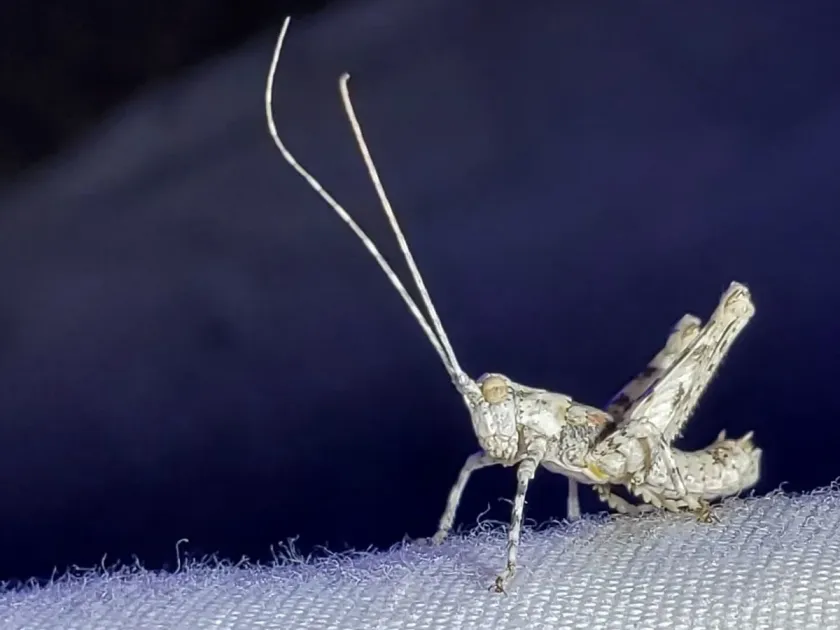
Tanaocerus koebelei belongs to the order Orthoptera and the family Tanaoceridae. This small insect is adapted to the harsh conditions of arid zones and is frequently found in the desert regions of North America.
Externally, the insect has the characteristic appearance of grasshoppers but is distinguished by the specific structure of its antennae and general body shape, which allows it to successfully camouflage in rocky or sandy soils.
Males and females may differ in size and color patterns, which helps the species blend in with the surrounding vegetation and avoid detection by natural predators.
This pest is primarily active during the daytime, showing high resistance to moisture deficits and extreme temperature fluctuations typical of its habitat.
The taxonomy of the species highlights its uniqueness, as the family Tanaoceridae includes a limited number of species that lead an extremely secretive lifestyle.
What it damages
The primary diet of Tanaocerus koebelei consists of various xerophytic plant species growing in deserts, including shrubs and subshrubs.
In years of mass outbreaks, this pest can cause noticeable damage to native vegetation by consuming leaves, young shoots, and buds, which weakens the overall health of the plants.
Although agricultural lands are rarely subject to massive attacks by this species, focal damage to forage crops is possible in areas bordering deserts.
The pest possesses a fairly wide range of feeding preferences, allowing it to survive during seasonal vegetation changes by switching from one type of desert flora to another.
The greatest damage is noted during the growing season of desert plants, when succulent parts of the stems become the main source of water for both nymphs and adults.
When it appears
The biology of Tanaocerus koebelei is closely linked to rainfall patterns in desert zones, as their development is activated during periods of humidity.
Adults are most frequently encountered in the spring and early summer periods when desert vegetation begins active growth after winter rains.
The lifecycle includes an egg stage characterized by high drought resistance, allowing the pest to survive unfavorable seasons in the soil.
Nymphs pass through several developmental stages, gradually increasing in size and expanding their feeding range as they approach maturity.
After the breeding cycle concludes, the population numbers may drop sharply, which is associated with the depletion of food resources and the onset of extremely hot summer periods.
Signs of infestation
The presence of the pest can be determined by characteristic nibbling on the edges of plant leaves, which appear as uneven, jagged sections of damaged tissue.
At early stages, the presence of nymphs in the grass cover is manifested by tiny holes on the leaves of young shrubs, which increase rapidly as the pest grows.
When inspecting plants in the morning, one can spot the insects themselves, which, when disturbed, make short jumps or freeze, mimicking dry twigs.
The presence of excrement in the form of small dark granules under damaged plants is also an indirect sign of a large group of Tanaocerus activity.
- Damage to buds and terminal shoots of shrubs.
- Skeletonization of leaves in areas of local insect concentration.
- Presence of shed nymphal skins on plant stems.
Control measures
Controlling Tanaocerus koebelei in natural conditions is complicated, so primary protection measures are aimed at preventing the pest from entering cultivated areas.
An effective method is maintaining a high level of agricultural practices, including timely weed management, which serves as a reservoir for the pest.
In the event of mass outbreaks, local applications of contact or stomach-action insecticides, approved for use in the given regions, may be employed.
Monitoring population density during the pre-season period plays a crucial role, allowing for the prediction of pest appearance risks and the implementation of preventive measures in advance.
The use of biological control methods, such as utilizing natural entomophages or entomopathogenic fungi, is considered a promising direction for environmentally safe pest management.
Taxonomy
- Latin name
- Tanaocerus koebelei
- Order
- Orthoptera (locusts)
- Family
- Tanaoceridae
- EPPO code
- TANAKO
Discussion
No discussions yet — be the first.