
Tanaocerus
Tanaocerus
Description
How to identify
Tanaocerus is a genus of insects belonging to the order Orthoptera and the family Tanaoceridae. These grasshoppers are specially adapted to harsh desert and arid environments.
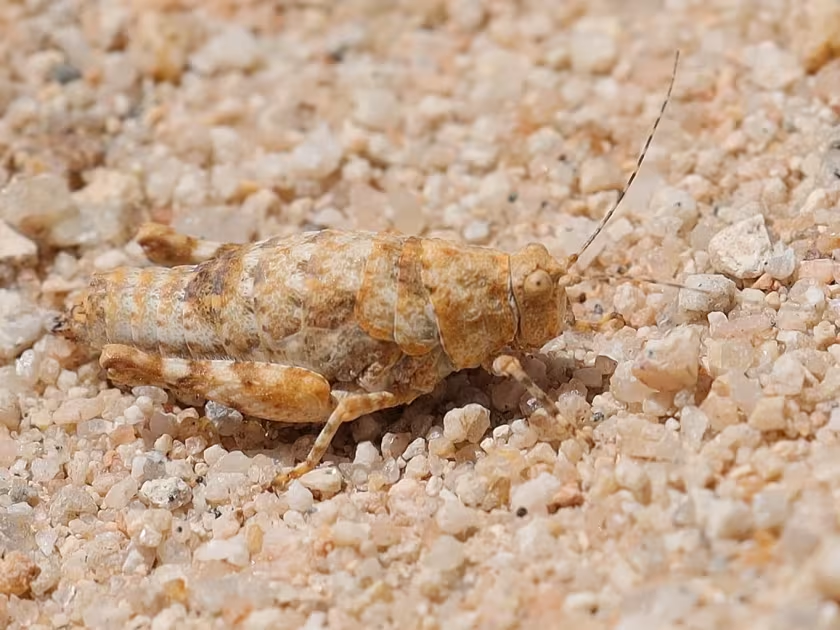
They possess a compact body structure with camouflage coloring, which allows them to perfectly blend into the sandy or gravelly soil of their natural habitat.
The visual systems of these insects are highly developed, enabling them to detect movement from significant distances in wide, open desert spaces.
Tanaocerus species are known for their extreme endurance, allowing them to survive in regions where moisture and food sources are scarce.
Their systematic classification places them within a unique group of grasshoppers that have evolved to thrive in specific, high-stress ecological niches.
What it damages
The primary diet of Tanaocerus consists of various wild desert grasses, shrubs, and succulents that can tolerate arid conditions.
While they typically stay in wildlands, they can pose a threat to agricultural crops if farms are established in close proximity to their native arid zones.
These pests feed on leaves and young shoots, weakening the plants' ability to photosynthesize and survive in drought-stricken areas.
In cases of high population density, they can cause significant damage to forage crops, leading to reduced yields and economic loss for farmers.
The loss of foliage in desert vegetation also threatens the overall health of the ecosystem, as these plants play a vital role in soil stabilization.
When it appears
The life cycle of Tanaocerus is closely linked to the vegetation periods in the desert, which are usually triggered by seasonal rainfall.
They overwinter primarily as eggs, which are buried in the soil to protect them from dehydration and extreme temperature drops.
Larval emergence typically occurs in the spring, once the soil temperature is adequate and fresh plant growth becomes available for feeding.
Adult insects are active during the warmer months, although they often adopt nocturnal or crepuscular habits to escape the intense daytime heat.
The cycle completes at the end of the season when adults lay their eggs in the soil, ensuring the survival of the next generation through the winter.
Signs of infestation
The presence of Tanaocerus is often identified by irregular feeding patterns on the leaves of plants, with jagged edges being a key indicator.
Small, granular droppings left at the base of plants or on the surrounding soil provide clear evidence of an active infestation by these insects.
A quick jump or movement of many individuals when disturbing the vegetation is a common sign of a significant infestation in a field.
Infested plants may exhibit stunted growth, wilting, and in severe cases, nearly total defoliation of the tender upper parts of the stems.
Observing the insects during the early morning hours can help confirm their identity, as they are most active when temperatures are more moderate.
Control measures
Effective control of Tanaocerus starts with agro-technical methods such as deep soil cultivation to disrupt and destroy their overwintering egg sites.
The use of insecticides should be restricted to cases where populations exceed economic thresholds, ensuring minimal impact on the local desert environment.
Encouraging natural predators, such as insectivorous birds and reptiles, is a sustainable way to keep the grasshopper population in check.
Monitoring programs using light traps can provide early warning of population surges, allowing farmers to take action before significant crop loss occurs.
Maintaining healthy, resilient crop varieties and implementing buffer zones between fields and wildlands can further reduce the impact of these pests.
Taxonomy
- Latin name
- Tanaocerus
- Order
- Orthoptera (locusts)
- Family
- Tanaoceridae
- EPPO code
- TANASP
Discussion
No discussions yet — be the first.