
Free-tailed bat
Tadarida
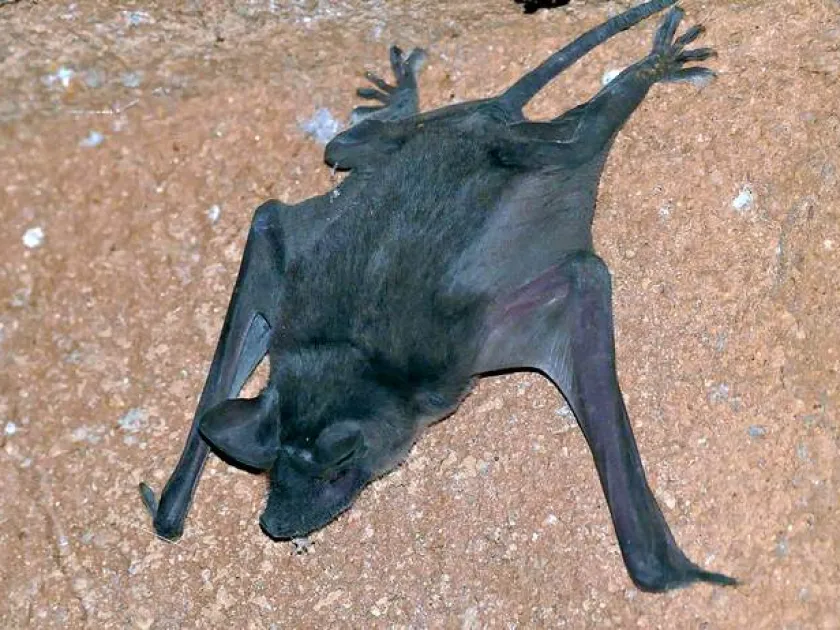
Description
How to identify
Free-tailed bats (genus Tadarida) belong to the order Chiroptera and the family Molossidae. They are mammals distinguished by a characteristic wrinkle on their upper lip.
These bats possess long, narrow, and pointed wings, allowing them to fly at high speeds and reach considerable altitudes while hunting for insects.
Unlike agricultural pests, they rely on complex echolocation systems to navigate and hunt in complete darkness with high efficiency.
They typically roost in colonies within rocky crevices, buildings, or large hollow trees, and are strictly nocturnal creatures.
It is crucial to emphasize that Tadarida are not phytophagous; they feed exclusively on insects and have no interaction with plant tissues.
What it damages
Free-tailed bats cause no damage to agricultural crops. They are exclusively insectivorous and do not consume leaves, seeds, roots, or any other plant parts.
Their role in the agricultural ecosystem is highly beneficial, as they consume vast quantities of nocturnal insect pests, including agricultural moths and beetles.
By consuming these insects, they act as a natural, free-of-charge pest management tool, significantly reducing the pressure from pest populations on fields.
Scientific studies frequently highlight the economic value of these bats in minimizing crop damage by natural predation of harmful insect species.
Therefore, they should be considered valuable allies for farmers rather than a threat to their production output.
When it appears
The activity of free-tailed bats is seasonal and highly dependent on ambient temperatures and the availability of insect prey throughout the year.
In spring, they emerge from hibernation or migration, increasing their activity as temperatures rise and the population of nocturnal insects begins to recover.
During the summer months, activity peaks as bats focus on foraging and rearing their young, resulting in high consumption rates of insects across local habitats.
As autumn approaches and temperatures drop, their metabolic activity slows down, leading to migration or preparation for winter dormancy.
Their daily activity is restricted to the night, with most foraging occurring during the early evening hours after sunset.
Control measures
Since free-tailed bats are not pests, no control measures are required. They should be protected as essential components of the ecosystem.
Farmers can enhance the presence of these beneficial animals by providing artificial roosting boxes and maintaining natural landscape features.
The use of broad-spectrum insecticides should be minimized, as these chemicals can be harmful to bat populations, disrupting the natural biological control they provide.
Integrated pest management strategies should emphasize the importance of preserving these mammals to promote sustainable and healthy agro-ecosystems.
Consulting with wildlife biologists can help landowners develop strategies that encourage bat activity, thereby reducing reliance on synthetic pesticides.
Taxonomy
- Latin name
- Tadarida
- Family
- Molossidae
- EPPO code
- TADASP
Discussion
No discussions yet — be the first.