
Szepligetella
Szepligetella
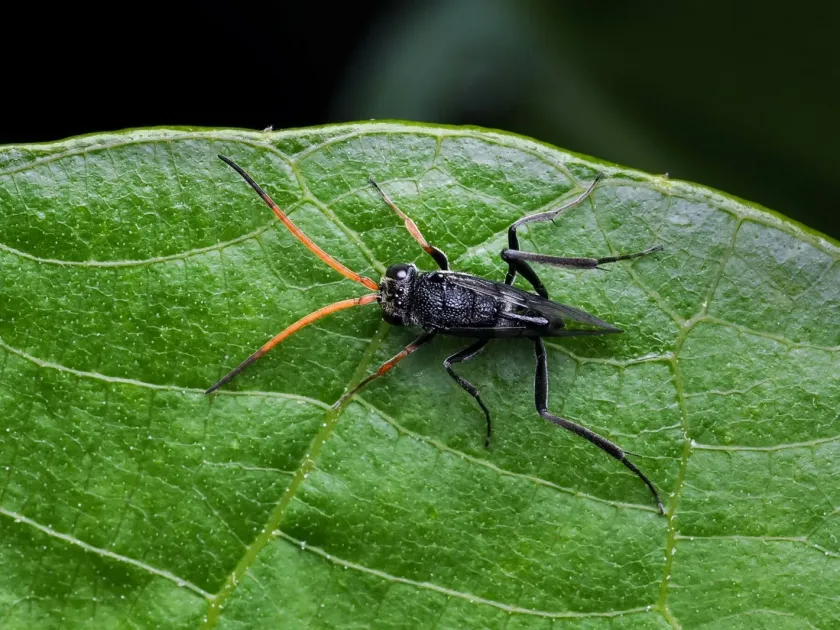
Description
How to identify
Szepligetella belongs to the Braconidae family of parasitic wasps, part of the Hymenoptera order. These are small insects often confused with common pests due to their complex life cycle involving other arthropods.
Morphologically, members of this genus feature the characteristic slender abdomen and well-developed wings of braconid wasps. The adult body length typically does not exceed a few millimeters, making field identification challenging without specific tools.
Their coloration ranges from dark brown to almost black, providing camouflage in natural habitats. Long, filiform antennae are actively used to locate potential hosts for egg-laying.
The primary feature of these insects is their lifestyle as parasitoids, meaning they develop within or on the bodies of other insects. Understanding their taxonomy is crucial for accurate identification in agroecosystems.
Agronomists should note that many Szepligetella species contribute to biological population control, so precise identification is necessary before initiating any protective measures.
What it damages
Szepligetella is not a typical leaf-eating pest. These insects primarily parasitize larvae of various beetles, often associated with wood or the stems of herbaceous plants.
The damage caused to plants is indirect: if Szepligetella parasitizes beneficial insects, it may disrupt the natural balance in orchards or fields. In some cases, they inhabit cereal stems where their hosts develop.
Crops potentially affected include timber species, fruit trees, and certain technical crops damaged by wood-boring insects.
Direct impact on plant tissue is minimal, as the wasp larva feeds primarily on the internal organs of the insect host inside the plant stem or trunk.
In industrial agriculture, this species is often viewed more as an indicator of entomofauna health rather than a primary pest requiring mass insecticide application.
When it appears
Adult Szepligetella activity occurs during the spring and summer, coinciding with the mass emergence of adults searching for egg-laying sites.
Temperature plays a decisive role in the developmental cycle, with moderately warm months and high humidity being most favorable for their propagation.
Depending on the climatic zone and host availability, one or two generations may develop within a single growing season.
Hibernation usually occurs at the larval stage, either inside a cocoon or within the host's body, concealed in plant debris or the soil.
The insect emergence often matches the vegetation period of the primary host plants, ensuring a stable life cycle for the species.
Signs of infestation
Indications of presence include small exit holes on the surface of stems or tree trunks, created by adults emerging after completing development.
In infested areas, one may find characteristic parasitoid cocoons left behind after the larval stage is completed.
An indirect sign is the presence of dead insect hosts near the damaged tissue, with intact exteriors but consumed internal organs.
The absence of typical foliage damage accompanied by stem holes can indicate the activity of parasitic wasp groups, including Szepligetella.
Professional monitoring using traps is the most reliable way to confirm the presence of this species in a given area during its active phase.
Control measures
The use of chemical insecticides against Szepligetella is generally discouraged, as these insects often provide ecological services by limiting the populations of harmful species.
The primary control method involves cultural practices, such as the timely removal and destruction of infested plant material where these insects may overwinter.
Maintaining crop rotation and avoiding dense planting reduces the likelihood of creating breeding grounds for both the hosts and their parasitoids.
- Limiting the use of broad-spectrum insecticides.
- Sanitary pruning of trees to remove dead wood.
- Planting flowering borders to attract and support beneficial entomophages.
If population reduction is necessary, biological control agents should be preferred, as they are more selective and environmentally friendly.
Taxonomy
- Latin name
- Szepligetella
- Order
- Hymenoptera
- Family
- Evaniidae
- EPPO code
- SZEPSP
Discussion
No discussions yet — be the first.