
Muslin moth
Syndemis musculana
Description
How to identify
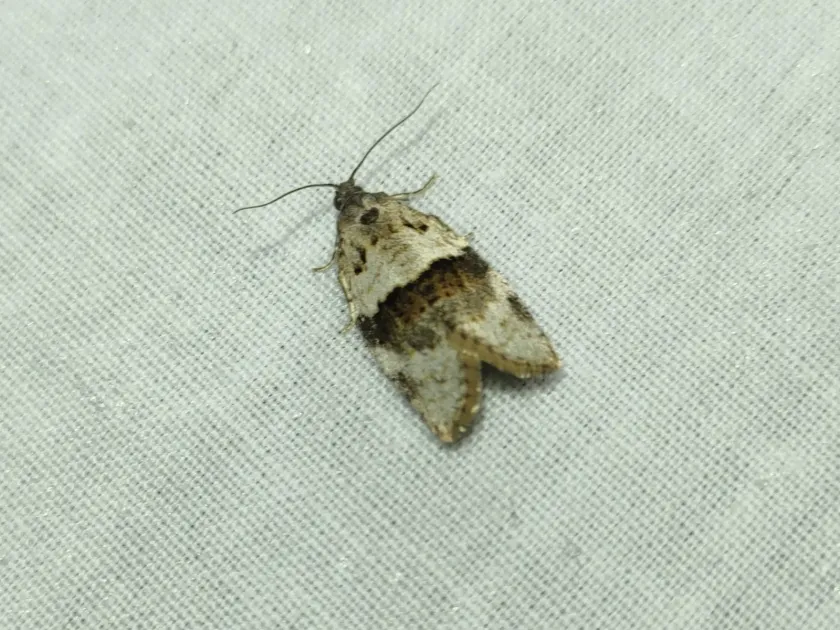
The Muslin moth (Syndemis musculana) is a member of the Tortricidae family within the order Lepidoptera. The wingspan of the adult moth typically ranges from 16 to 22 mm, featuring yellowish-brown forewings with distinct darker transverse bands.
The larvae are typical leafrollers, reaching a length of approximately 15–18 mm when fully grown. They possess a pale green body and a dark brown to black head, allowing them to blend into the foliage of their host plants effectively.
What it damages
This species is a known polyphagous pest, meaning it feeds on a wide range of woody plants. Fruit trees such as apple, pear, cherry, and plum are particularly susceptible to larval feeding, leading to reduced tree vigor.
Additionally, the pest affects various berry bushes, including currants and raspberries. Its ability to infest wild forest trees like oaks and birches ensures a permanent reservoir of the pest in areas surrounding agricultural fields.
When it appears
The Muslin moth generally completes one generation per year, although two generations may occur in warmer climates. The insect overwinters as a young larva inside a dense silken hibernaculum hidden in bark crevices or among leaf litter.
Activity resumes in early spring, synchronized with the bud burst of host trees. The larvae emerge to feed on developing buds and flowers. The adult flight period typically takes place between May and June, depending on local weather conditions.
Signs of infestation
The most noticeable sign of infestation is the presence of rolled or folded leaves, bound together by silk threads. Larvae hide and feed inside these shelters, causing significant damage to the leaf tissue.
Early-season feeding results in damaged buds and blossom drop. Later in the season, larvae may scrape the surface of young fruits, causing scarring, deformities, and potential entry points for secondary infections or pathogens.
Control measures
Integrated pest management includes cultural practices such as removing leaf litter and scraping loose bark to eliminate overwintering larvae. Ensuring good orchard sanitation helps reduce the population density.
Chemical control is effective during the early larval stages when they are still exposed. Application of targeted insecticides during the pre-blossom and post-blossom stages is recommended. Furthermore, pheromone traps are useful for monitoring population levels and timing insecticide applications accurately.
Taxonomy
- Latin name
- Syndemis musculana
- Order
- Lepidoptera (butterflies)
- Family
- Tortricidae
- EPPO code
- SYNDMU
Discussion
No discussions yet — be the first.