
Syndemis
Syndemis
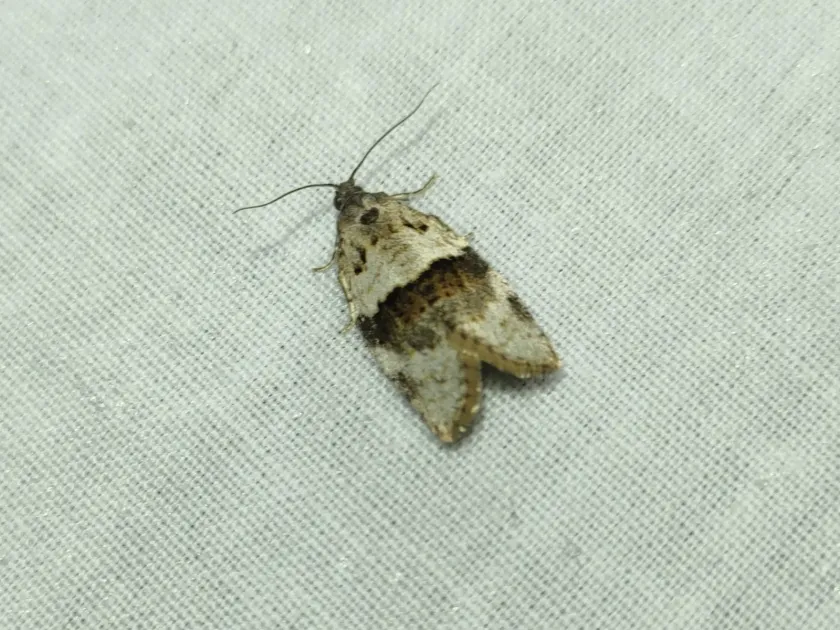
Description
How to identify
Syndemis (Syndemis musculana) belongs to the order Lepidoptera and the family Tortricidae. The adult moth has a wingspan of 16 to 22 mm, with forewings ranging from grey-brown to ochre, featuring a distinct dark oblique band across the middle.
The larvae of Syndemis undergo five larval instars. The caterpillar is typically yellowish-green or olive in color with a shiny dark head and thoracic shield. Full-grown larvae can reach 18–20 mm in length and are covered with fine light setae.
The pupa of the pest is brown and measures approximately 8–10 mm. It is usually found within rolled leaves of the host plant, where the larva pupates after completing its active feeding period.
Species identification requires laboratory examination of adult genitalia, although the moth can be recognized in the field by its characteristic wing pattern and the typical resting posture of leafroller moths.
In its natural habitat, the pest is found throughout forest-steppe and forest zones, preferring moderately humid and shaded areas, which allows it to thrive in both commercial orchards and natural woodlands.
What it damages
Syndemis is a polyphagous pest affecting a wide range of woody plants and shrubs. Common hosts include apple, pear, plum, and cherry trees, as well as various forest species such as oak, birch, and pine.
Damage is primarily caused to reproductive organs and foliage. In spring, larvae feed on buds, blossoms, and flowers, significantly reducing potential yield before fruit even begins to set.
During the summer months, the pest shifts to fruitlets and mature fruits. Larvae excavate superficial cavities in young fruit, leading to malformation or premature fruit drop due to subsequent fungal infections.
Leaf damage occurs as the larvae roll leaves into tubes or bind them together with silk. Within these shelters, the larvae feed and remain protected from environmental factors and natural predators.
Mass outbreaks of Syndemis can result in losses of up to 30% of the harvest if left unmanaged, and cause overall tree weakening, making them more susceptible to winter frosts and various diseases.
When it appears
The species overwinters as a larva in dense cocoons hidden within bark crevices, plant debris, or rolled dry leaves remaining on the tree branches throughout the winter period.
Spring emergence of larvae coincides with bud burst, aligning with the "green cluster" phenological stage in most pome fruits. At this time, they begin intense feeding on succulent new tissues.
The flight of the first generation of moths occurs from May through June. Depending on regional climatic conditions, Syndemis may produce one or two generations per season, extending the risk period for the orchard.
Eggs are laid by females on the upper surface of leaves in flat, scale-like clusters. The incubation period lasts 10 to 14 days, followed by the hatching of the summer generation of larvae, which are as destructive as their spring counterparts.
By late summer, larvae complete their development and enter diapause, preparing for winter hibernation, which brings the annual cycle of the pest in the orchard to a close.
Signs of infestation
The first visual sign of pest presence is the appearance of silk webbing on shoot tips. Leaves pulled together by silk threads begin to dry out and curl, which is immediately noticeable during a routine canopy inspection.
Damaged buds in spring appear hollowed out or eaten, often with small dark granular frass (excrement) visible around the feeding sites.
Young fruitlets may show patches of damaged skin or small entry holes, particularly where the fruit contacts a leaf, indicating that larvae have been grazing on the surface.
Detection of adult moths is possible using pheromone traps placed in orchards to monitor population density and determine the precise timing for control measures.
The presence of mass webbing across the tree canopy in June indicates high activity of the current generation, necessitating immediate intervention by an agronomist to save the fruit crop.
Control measures
Chemical control methods involve the application of systemic or contact-stomach insecticides during periods of active larval emergence from overwintering sites or during the peak hatching of the summer generation.
Biological protection measures rely on products based on Bacillus thuringiensis, which are effective against young larvae while remaining safe for beneficial pollinators and natural enemies.
Agrotechnical practices include regular cleaning of tree trunks to remove dead bark where larvae overwinter, as well as the collection and disposal of fallen leaves that may harbor pests.
The use of pheromone traps allows for precise calculation of insecticide application timing, which minimizes the number of sprays required and reduces the ecological impact on the orchard ecosystem.
An important component of integrated pest management is supporting populations of natural entomophages, such as Trichogramma wasps and predatory bugs, which can significantly suppress leafroller populations without chemical intervention.
Taxonomy
- Latin name
- Syndemis
- Order
- Lepidoptera (butterflies)
- Family
- Tortricidae
- EPPO code
- SYNDSP
Discussion
No discussions yet — be the first.