
Fern weevil
Syagrius intrudens
Description
How to identify
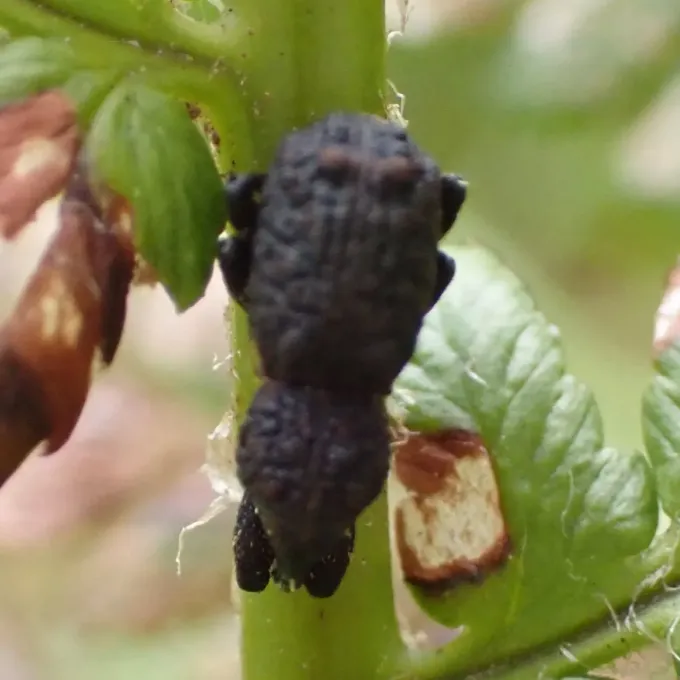
The fern weevil (Syagrius intrudens) is a beetle species belonging to the Curculionidae family. Adult specimens typically measure between 8 and 10 mm in length and possess a dark brown to black coloration.
Like other weevils, they are characterized by a distinct rostrum (snout) which is used for feeding and preparing egg-laying sites. Their body surface can appear rough due to tiny scales, though these may wear off as the beetle matures.
The larvae are legless, C-shaped grubs, white to creamy in color with a hard brown head capsule. They spend their entire developmental phase feeding concealed within the host plant tissue.
The life cycle involves complete metamorphosis, covering egg, larval, pupal, and adult stages. Adults are nocturnal, preferring to hide in the plant debris or the base of stems during daylight hours.
Originally native to parts of Australia, this invasive species has been reported in greenhouses and nurseries worldwide, causing damage to diverse fern species.
What it damages
The fern weevil specifically targets a wide range of fern species, with particular impact on genera such as Cyathea, Dicksonia, and Blechnum. These plants are often susceptible to severe infestation in ornamental settings.
Larval feeding is the primary cause of damage, as grubs bore extensive tunnels through the petioles and rhizomes of the plants. This internal damage interrupts the vascular system, preventing water and nutrient transport.
Adult beetles contribute to damage by grazing on the foliage and younger fronds, leaving behind irregular notches. While usually less fatal than larval feeding, this negatively impacts the plant's aesthetic quality.
Infested plants often display signs of rapid decline, including drooping, chlorosis, and eventual death of the fronds. In dense collections, the pest can spread quickly from plant to plant.
Secondary infections, including fungal rots, often infiltrate the tunnels carved by larvae, leading to the rapid decay of the plant's internal structure and collapse of the stems.
Signs of infestation
Initial signs of a fern weevil infestation include small, pinpoint entry holes on the petioles or stipes where larvae have bored into the plant tissue.
A key diagnostic indicator is the premature wilting of fronds despite sufficient watering, caused by the disruption of internal transport channels within the stalk.
Visible exit holes indicate that the larvae have completed their development and emerged as adults, leaving the plant structure significantly weakened.
Frass, which resembles fine brown sawdust, is frequently found at the base of the plant or in the crotches of the fronds, indicating active feeding by the larvae.
- Yellowing and premature necrosis of individual fronds.
- Distorted growth patterns in emerging young fronds.
- Discovery of adult beetles during nocturnal inspections with a light.
Control measures
Preventative measures are essential, starting with strict quarantine procedures for any new fern specimens entering a nursery or collection to ensure they are pest-free.
Manual collection of adult beetles at night is a useful non-chemical approach to reduce the population, especially in home gardens or small collections where infestation is low.
Chemical control using systemic insecticides is highly recommended because it allows the poison to be transported within the plant tissues, effectively targeting the hidden larvae.
Products containing neonicotinoids or similar systemic compounds are typically chosen to provide long-lasting protection against internal feeding pests.
Sanitation practices, such as pruning and disposing of heavily infested plant parts by burning, are critical to interrupt the life cycle and prevent the re-emergence of the pest.
Taxonomy
- Latin name
- Syagrius intrudens
- Order
- Coleoptera (beetles)
- Family
- Curculionidae
- EPPO code
- SYAIIN
Discussion
No discussions yet — be the first.