
Fern weevil
Syagrius
Description
How to identify
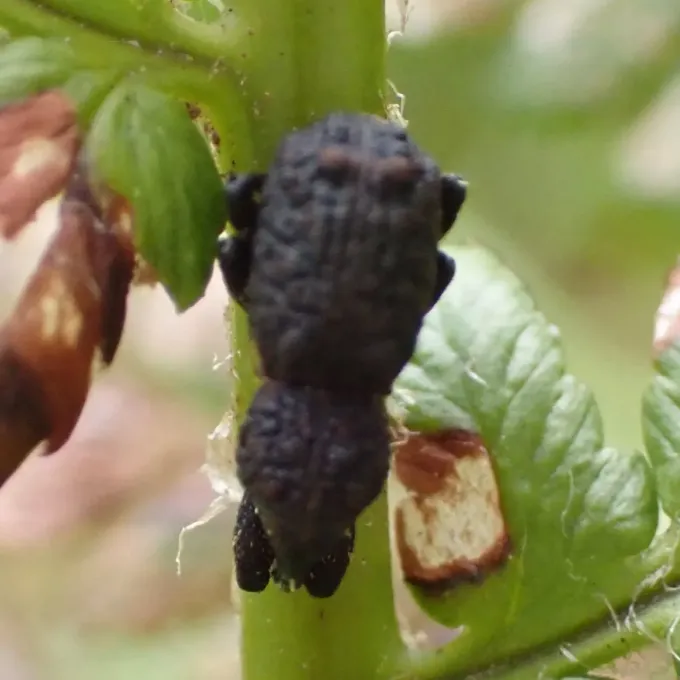
The fern weevil (Syagrius intrudens) is a beetle belonging to the family Curculionidae. Adult specimens are elongated, measuring 7 to 10 mm in length, and are typically dark brown or black, which provides effective camouflage against the stems and bark of their host plants.
The body of the beetle is covered in tiny scales and bristles, and the head features the characteristic snout of the weevil family. The larvae are legless, creamy-white in color with a distinct brown head capsule, and usually grow to about 10–12 mm long while living concealed inside plant tissues.
These beetles are primarily nocturnal, remaining hidden during daylight hours in leaf axils, under plant debris, or in soil crevices. This secretive lifestyle makes them particularly difficult to detect in the early stages of an infestation.
Reproduction can occur year-round in greenhouse environments, while in open landscapes, the life cycle is dictated by seasonal temperatures. However, given suitable warm conditions, they can reproduce rapidly and establish stable populations within a short period.
The primary vector for the spread of Syagrius intrudens is the trade and transport of infested nursery stock. As a result, the pest is frequently introduced into private gardens and botanical collections, where it can quickly become an established and persistent threat.
What it damages
The fern weevil specializes in feeding on various fern species, with a particular preference for genera such as Cyrtomium, Dryopteris, Polystichum, and Asplenium. These plants are susceptible both in indoor collections and outdoor garden settings.
Adult beetles cause damage by feeding on the margins of the fronds, creating characteristic notches or jagged edges. While this reduces the aesthetic value of the plant, the primary damage is caused by the larvae, which bore into the stems and stipes.
As the larvae feed internally on the vascular tissues of the stem, they disrupt the flow of nutrients and water to the frond. This leads to yellowing, wilting, and eventually the premature death of the affected fronds, significantly weakening the plant's overall vitality.
In cases of severe infestation, the pest can cause the total decline of even large, established fern clumps. Damaged tissues are also highly prone to secondary fungal infections, which further accelerate the collapse of the root system and the death of the specimen.
Damage to the plant's growing point is particularly critical, as it halts further leaf development. Because the pest spreads easily in dense plantings, an infestation can rapidly escalate to affect an entire collection of ferns if left unmanaged.
Signs of infestation
The first visual indication of a fern weevil infestation is the presence of distinctive notched or irregular chewing patterns along the edges of the fronds. These symptoms are a strong diagnostic indicator of weevil activity.
Secondary signs include small entrance holes near the base of the stipes or stems. Darkening or localized necrosis around these entry points often indicates that a larva has successfully bored into the interior of the plant stem.
By carefully dissecting a suspected stem, one can reveal internal tunnels filled with frass (insect excrement), which provides definitive proof of Syagrius intrudens activity. This invasive internal feeding is why external contact insecticides are often less effective.
General plant decline, often manifested as premature frond wilting despite adequate moisture, is frequently mistaken for root rot or drought stress. If the root system appears healthy but the plant continues to decline, the stem base must be examined for signs of weevil boreholes.
Adult beetles can be detected through nocturnal monitoring. Using a flashlight to inspect plants at night when the beetles are actively feeding is the most reliable method for confirming their presence in a collection.
Control measures
Controlling the fern weevil requires a comprehensive strategy that integrates mechanical, biological, and chemical methods. The most crucial preventive measure is strict quarantine of all new plant material for at least 2 to 4 weeks before introducing it into an established collection.
Mechanical control includes nocturnal manual removal of adults and the prompt pruning and destruction of any fronds showing signs of internal boreholes. Proper disposal of infested plant matter is essential to prevent re-emergence.
Chemical control is most effective using systemic insecticides that are absorbed by the plant and translocated into the tissues where the larvae feed. This approach is necessary to reach the hidden larvae effectively.
It is recommended to rotate chemical classes to mitigate the risk of resistance development. Regular preventative spraying during the early part of the growing season can help target adults before they have an opportunity to lay eggs in the stems.
- Application of entomopathogenic nematodes to the soil.
- Replacing topsoil in pots to remove overwintering pupae.
- Using sticky barriers or traps near the base of plants.
- Maintaining optimal environmental conditions to ensure plant vigor.
Taxonomy
- Latin name
- Syagrius
- Order
- Coleoptera (beetles)
- Family
- Curculionidae
- EPPO code
- SYAISP
Discussion
No discussions yet — be the first.