
Sunflower moth
Suleima helianthana
Description
How to identify
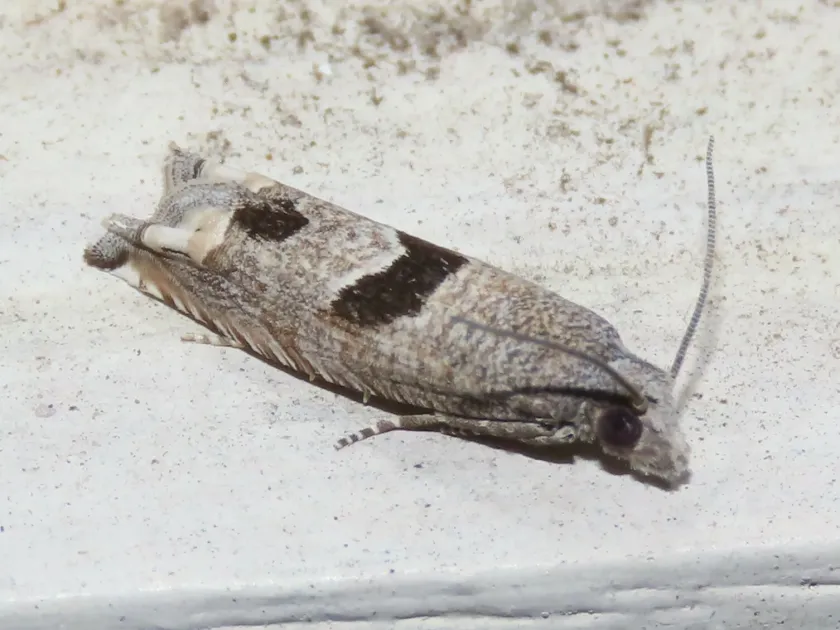
The sunflower moth (Suleima helianthana), also known as the sunflower bud moth, is a moth species belonging to the family Tortricidae in the order Lepidoptera. Adults are small, mottled, brownish-gray moths that are primarily nocturnal.
The larvae, which are the damaging stage of this insect, reach about 12-15 mm in length. They are typically creamy-white with a brown head capsule and can be found boring into the stems or floral buds of the host plant.
The insect typically completes two generations per growing season in temperate and warm climates. It overwinters as a mature larva inside the stems of sunflower plants or other suitable host debris.
Eggs are laid singly or in small clusters on the leaves or buds of the sunflower. Once the larvae emerge, they look for entry points to burrow into the plant's tissues.
Effective management starts with accurate identification of the pest and understanding the developmental windows when the larvae are exposed on the surface before entering the stem.
What it damages
The primary host for Suleima helianthana is the common sunflower (Helianthus annuus). The pest can also thrive on various wild species within the Asteraceae family found in or around field borders.
Larvae cause direct damage by tunneling into the stems and the base of the flower head. This tunneling disrupts the plant's vascular system, hindering the transport of water and nutrients.
Stems damaged by the moth are structurally weakened and highly prone to lodging (falling over) due to wind or heavy rain, which makes mechanical harvesting difficult or impossible.
The entry holes created by the larvae provide an easy pathway for secondary pathogens, such as fungi and bacteria, which can lead to stem rot and head rot, further reducing the overall crop quality.
Significant economic loss occurs when the damage to the head results in poor seed filling, reduced kernel weight, and lower oil content in the seeds.
Signs of infestation
The earliest sign of an infestation is the appearance of tiny holes on the sunflower stems or near the base of the flower buds, indicating where larvae have entered.
An accumulation of frass (larval excrement) near the entry points is a hallmark sign that the larvae are active inside the plant tissues.
Wilting of upper leaves or flagging of the flower head can occur if the larvae have bored into the crown or main stalk, cutting off nutrient flow to the affected area.
In cases of severe infestation, the sunflower head may develop abnormally, or the entire plant may appear stunted compared to healthy neighboring plants.
Dissecting the stems of symptomatic plants will reveal hollowed-out channels and the presence of larvae or pupae, confirming the diagnosis of a sunflower moth infestation.
Control measures
Cultural control is the most effective approach to managing the sunflower moth. Crop rotation is essential, and producers should avoid planting sunflowers in the same field for several consecutive years.
Post-harvest management is crucial; deep plowing or shredding of sunflower stalks helps to destroy the overwintering pupae and larvae, significantly reducing the population for the next season.
Eliminating wild sunflower species and related Asteraceae weeds from field margins reduces the alternate host reservoirs for the moth.
If chemical intervention is necessary, insecticides should be applied during the period when newly hatched larvae are active on the plant surface before they tunnel into the stem.
- Using pheromone traps for monitoring moth flight activity.
- Timing insecticide applications based on economic injury thresholds.
- Maintaining healthy soil fertility to help plants recover from light damage.
- Selecting sunflower hybrids that show natural resistance to stalk-boring pests.
Taxonomy
- Latin name
- Suleima helianthana
- Order
- Lepidoptera (butterflies)
- Family
- Tortricidae
- EPPO code
- SULEHE
Discussion
No discussions yet — be the first.