
Suleima
Suleima
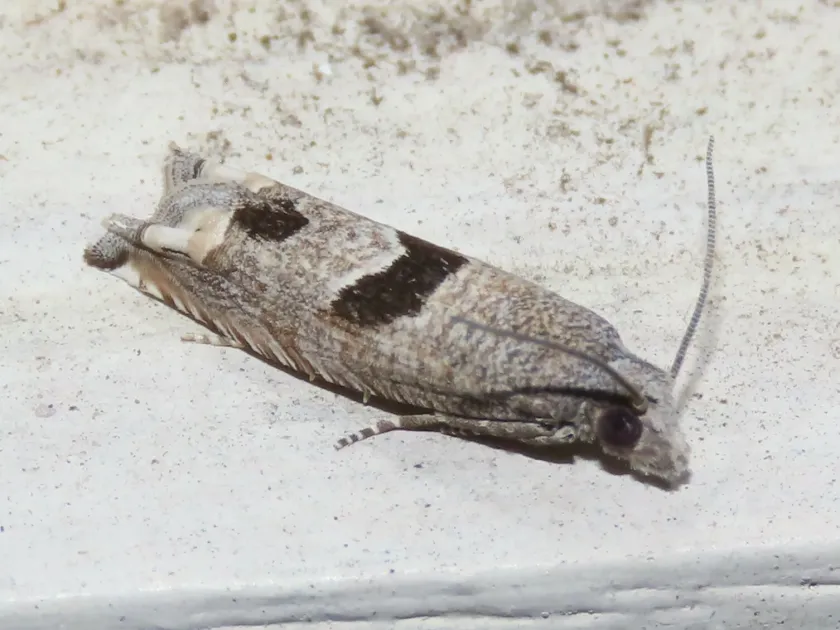
Description
How to identify
Suleima (lat. Suleima helianthana) is a moth species belonging to the family Tortricidae, known as a significant pest of sunflower crops and wild Asteraceae plants.
The adult moth is relatively small with cryptic coloration that provides excellent camouflage on the host plant, making it difficult to detect during daylight hours.
The larval stage, or caterpillar, is the destructive phase. The larvae are typically characterized by a cylindrical body, a distinct dark head capsule, and a series of sclerotized plates on their segments.
The life cycle undergoes complete metamorphosis, including egg, larva, pupa, and adult stages, with the duration of each phase heavily dependent on ambient temperature.
Overwintering typically occurs as a mature larva inside plant debris or within the topsoil, where it remains protected until the conditions become favorable for pupation.
What it damages
Suleima larvae primarily cause damage by boring into the stems and flower heads (capitula) of sunflower plants, which interferes with nutrient and water transport.
Larval feeding within the stem significantly weakens the plant's structural integrity, increasing the risk of lodging during strong winds or heavy rain.
Destruction of the inner tissues of the sunflower head directly impacts seed yield, as the larvae consume developing seeds and disrupt the pollination process.
Feeding sites often become secondary infection points for various fungal pathogens, leading to head rot and significant reduction in seed quality and oil content.
Severe infestations in production fields can lead to substantial economic losses, especially when high population densities coincide with the critical flowering stage.
When it appears
Adult moth activity typically commences in the late spring or early summer, triggered by the rise in daily mean temperatures and the availability of host plants.
The peak period for egg-laying aligns with the budding and early flowering phases of the sunflower, which are the most susceptible stages for the crop.
The development of larvae occurs throughout the summer months, with their feeding intensity peaking during the seed filling stage of the sunflower development.
Depending on the geographic region and climatic conditions, multiple generations may occur within a single growing season, complicating the control efforts.
Regular monitoring using pheromone traps or field inspection is essential to track moth emergence and to time chemical or biological interventions accurately.
Signs of infestation
The presence of Suleima can often be detected by identifying entry holes on the stems, which are frequently accompanied by frass (larval excrement) accumulation.
Visual inspection of sunflower heads may reveal silk webbing produced by the larvae to protect themselves while feeding on the florets and developing seeds.
Localized wilting of leaves or segments of the sunflower head can indicate internal damage caused by larval feeding on vascular tissues.
- Presence of holes in the stem with visible brownish frass pellets.
- Webbing covering the surface of the flower head or connecting parts of the capitulum.
- Presence of larvae inside the stem pith or within the sunflower head upon dissection.
Stunted growth or asymmetric development of the sunflower head compared to adjacent healthy plants can also serve as a diagnostic indicator of an infestation.
Control measures
Cultural control practices, such as deep fall plowing, are highly effective as they destroy the overwintering larvae residing in crop residues.
Crop rotation remains a fundamental strategy, ensuring that host plants are not grown in the same field for consecutive years, thus breaking the life cycle of the pest.
Timely application of systemic insecticides can be effective if targeted at the early larval stages, before they bore into the plant stems where they become protected.
Integrating biological control agents, such as parasitoid wasps or microbial insecticides like Bacillus thuringiensis, helps maintain pest populations below the economic threshold.
Monitoring the threshold of moth density in pheromone traps allows farmers to make informed decisions regarding the necessity and timing of field treatments.
Taxonomy
- Latin name
- Suleima
- Order
- Lepidoptera (butterflies)
- Family
- Tortricidae
- EPPO code
- SULESP
Discussion
No discussions yet — be the first.