
Stylopalpia costalimai
Stylopalpia costalimai
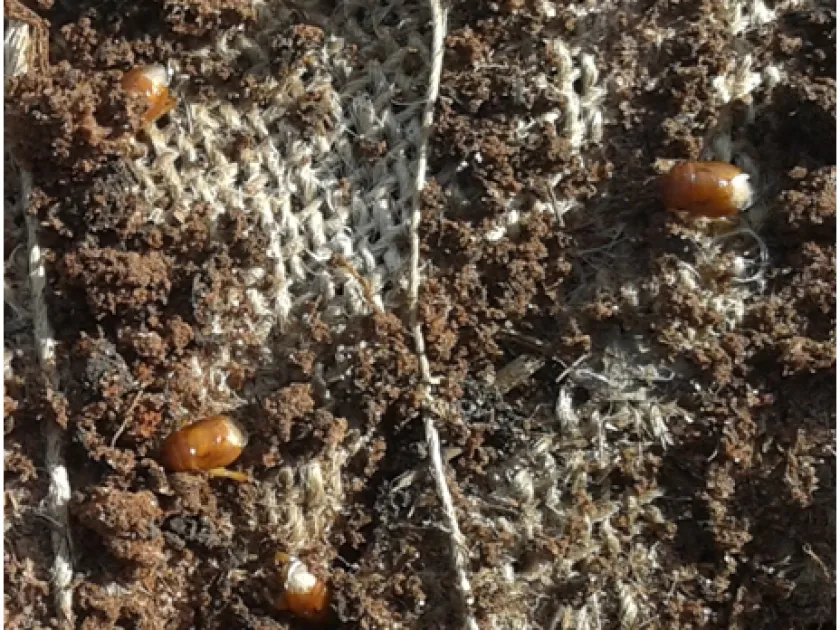
Description
How to identify
Stylopalpia costalimai is a species belonging to the order Lepidoptera and the family Pyralidae, known for its specific host plant relationships.
The adult form is a small moth, often exhibiting cryptic coloration that provides camouflage against the bark or foliage of the host plant.
The life cycle encompasses a full transformation, including egg, larval, pupal, and adult stages, with each stage adapted to specific environmental conditions.
Larvae are the primary feeding stage, characterized by specific mandible structures adapted for tunneling into the tough tissues of legume seed pods.
The pupal stage is often spent within a protective cocoon, allowing the species to successfully overwinter in the soil or within plant debris.
What it damages
The larvae of this species feed primarily on the seeds of legume plants, with Bauhinia species being highly susceptible to infestations.
Damage occurs when larvae bore into the developing seed pods, consuming the seed embryo and destroying the reproductive potential of the plant.
The internal tunneling activity creates galleries that serve as entry points for secondary pathogens like fungi, leading to rot and further crop loss.
Economic impact is significant, as the destruction of seeds directly reduces both the harvest weight and the viability of the seeds for future planting.
In cases of severe infestation, the cumulative damage can lead to a near-total loss of the crop's seed production in the affected area.
Signs of infestation
The most visible sign is the presence of small entry holes on the seed pods, often accompanied by frass or fine silk webbing near the damage site.
Premature yellowing or shriveling of the seed pods is a common indicator that internal larval feeding is disrupting the nutrient supply.
The discovery of hollowed-out seeds upon harvesting or inspection confirms the presence and activity of the larvae within the pod.
In some cases, plant exudates or resin may be seen around the entry points as the plant attempts to seal off the damaged tissues.
Localized browning or dark patches on the surface of the pod often delineate the area where a larva has been actively tunneling through the seed tissues.
Control measures
Integrated pest management starts with regular field monitoring using pheromone traps to detect the arrival and population density of the adult moths.
Cultural practices, including the deep plowing of fields post-harvest, are essential to destroy overwintering pupae hidden in the soil.
Sanitation is critical; all dropped or damaged pods should be removed from the field and destroyed to prevent the next generation of the pest.
Chemical control measures should be timed to coincide with the hatching period of the larvae to ensure the highest efficacy of the applied insecticides.
Biological control using entomopathogenic fungi or bacterial agents like Bacillus thuringiensis can provide an environmentally friendly alternative for population reduction.
Taxonomy
- Latin name
- Stylopalpia costalimai
- Order
- Lepidoptera (butterflies)
- Family
- Pyralidae
- EPPO code
- STYPCO
Discussion
No discussions yet — be the first.