
Styela ascidian
Styela
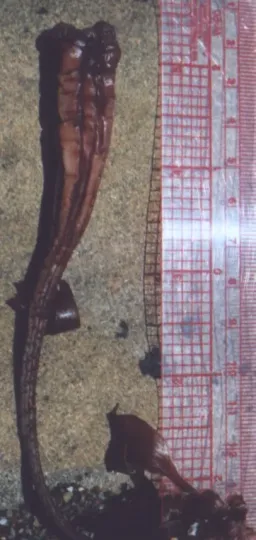
Description
How to identify
Styela is a genus of ascidians (sea squirts) belonging to the phylum Chordata. These marine organisms are sessile filter feeders that attach themselves to hard surfaces.
They are characterized by a tough, leathery tunic and two siphons used for water filtration. Their color ranges from reddish-brown to greyish, depending on the environment.
The most prominent species, Styela clava, often has a club-shaped body, which is a key identification feature for researchers and marine biologists in the field.
Styela is not a pest of terrestrial agriculture, but it is considered a major biofouling organism in maritime industries and shellfish farming operations worldwide.
As part of the Styelidae family, they follow a lifecycle involving a free-swimming larval stage that quickly settles on any available substrate to metamorphose into an adult.
What it damages
Styela causes significant damage to aquaculture by competing for space and nutrients with commercially valuable shellfish like mussels, oysters, and scallops.
By aggressively filtering phytoplankton, these tunicates deplete the food source, leading to stunted growth and reduced meat yield in cultured shellfish species.
Massive colonization of farming equipment increases the drag and weight of submerged structures, often leading to equipment failure, net collapse, or structural damage.
Heavy fouling reduces water circulation through nets, causing localized hypoxia and creating an environment that promotes the growth of secondary pathogens and bacteria.
Their presence on market-ready products often results in rejection during phytosanitary inspections, posing a barrier to export markets for the aquaculture industry.
When it appears
The reproduction and larval settlement of Styela are highly dependent on water temperatures, with peak activity occurring during the spring and summer months.
Warmer temperatures trigger the release of larvae, which actively seek suitable surfaces for attachment, making this period critical for farm maintenance.
In regions with temperate or tropical climates, breeding cycles can span almost the entire year, necessitating constant vigilance against colonization.
During the winter, metabolic processes slow down significantly, but established colonies remain attached, continuing to occupy valuable space on farm infrastructure.
Aquaculture managers must track larval settlement patterns to schedule anti-fouling treatments before the major recruitment waves occur.
Signs of infestation
The most visible sign of an infestation is the presence of leathery, club-shaped growths on ropes, nets, and the shells of cultured mollusks themselves.
A noticeable increase in the weight of submerged lines and a change in the surface texture of mesh nets indicate the presence of extensive ascidian colonies.
Decreased growth rates of target shellfish species, despite adequate feeding conditions, are a common symptom of high competition from invasive Styela.
Cloudy or low-quality water within the cage enclosures often indicates heavy fouling, as these organisms affect the local water chemistry and flow through their filtration.
Physical degradation of mesh nets, caused by the strong attachment bases of the tunicates, serves as a clear indication of a long-term infestation issue.
Control measures
Mechanical removal through high-pressure water cleaning or manual scrubbing remains the primary method for controlling Styela on farm infrastructure.
The application of non-toxic anti-fouling coatings is highly effective in preventing larval settlement on cages, ropes, and farming rafts.
Strategic site selection, avoiding areas with known high concentrations of invasive tunicate larvae, is essential for long-term farm sustainability.
Short-term exposure of equipment to freshwater or high-temperature water can successfully kill settling larvae without chemical residues.
- Regular monitoring of water for tunicate larval density
- Routine maintenance and cleaning of submerged nets
- Use of antifouling surfaces on cages and buoys
- Optimizing shellfish density to reduce available attachment space
- Strict quarantine procedures when moving equipment between regions
Taxonomy
- Latin name
- Styela
- Family
- Styelidae
- EPPO code
- STYESP
Discussion
No discussions yet — be the first.