
Strophosoma laterale
Strophosoma laterale
Description
How to identify
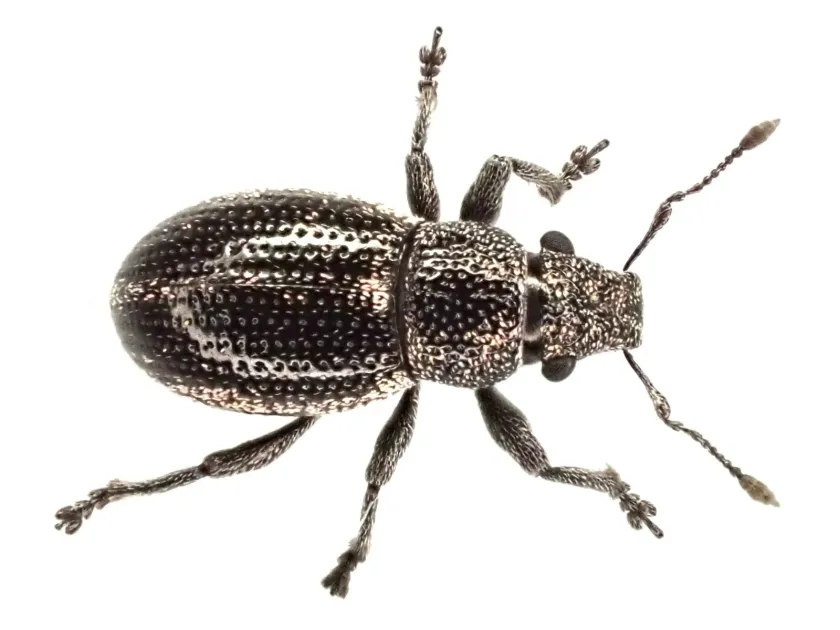
Strophosoma laterale is a species of broad-nosed weevil belonging to the family Curculionidae. These beetles are generally small, characterized by a short, broad rostrum and a robust body structure typical of the genus.
The coloration of the adult beetle ranges from dark brown to black, often covered with fine, grayish scales or hairs, which give the insect a matte appearance. These scales help the beetle blend into soil and debris.
The larvae of this species are C-shaped, legless, and have a fleshy, creamy-white appearance with a distinct, sclerotized brown head capsule. They live exclusively in the soil.
The life cycle involves complete metamorphosis (egg, larva, pupa, adult). The species is highly adapted to the soil-dwelling larval stage, which is the most critical period for plant root system health.
Found across various temperate regions, they inhabit both woodland margins and agricultural landscapes, often moving from natural hosts to cultivated ornamental and fruit plants.
What it damages
The adult Strophosoma laterale is polyphagous, feeding on a wide array of host plants, including deciduous trees like oak and beech, as well as various berry bushes and shrubs.
Adult feeding is characterized by notching or scalloping of the leaf margins. While rarely fatal to large trees, this damage can significantly impact the health and aesthetic value of young nursery stock.
The larval stage is considered the most destructive. Larvae reside in the rhizosphere, feeding on the root system of host plants, which causes stunted growth, wilting, and in severe cases, the death of seedlings.
Damage to the root system is often hidden, making it difficult to diagnose until the plant shows visible symptoms of water and nutrient stress, such as yellowing or rapid decline.
In forest nurseries and orchards, this pest can cause significant economic losses by destroying the root systems of young saplings, rendering them unsuitable for sale or field planting.
When it appears
Adult activity typically begins in the spring as soil temperatures rise. Beetles emerge from their overwintering sites, which can include the soil profile or leaf litter near the host plants.
Peak feeding activity for the adults generally occurs during late spring and early summer. They are primarily nocturnal, spending the daylight hours hiding under debris or buried in the top layer of soil.
Egg-laying takes place in the soil surrounding the host plants. Females choose sites with high moisture content to ensure that the emerging larvae have immediate access to food sources.
Larval development proceeds throughout the summer and autumn months. The larvae pass through several instars while consuming root tissues before preparing to overwinter or pupate.
The duration of the life cycle can vary based on local climatic conditions, with some populations taking more than one year to complete a full generation from egg to adult.
Signs of infestation
The most recognizable sign of adult infestation is the characteristic scalloped edge of the leaves. This pattern, often described as «notching,» is a key diagnostic indicator for many weevils.
Signs of larval infestation include unexpected wilting of plants, particularly in dry conditions, despite regular irrigation. This is a direct consequence of root system destruction.
To confirm the presence of larvae, inspect the soil around the base of the plant. Carefully lifting the plant or excavating the root zone will reveal the small, C-shaped white larvae.
The infestation is usually patchy, beginning with small clusters of plants that appear less vigorous than the surrounding vegetation, eventually expanding if not managed.
During the night, adults can often be found by inspecting the foliage with a flashlight, as they actively feed on the leaves under the cover of darkness.
Control measures
Effective management begins with good cultural practices, such as frequent soil cultivation around nurseries, which disturbs the soil habitat and exposes larvae to predators and environmental stress.
Chemical control focuses on the adult stage. Insecticides applied to the foliage during the peak activity period at night can significantly reduce the adult population and interrupt the egg-laying cycle.
Biological control options, including the application of entomopathogenic nematodes to the soil, are highly effective against larvae. These microscopic organisms infect and kill the larvae in the root zone.
Maintaining crop rotation and avoiding the planting of highly susceptible hosts in infested soil for several years can help break the lifecycle of the weevil.
Early detection through regular monitoring of leaf foliage and root health is crucial. Removing and destroying heavily infested seedlings helps prevent the spread of the pest to healthy parts of the planting.
Taxonomy
- Latin name
- Strophosoma laterale
- Order
- Coleoptera (beetles)
- Family
- Curculionidae
- EPPO code
- STROLA
Discussion
No discussions yet — be the first.