
Strophosoma capitatum
Strophosoma capitatum
Description
How to identify
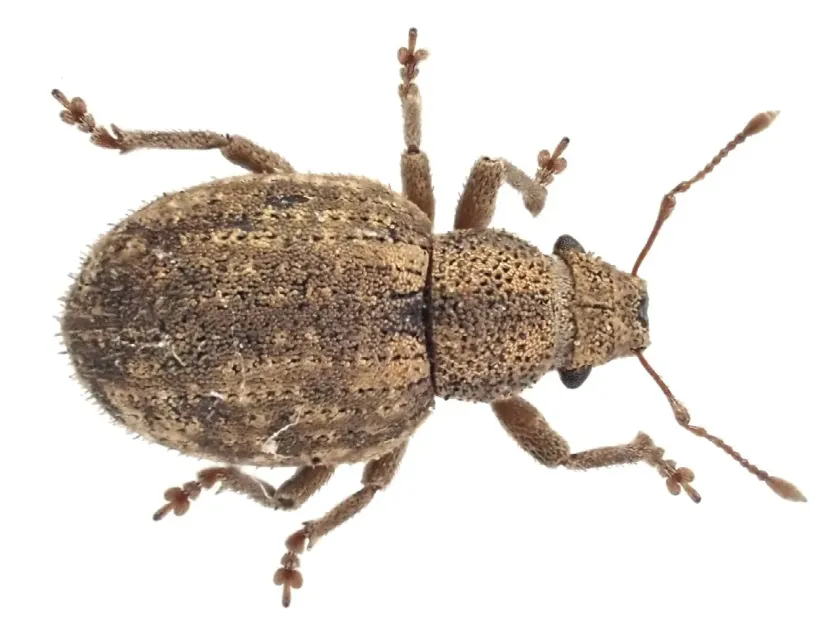
Strophosoma capitatum is a species of broad-nosed weevil belonging to the Curculionidae family. These beetles are generally small, measuring between 3 and 5 mm in length, and are known for their effective camouflage capabilities.
The body of the adult beetle is oval-shaped and covered in tiny scales, often ranging in color from earthy brown to greyish-brown. This coloration allows them to blend in perfectly with the bark and soil of their host environment.
The larvae are typically soil-dwelling, white in color, and legless with a distinctive brown head capsule. They spend their entire developmental period in the soil, feeding on roots and organic matter before pupating.
The reproductive cycle is usually annual. Females lay eggs in the soil or leaf litter, ensuring that the next generation is protected from environmental extremes throughout the winter.
These insects are adept at playing dead when threatened, a behavioral trait that makes them difficult to observe during field assessments. This defense mechanism is part of their overall survival strategy in forest ecosystems.
What it damages
The primary damage is caused by the adults, which feed on the needles, buds, and young bark of coniferous trees. Pine and spruce saplings in nurseries are particularly susceptible to severe defoliation.
Needle feeding reduces the photosynthetic area of the young trees, leading to stunted growth and loss of vigor. If the feeding pressure is high, it can lead to the death of the terminal leader, forcing the tree to grow in a distorted manner.
Bud feeding is critical because it directly impacts the vertical growth and structural integrity of the saplings. Damaged buds often fail to open properly or develop into malformed shoots, reducing the market value of nursery stock.
Larval feeding on the roots of young seedlings is a hidden threat. By consuming fine roots, the larvae deprive the sapling of essential water and nutrients, which often results in sudden yellowing and death.
Weakened trees become more vulnerable to secondary pest infestations, such as bark beetles or fungal pathogens, which can exacerbate the damage caused by the weevil and lead to higher mortality rates in plantations.
When it appears
Adult beetles become most active in the spring, typically from April to May, as the temperatures rise. This timing coincides with the flush of new growth on coniferous trees, which serves as their primary food source.
During the summer months, adult activity continues but may fluctuate depending on environmental moisture levels. The larvae continue their development underground throughout the warmer part of the year.
The emergence of the beetles is highly dependent on the local climate and phenology of the host trees. A warm, early spring can trigger an earlier and more intense period of adult feeding.
Monitoring should be focused on the spring season. Inspecting the tips of branches and buds in the early evening or late night is most effective since these beetles are largely nocturnal or crepuscular.
Overwintering occurs either in the larval stage or as adults within the soil profile. They move deeper into the soil as the temperature drops in autumn to avoid freezing during the winter months.
Signs of infestation
Signs of infestation include irregular feeding patterns on needles. The edges of the needles will appear notched, ragged, or sometimes completely consumed, leaving only the central midrib.
- Ragged or notched needle edges.
- Damaged or hollowed-out buds on terminal shoots.
- Seedlings displaying chlorosis (yellowing) due to root damage.
- Presence of small brown beetles when shaking branches over a white surface.
- Stunted growth of new shoots during the spring growing season.
In nurseries, infestation often appears in patches. Because the larvae do not disperse far, damage is typically concentrated around the site of the initial egg-laying by the female.
If you notice young seedlings struggling to remain upright, it is worth checking the root zone for larval damage, which is often characterized by the absence of feeder roots.
During the day, search near the base of the tree or tucked into the bark crevices; the beetles are often found hiding in these spots to avoid light and desiccation.
Control measures
Chemical control involving systemic insecticides is effective during the peak spring emergence. Applications should ideally be made in the evening to target the beetles when they are most actively feeding on the foliage.
Cultivation of the soil between nursery rows can help disrupt the larval stage by exposing them to desiccation and natural predators, effectively reducing the next generation's population.
Promoting tree health is an essential preventative measure. Adequate irrigation and nutrition ensure that saplings have the energy to recover from light grazing and maintain a strong resistance to pest pressure.
Mechanical methods, such as using sticky bands around the base of the stems, can prevent the beetles from climbing up the tree, especially in small-scale plantings or high-value decorative conifer stocks.
Integrated Pest Management (IPM) practices, including the removal of heavily infested or dead saplings, can prevent the buildup of the weevil population and minimize the need for broad-spectrum pesticide applications.
Taxonomy
- Latin name
- Strophosoma capitatum
- Order
- Coleoptera (beetles)
- Family
- Curculionidae
- EPPO code
- STROCA
Discussion
No discussions yet — be the first.