
Strophosoma
Strophosoma
Description
How to identify
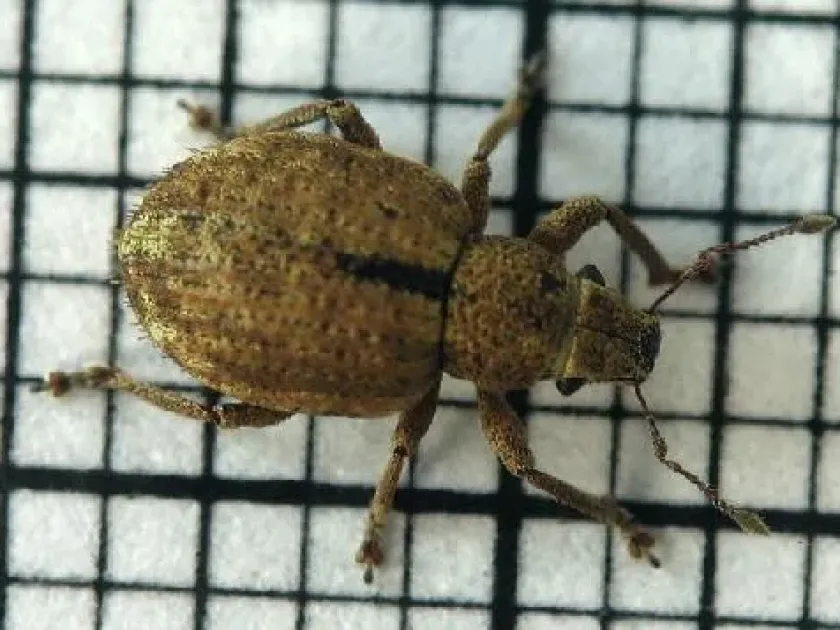
Strophosoma is a genus of snout beetles belonging to the family Curculionidae. These beetles are typically small, ranging from 3 to 7 mm in length, with a body covered in fine scales giving them a grey-brown appearance.
A key diagnostic feature is their short, broad rostrum, which distinguishes them from many other long-snouted weevil species. Many species within this genus are flightless due to fused wing covers.
The larvae are typically C-shaped, legless, white to cream-colored, and possess a distinct dark head capsule. They spend their entire developmental period in the soil feeding on plant roots.
Adult beetles are nocturnal, meaning they hide during the day beneath debris, in leaf litter, or within the soil near the base of host plants, making them difficult to spot during daylight hours.
The genus belongs to the subfamily Entiminae, which includes numerous polyphagous species that pose a significant threat to various agricultural crops and forest plantations.
What it damages
Adult Strophosoma beetles are generalist herbivores, feeding on the foliage of a wide variety of plants, including fruit trees, berry bushes, and diverse deciduous forest species.
They often cause severe damage in nurseries by notching the leaves of young seedlings. Extensive feeding can lead to significant defoliation, inhibiting plant growth and reducing overall vigor.
Larvae feed on the fine root systems of herbaceous plants and woody shrubs. While less visible, this underground feeding can cause serious stunting, especially in young saplings.
The damage caused by these beetles often leaves plants vulnerable to secondary infections, such as fungal pathogens, which can exacerbate the impact on plant health.
In cases of heavy infestations, the collective damage from adults on foliage and larvae on roots can result in the loss of nursery stock or poor establishment of new plantings.
When it appears
Adult emergence typically begins in early spring, as temperatures rise and the ground thaws. This is the period when beetles start moving from their overwintering sites.
Peak feeding activity usually occurs during the spring and early summer, coinciding with the rapid growth phase of host plants and the development of new leaves.
During the height of summer, adult activity may decrease due to high temperatures, though they remain present in the environment throughout the growing season.
Autumn marks the transition toward overwintering, as adults retreat into the soil, leaf litter, or protected areas near host plants to endure the winter months.
Understanding this phenology is crucial for effective monitoring and application of control measures, as interventions are most successful during periods of high adult activity.
Signs of infestation
The most characteristic sign of Strophosoma presence is the irregular, notched appearance of leaf edges, often referred to as "scalloped" or "zigzag" leaf margins.
Nighttime inspections using a flashlight will often reveal adult beetles actively feeding on the foliage, as they are strictly nocturnal.
When disturbed, these beetles exhibit a "drop-and-hide" behavior, where they fall to the ground and remain motionless, blending in perfectly with the soil substrate.
Evidence of larval activity may include poor plant development, chlorosis, or the presence of root damage that can be verified by digging around the root zone of affected plants.
- Scalloped or notched leaf edges.
- Stunted growth of young seedlings.
- Beetles visible on leaves at night.
- Damaged roots upon excavation.
Control measures
Cultural control methods, such as regular soil cultivation or hoeing, can effectively disrupt the life cycle of the larvae and reduce their survival rates in the soil.
Maintaining a weed-free environment in nurseries and orchards removes alternative food sources and shelters, making the area less attractive to the beetles.
Sticky bands applied to the stems of young trees can act as a physical barrier, preventing adult beetles from climbing up to feed on the leaves.
In cases where infestations exceed economic thresholds, appropriate insecticides should be applied following the specific guidelines for horticultural or forestry pest management.
Encouraging biological control by fostering habitats for generalist predators, such as carabid beetles and insectivorous birds, is an effective long-term management strategy.
Taxonomy
- Latin name
- Strophosoma
- Order
- Coleoptera (beetles)
- Family
- Curculionidae
- EPPO code
- STROSP
Discussion
No discussions yet — be the first.