
Guava leafroller
Strepsicrates macropetana
Description
How to identify
The leafroller Strepsicrates macropetana belongs to the family Tortricidae, order Lepidoptera. Adults are small moths with a wingspan characteristic of the family, featuring cryptic coloration that allows them to blend into bark or foliage.
The larvae, or caterpillars, possess strong chewing mouthparts. They are typically light green to brownish, providing excellent camouflage while they feed inside rolled leaves or infested fruits.
The life cycle follows a complete metamorphosis: egg, larva, pupa, and adult. Each stage is strictly synchronized with the phenological development stages of their host plants.
Detecting this pest is challenging due to the secretive behavior of the larvae. Agronomists recommend using pheromone traps to monitor adult flight patterns and determine the exact timing for control measures.
Adult moths are primarily nocturnal, making visual detection difficult without specialized tools. Species identification often requires expert analysis of internal structures or genetic testing.
What it damages
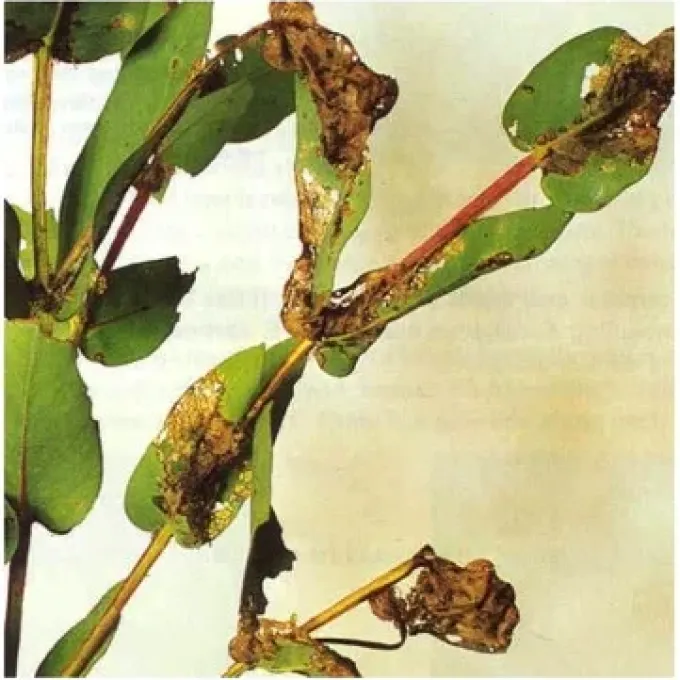
The primary hosts of this species include plants in the Myrtaceae family, most notably guava (Psidium). The pest focuses its feeding on tender shoots and young foliage.
In commercial orchards, larvae damage flower buds and developing fruits. This causes a significant decrease in produce quality and overall tree vitality.
Feeding on apical meristems is particularly detrimental. It halts shoot development, causes stem deformation, and disrupts the natural growth architecture of the tree.
The entry wounds made by the larvae provide easy access for secondary fungal and bacterial pathogens, which further damage the plant tissue.
The impact of Strepsicrates macropetana is high in tropical and subtropical regions, where severe infestations can lead to significant defoliation and yield losses.
When it appears
The phenology of the leafroller is closely linked to the local temperature. In warmer climates, the insect can complete multiple generations per year, complicating management efforts.
The period of mass flight typically coincides with the active vegetative stage of the host plant. Moths lay eggs on young leaves or directly onto fruit surfaces, ensuring offspring have immediate access to food.
The duration of the life cycle depends on daily average temperatures. High air humidity generally promotes faster reproduction rates and higher larval survival.
Overwintering occurs in the pupal stage or as diapausing larvae in protected microhabitats such as bark crevices, plant debris, or the topsoil.
Spring emergence coincides with the start of sap flow. The first wave of larvae from overwintering sites is the critical window for applying effective control.
Signs of infestation
The most common sign of infestation is leaves rolled into tubes or dense cocoons held together by silk webbing. Larvae feed securely within these protected nests.
Surface scarring, pitting, or deep tunnels on developing fruits are clear indicators of larval activity, often resulting in deformed fruit or premature drop.
The presence of larval frass (excrement) within leaf rolls provides definitive evidence of an active infestation that needs immediate attention.
The wilting of shoot tips despite adequate irrigation often points to larval activity within the stem or at the growing point.
Mass fruit drop, without apparent disease symptoms, is frequently caused by leafroller damage to the fruit stalk or the fruit itself during the early development stages.
Control measures
Integrated Pest Management (IPM) is essential, combining cultural, biological, and chemical methods based on regular population monitoring.
Cultural practices include the removal and destruction of infested plant parts and orchard sanitation, which significantly reduce the overwintering population.
Biological control involves the use of entomophagous agents, such as parasitoid wasps or predatory insects, that naturally limit the population growth of the pest.
Microbial insecticides based on Bacillus thuringiensis are highly effective against early-instar larvae while remaining safe for non-target beneficial insects.
Chemical control relies on systemic and contact insecticides applied according to strict regulations. Rotating active ingredients is crucial to prevent the development of pesticide resistance.
Taxonomy
- Latin name
- Strepsicrates macropetana
- Order
- Lepidoptera (butterflies)
- Family
- Tortricidae
- EPPO code
- STRZMA
Discussion
No discussions yet — be the first.