
Strepsicrates ejectana
Strepsicrates ejectana
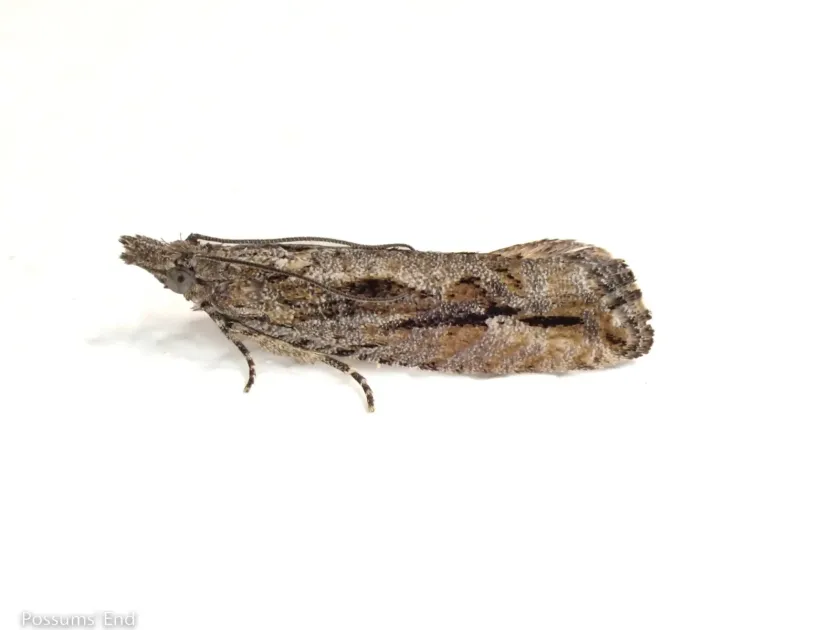
Description
How to identify
Strepsicrates ejectana is a species of moth belonging to the family Tortricidae. These insects are commonly referred to as leafrollers due to the characteristic behavior of their larvae, which roll or tie leaves together for protection.
Adult moths are relatively small, with a wingspan typically ranging between 12 and 15 mm. Their forewings are cryptically colored, usually exhibiting shades of gray, brown, or tan, which provide excellent camouflage against tree bark during the day.
The larvae progress through several instar stages. Early stages are translucent, while later instars become green or brownish with a distinct, darkened head capsule. Their movement is highly rapid when disturbed, often dropping on a silk thread.
Pupation occurs within the rolled leaf structures created by the larvae. The pupae are reddish-brown and equipped with small abdominal spines that help them anchor securely within their silken retreat until the moth emerges.
The life cycle is highly dependent on ambient temperature and humidity. In favorable tropical or subtropical climates, the species can produce multiple overlapping generations, making it a persistent concern for farmers.
What it damages
This pest is primarily associated with plants in the Myrtaceae family, including Myrtus species and, notably, guava (Psidium guajava). It is recognized as a significant pest in fruit orchards and nurseries.
Larvae consume tender young foliage, terminal buds, and flowers. Feeding on the terminal buds is particularly damaging, as it stunts growth and interferes with the proper canopy development of the plant.
Floral damage is common, leading to flower abortion and a subsequent reduction in fruit set. This direct loss of reproductive parts significantly diminishes total yield, impacting the economic viability of orchards.
By grazing on leaf surfaces and creating rolled shelters, the larvae cause physical deformation. The damaged tissues are prone to secondary infections, including fungal pathogens that further degrade the health of the plant.
In ornamental Myrtaceae, the aesthetic damage caused by leaf rolling and feeding renders plants unsellable. The presence of webbing and frass within the leaves makes the produce unsightly for commercial retail.
Signs of infestation
The most prominent sign of infestation is the presence of tightly rolled or folded leaves, often bound by thin, visible silk threads. These structures serve as protection and feeding sites for the larvae.
Feeding damage often appears as uneven, jagged margins on leaves or irregular "shot-holes" across the leaf blade. Inspection of the rolled leaves will frequently reveal larval excrement, confirming active infestation.
Premature wilting of buds and flowers is another strong indicator. If a plant shows clusters of webbed leaves or withered inflorescences, it is highly likely that a leafroller population is active.
At night, adult moths may be attracted to artificial lights near the orchard. Monitoring for these adults can help predict the onset of egg-laying and the subsequent appearance of a new generation of larvae.
Severe infestations lead to stunted growth and premature leaf drop. When damage becomes widespread, the cumulative stress weakens the plant, making it more susceptible to environmental stressors like drought.
Control measures
Integrated Pest Management (IPM) for Strepsicrates ejectana starts with sanitation. Regularly pruning and destroying infested leaf clusters helps remove larvae and pupae from the orchard environment.
Monitoring using pheromone traps is essential for tracking adult flight activity. This allows for precise timing of interventions, targeting the larvae while they are most vulnerable and before they hide in rolled leaves.
Biological control agents, particularly microbial insecticides like Bacillus thuringiensis, are highly effective. They specifically target the lepidopteran larvae while sparing beneficial insects and natural predators.
Chemical control should be used as a last resort, focusing on systemic or contact insecticides applied during peak hatching periods. Rotating chemical classes is vital to prevent the development of insecticide resistance.
Encouraging biodiversity by preserving habitats for natural enemies—such as predatory bugs, lacewings, and parasitic wasps—can provide long-term regulation of leafroller populations in a sustainable manner.
Taxonomy
- Latin name
- Strepsicrates ejectana
- Order
- Lepidoptera (butterflies)
- Family
- Tortricidae
- EPPO code
- SPLOHO
Discussion
No discussions yet — be the first.